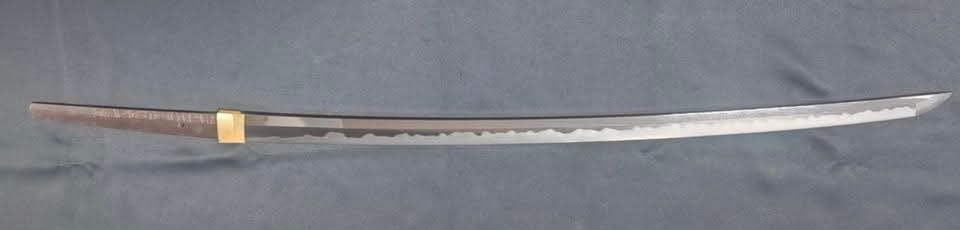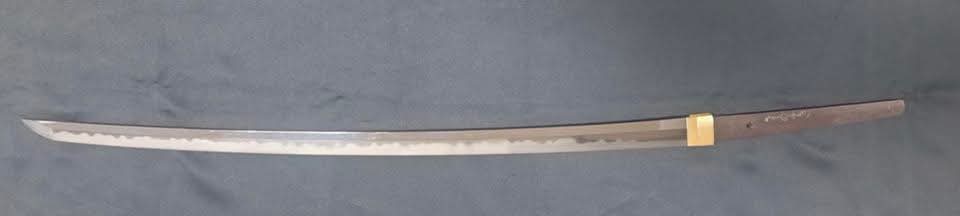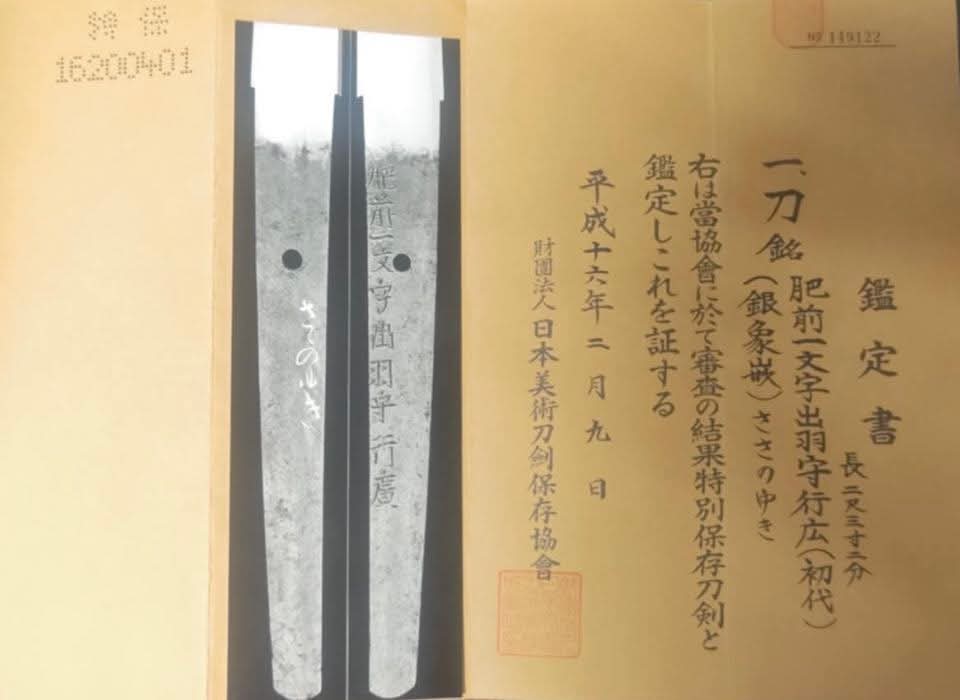

Hizen Ichimonji Dewa-no-kami Yukihiro katana. An Excellent sword with stunning hamon packed with Hataraki.
Shirasaya has Sayagaki by Tanobe Sensei
Nagasa 70.3cm
Nbthk Tokubetsu Hozon certificate
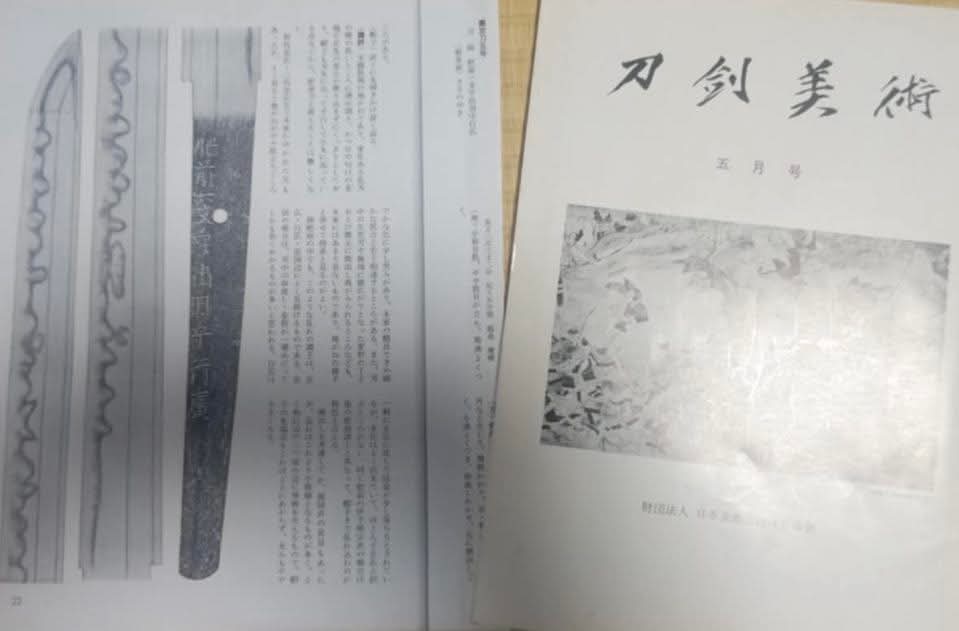
Published in the token bijitsu magazine
Mounted in Shirasaya
Token Bijitsu translation
Kantei Sword No. 5
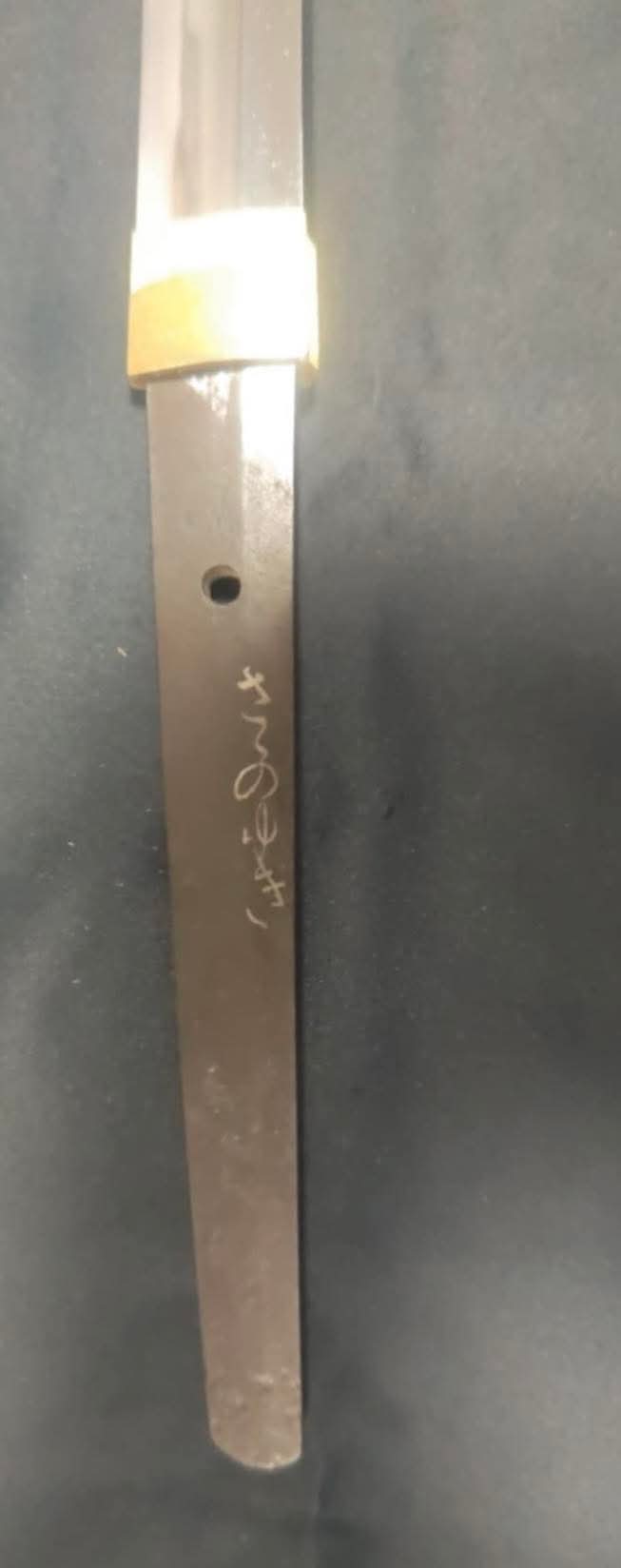
Katana, mei: Ginzōgan-mei: Hizen Ichimonji Dewa no Kami Yukihiro (肥前⼀⽂字出⽻守⾏広)
Sasanoyuki (ささのゆき) [lit. “snow on bamboo grass;” a reference to the cutting ability of the blade]
Nagasa 70.3 cm, sori 1.5 cm, shinogi-zukuri, iori-mune
Ji: Ha: Bōshi: rather standing-out ko-itame that features plenty of ji-nie
widely hardened and ko-nie-laden gunome-midare with a wide nioiguchi that starts with some
yakidashi at the base and that is mixed with chōji, ko-notare, yahazu elements, tobiyaki, ashi, yō,
and sunagashi
sugu with hakikake at the tip and with a kaeri that runs back in a long fashion
Explanation:
As the blade displays a konuka-hada, a midareba that is rich in variety, nie accumulations in the valleys
between the midare elements, where also the bottom edge of the nioiguchi and the tips of the ashi “fume”
out, and a bōshi that runs parallel to the fukura and turns back with a ko-maru-kaeri, it should not be too
difficult to recognize that this is a Hizen-tō.
Some participants also went for the first and second generation Tadahiro (忠広) and other smiths from
the Hizen main line, but a closer examination of the jigane reveals that the hada tends to stand out and that
the steel is somewhat blackish, which means, the forging differs slightly from more refined approach seen
with the Hizen main line smiths. Also, yahazu elements in the ha, chōji of uncommon shape that are
prominently horizontally elongatd, and the presence of a yakidashi are also features that are relatively
uncommon for the Hizen main line. This combined with the jigane, it is more appropriate to regard the
blade as a collateral Waki-Hizen branch work.
Among Waki-Hizen works, a midare as seen here is most typical for Masahiro (正広), Yukihiro (⾏広),
and Tadakuni (忠国). In case of Tadakuni, however, there would be more sunagashi and kinsuji in the ha,
which usually also appear in a noticeably longer manner. Yukihiro is sometimes regarded as being slightly
inferior in terms of skill than Masahiro, but the Kantei blade is of excellent make and has virtually no
elements that would distinguish it from a work of Masahiro. In case of Iyo no Jō Munetsugu (伊予掾宗次),
who was a Hizen smith as well, not only the ha, but also the bōshi would display midare, that is, be a
midare-komi bōshi, a characteristic, which distinguishes him from all other Hizen smiths.
Because of the yakidashi, some went for Oya-Kunisada (親国貞). However, his midare elements would
be smaller dimensioned and often there would be tobiyaki in the monouchi and/or around the mitsugashira.
Apart from that, his kaeri would not start as late as seen here and would turn back in a more pronouncedly roundish manner
Sayagaki By Tanobe Sensei
肥前⼀⽂字出⽻守⾏廣
初代⾏廣ノ⼗字銘及サヽノユキト利刃ヲ称ス銀象嵌有之細緻ナ⽶糠肌ニ鍛ヘ焼⾼ク互乃⽬ニ丁
⼦・⼩湾・⽮筈刃ヲ交ヘル乱ヲ⾒セ動勢アリテ匂深デ乱ノ⾕ニ沸ガ溜リ砂流・⾦筋・湯⾛ガ絡
ミ匂⼝明ルクヘ⼩丸帽⼦ニ結ブナド同⼯ノ典型且屈指ノ優品也
刃⻑弐尺三⼨壱分半
惟時⼄⺒暦卯⽉穀旦探⼭観⽽誌之「花押」
Hizen Ichimonji Dewa no Kami Yukihiro
Shodai Yukihiro no jūji-mei oyobi Sasanoyuki to riba o shō-su ginzōgan kore ari. Saichi na konuka-hada ni
kitae yaki takaku gunome ni chōji, ko-notare, yahazuba o majieru midare o mise dōsei arite nioi fukashi de
midare no tani ni nie ga tamari sunagashi, kinsuji, yubashiri ga karami nioiguchi akaruku sae ko-maru
bōshi ni musubu nado dōkō no tenkei katsu kusshi no yūhin nari.
Hachō ni-shaku san-sun ichi-bu han
Koretoki kinoto-hebidoshi uzuki kokutan Tanzan kore o mite narabi ni shirushite + kaō.
Ichimonji Dewa no Kami Yukihiro from Hizen
This is a work of the first generation Yukihiro that is signed in ten characters and that bears the
silver-inlaid inscription “Sasanoyuki,” which alludes to the cutting ability of the blade. The kitae
is a finely forged konuka-hada, the hardening is a wide and vivid gunome-based midare with a wide,
bright, and clear nioiguchi that is mixed with chōji, ko-notare, yahazuba, sunagashi, kinsuji, and
yubashiri, there are accumulations of nie along the valleys between the midare elements, and the
bōshi features a ko-maru-kaeri. With all this, the blade is not only in the textbook style of this smith,
but is also an outstanding masterwork of his.
Blade length ~ 70.1 cm
Examined and written by Tanzan [Tanobe Michihiro] on a lucky day in April in the year of the snake
of this era (2025) + monogram