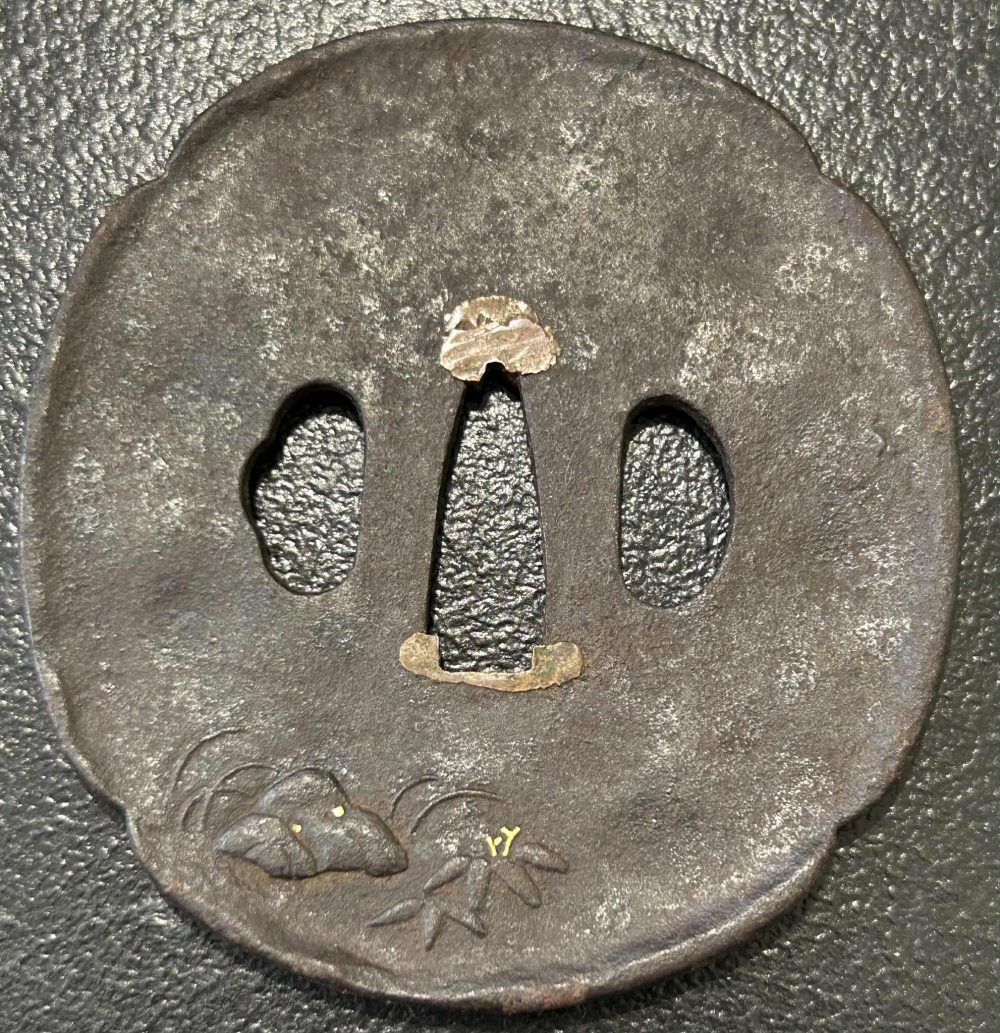
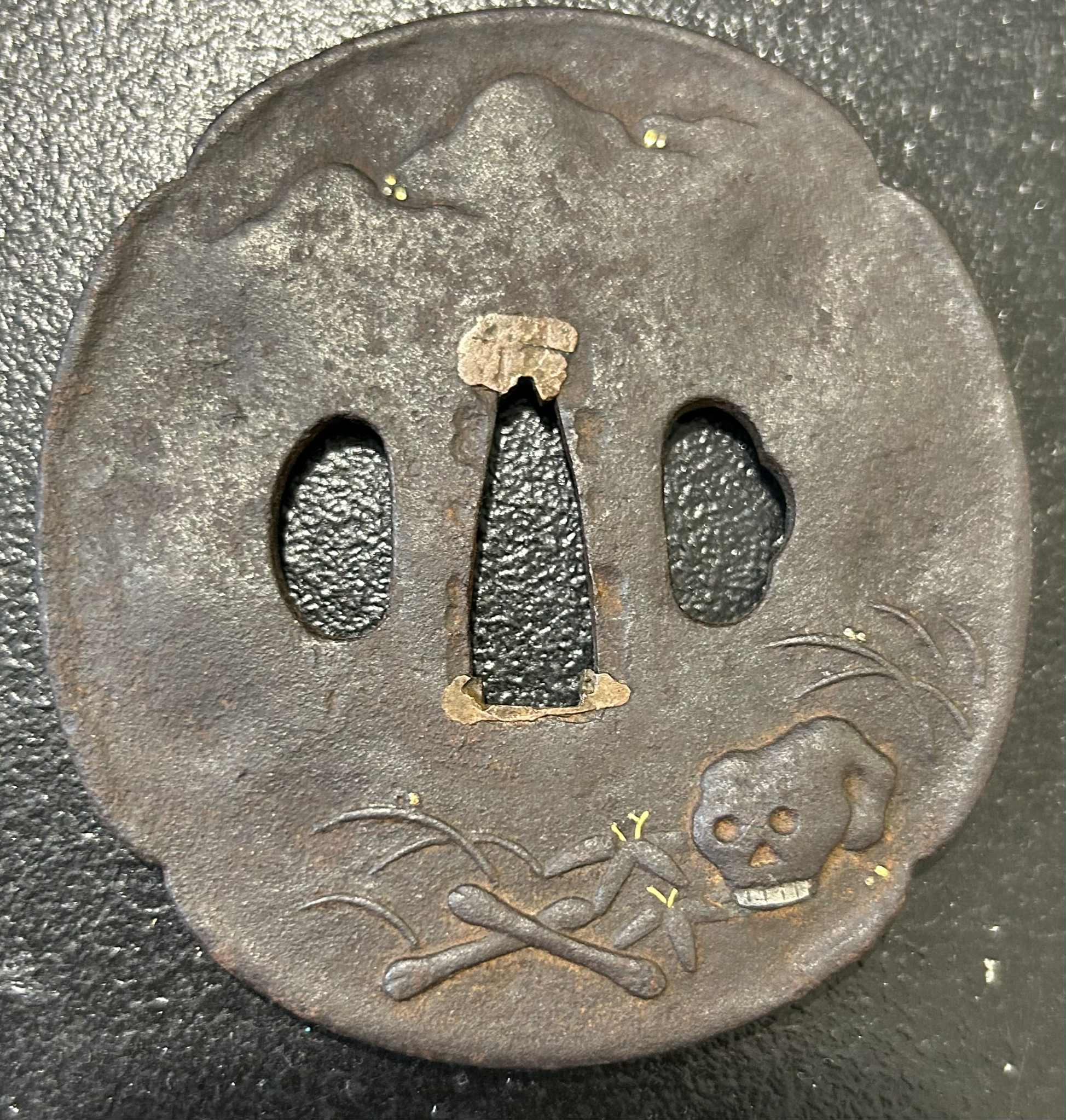
Nozarashi Katana Tsuba
85 mm x 80 mm x 3 mm
Edo Period
Nozarashi skull tsuba featuring a design theme known as nozarashi (weather-beaten). These designs typically include a skull motif and bones and are rich in symbolism, often incorporating elements like a crescent moon, grasses,Bats and sometimes Poems
Description and Symbolism
The term Nozarashi refers to bones bleached and weathered in a field, a classic memento mori (reminder of death and mortality and impermanence ) theme in Japanese art. These tsuba designs are intended to evoke a sense of the transient nature of life and the inevitability of death.
Specific elements often incorporated into the design include.
- A Skull: Often the central element, often depicted in an iron base with inlays of other metals like silver or shibuichi (copper-silver alloy).
- Pampas Grass: Grasses growing beside or through the eye sockets, a detail that can allude to the pain of the spirit or a specific poetic reference.
- A Crescent Moon: Often depicted on the reverse side of the tsuba, adding to the desolate, autumnal imagery.
- Poetry: Some highly valued examples have a waka poem carved into the surface, which often references loneliness, a battlefield, or the spirit of a famous poet, such as Ono no Komachi.
Historical Context
The nozarashi theme was popular during this time, created by skilled artisans from various schools, such as the Mino or Mito schools.
Genuine antique Nozarashi skull Tsuba are Rare and sought after by collectors of Nihonto (Japanese swords) and related fittings (Tosogu).