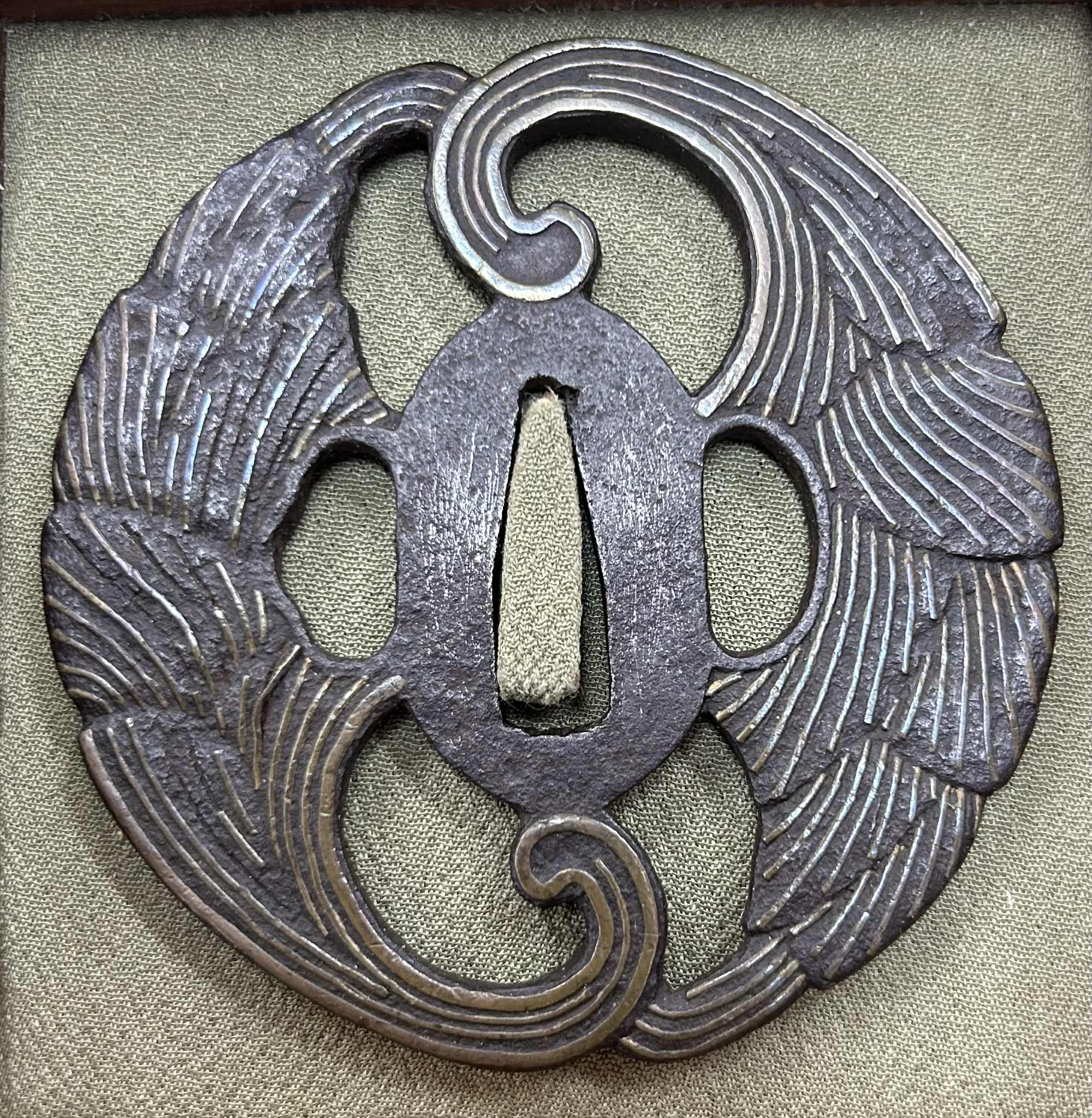
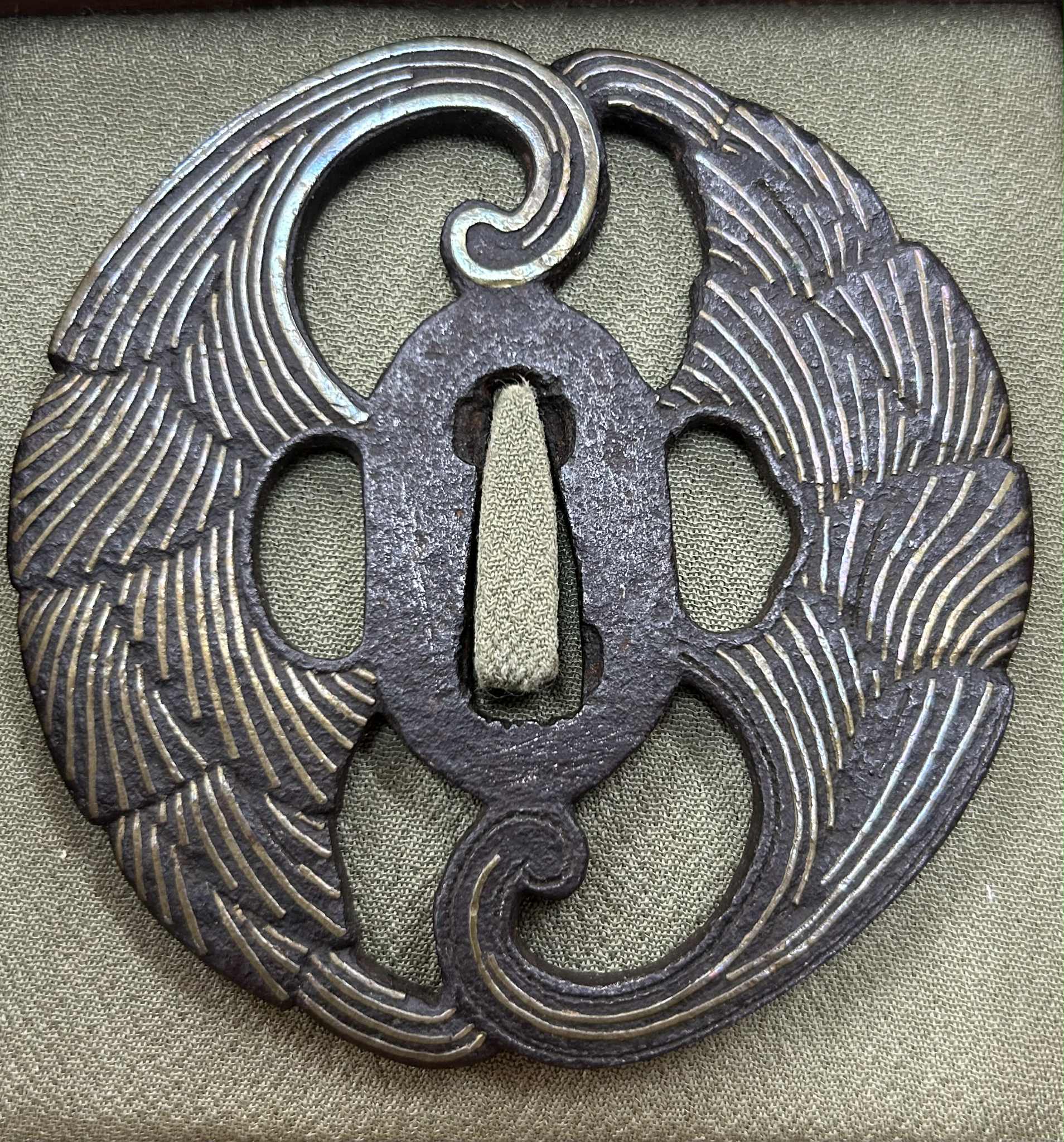
Large Katana Tsuba in the form of Myoga, Edo Period
85mm x 85 mm x 3mm
This Tsuba design comes from the Myoga (Japanese ginger). This design is called Irechigai Myoga. It is a combination of two Myoga facing opposite directions
Heianjo tsuba
These tsuba are typically crafted from iron with brass inlay work (known as Heianjo-zogan).
Key Characteristics
- Style: Heianjo-style (established in Yamashiro Province, modern-day Kyoto). This school primarily used iron and was known for simple, elegant designs, originally featuring family crests and arabesque patterns executed in brass inlay.
- Material: The base is generally iron, adorned with brass (or sometimes gold, silver, or copper) inlays.
- Design (Mon): The mon is the Myoga (Japanese ginger) motif. A common variation is the Irechigai Myoga pattern, which depicts two overlapping or “hugging” ginger shoots.
- Symbolism: The Myoga motif is considered a good-luck design because its pronunciation in Japanese is the same as the word for “divine protection” (myoga). It was a popular motif for family crests (kamon) and is often seen at shrines and temples.