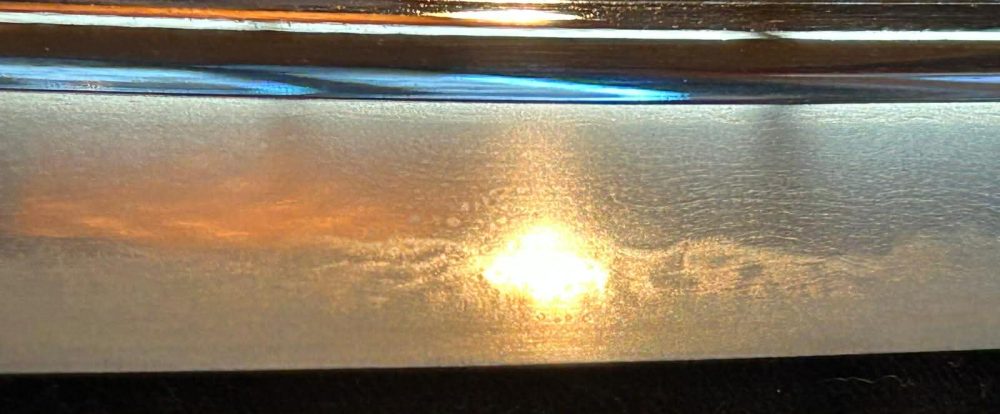
I am pleased to present this extremely Rare Masterpiece Juyo Token by the master Swordsmith Kamakura Ayanokoji Sadayoshi.
If you are looking for an excellent serious collectors Juyo Token from the Kamakura Period. Or an Excellent contender at the next Tokubetsu Juyo Shinsa.
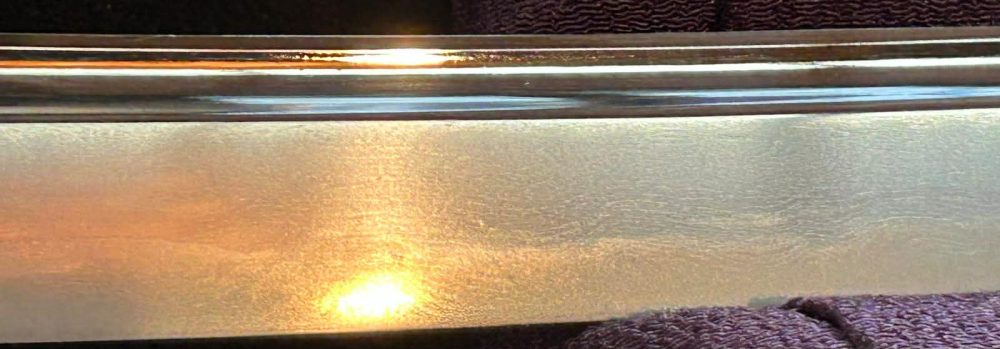
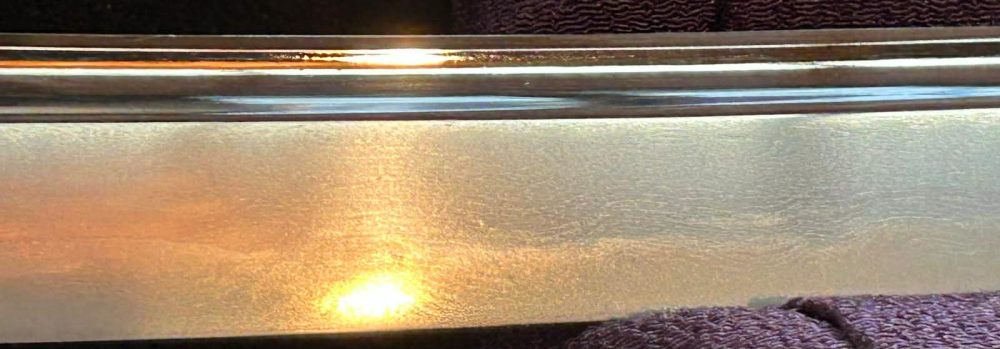
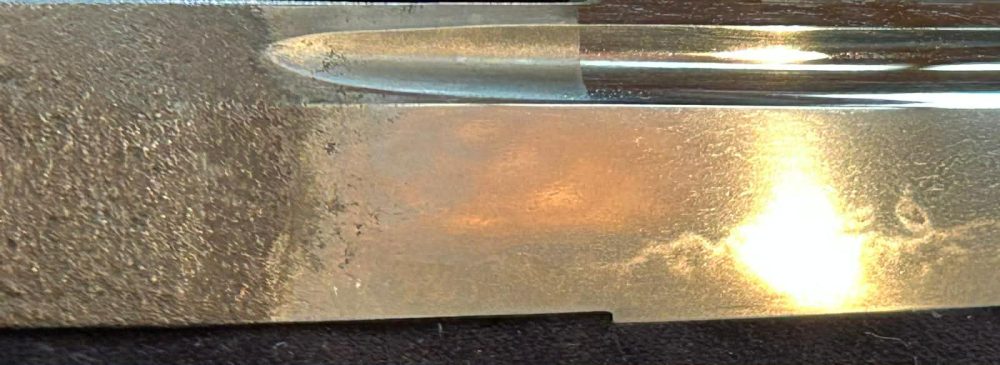
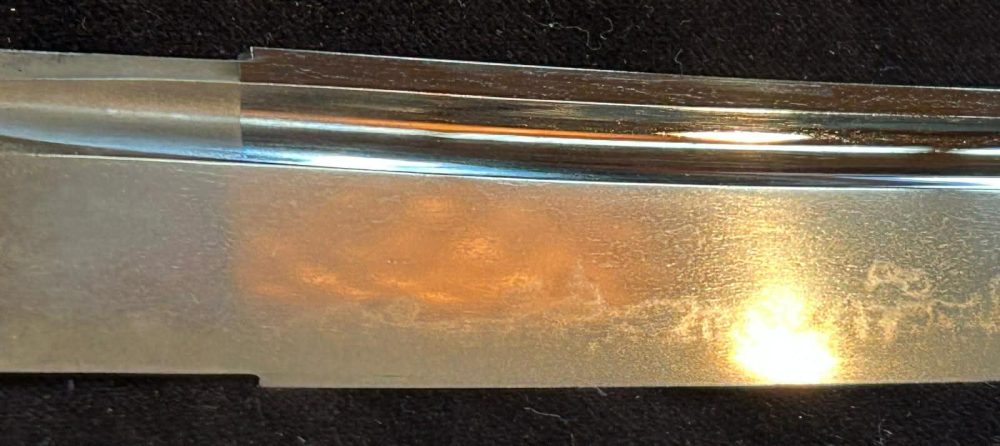
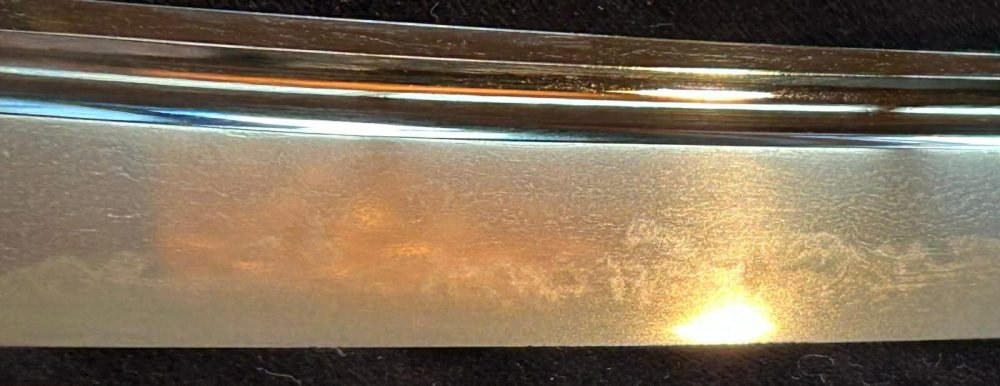
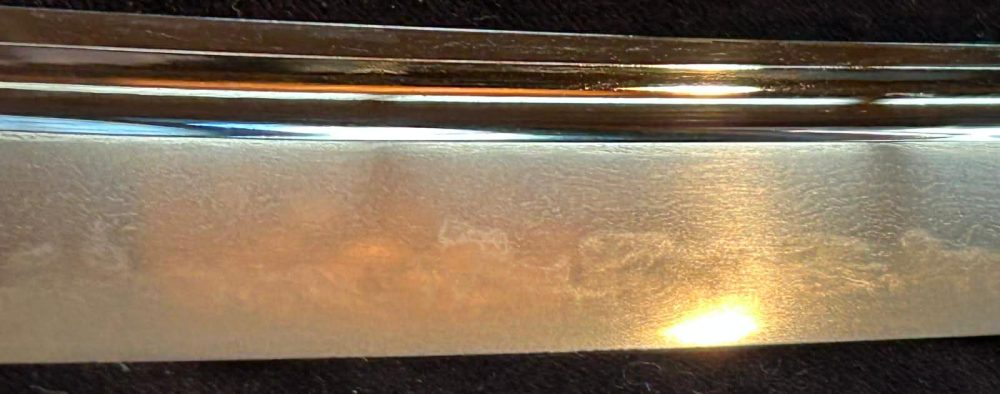
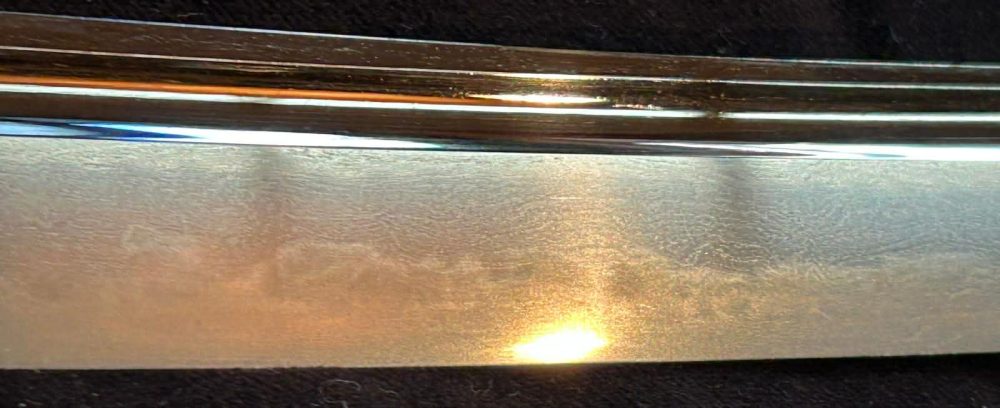
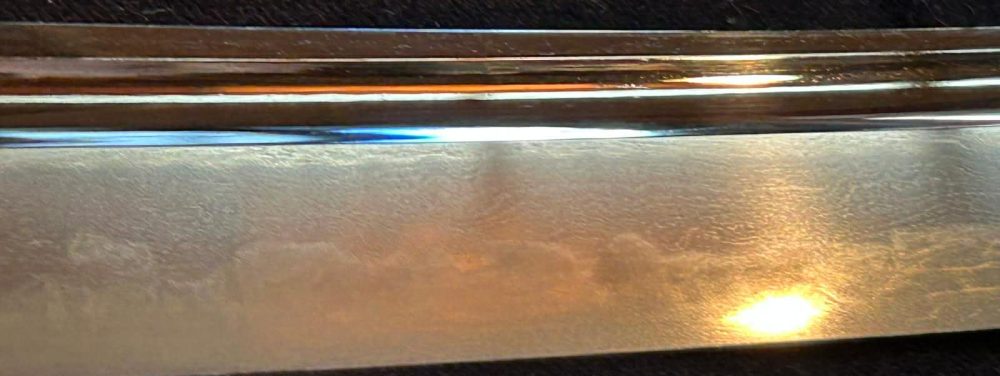
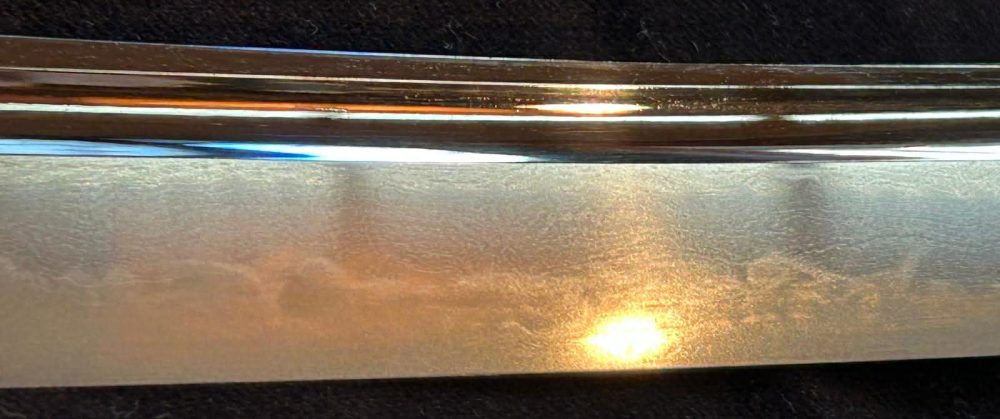
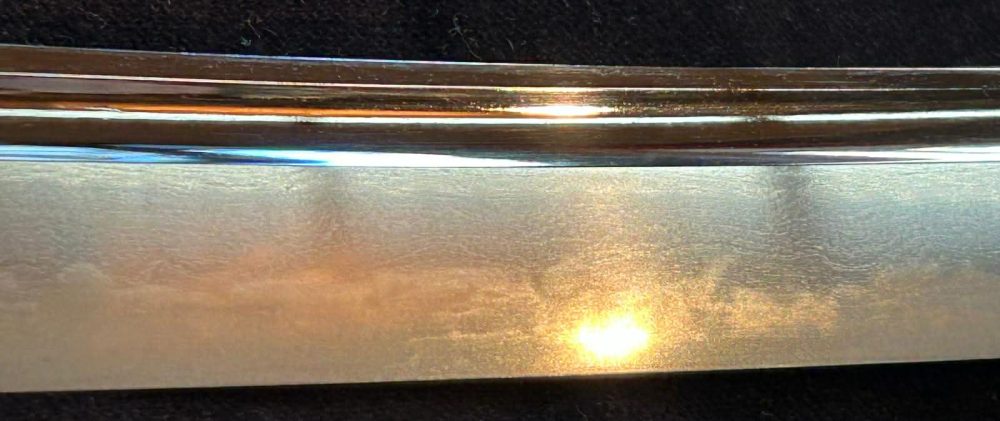
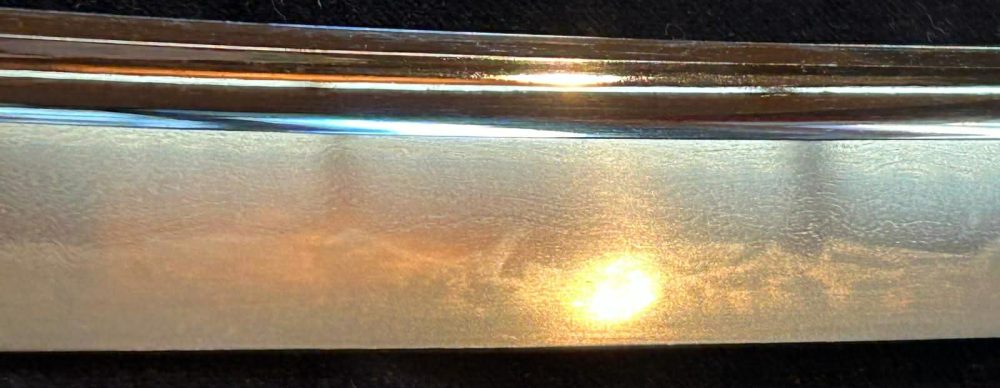
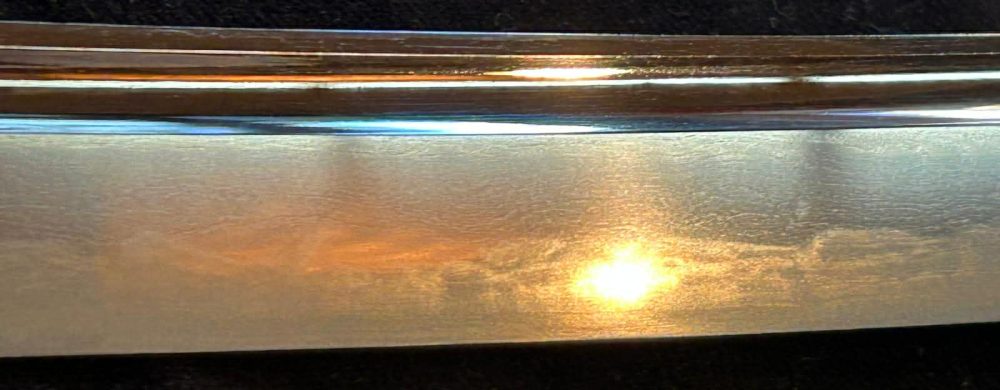
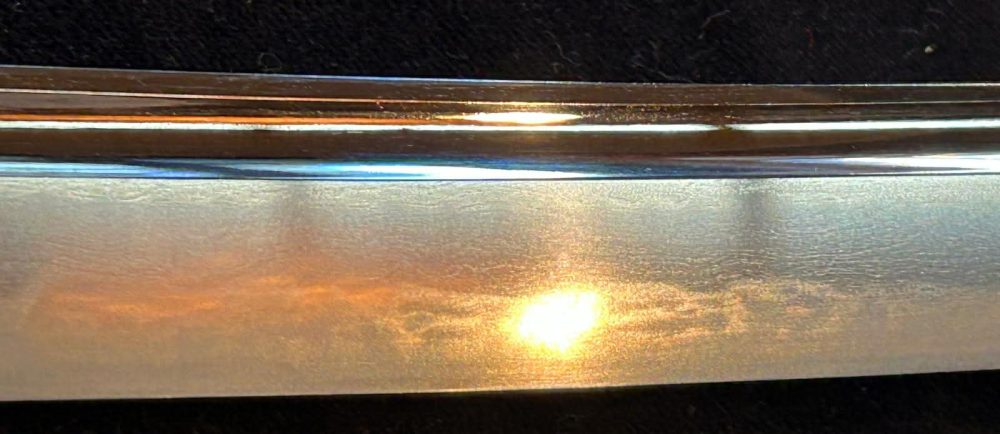
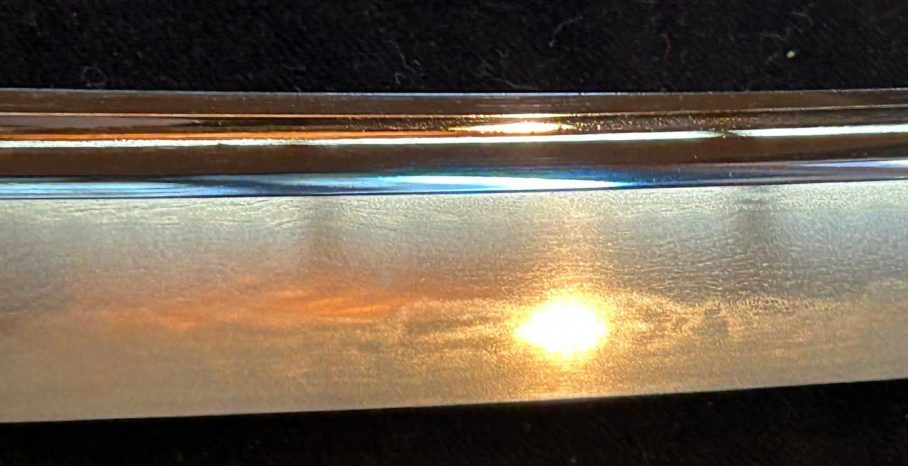
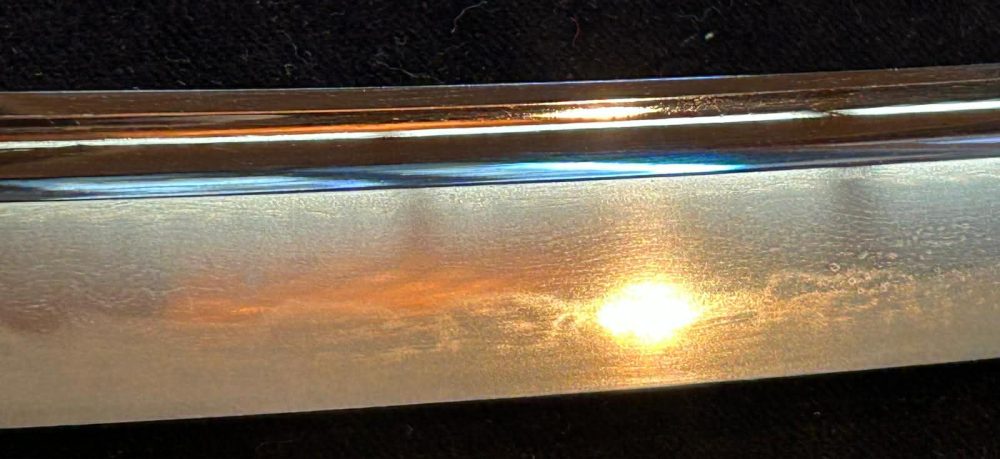
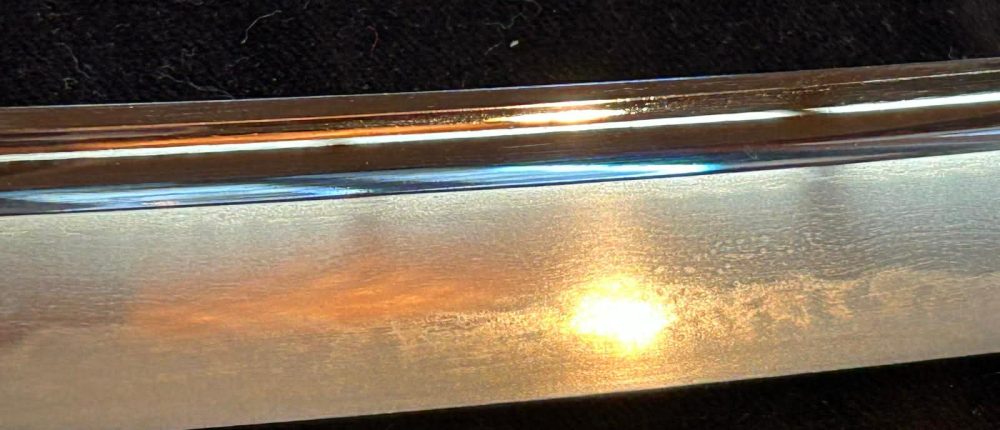
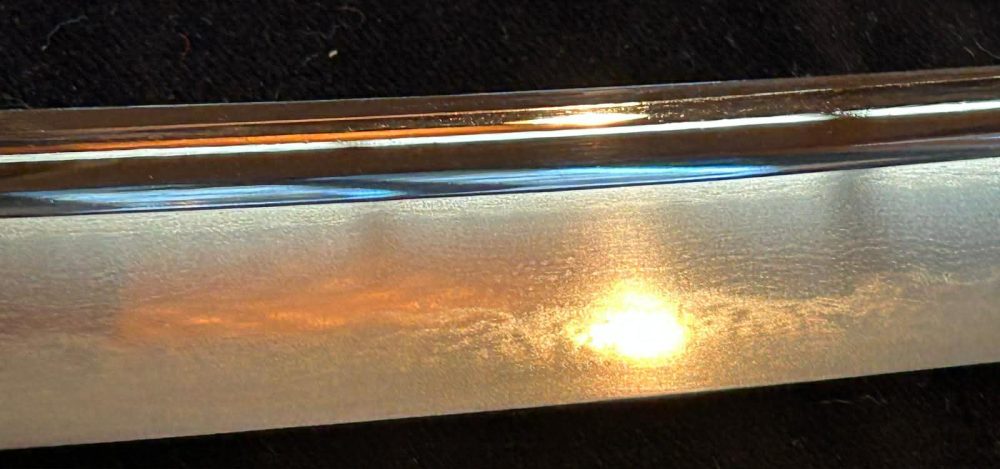
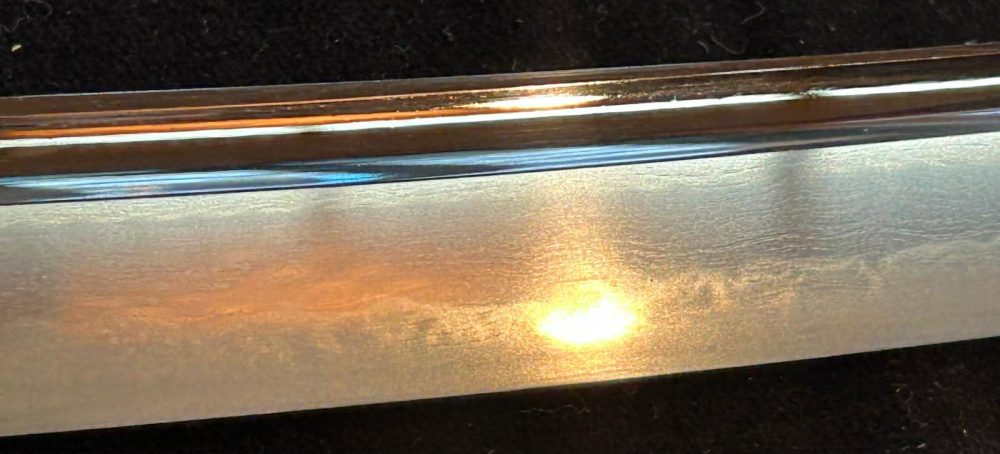
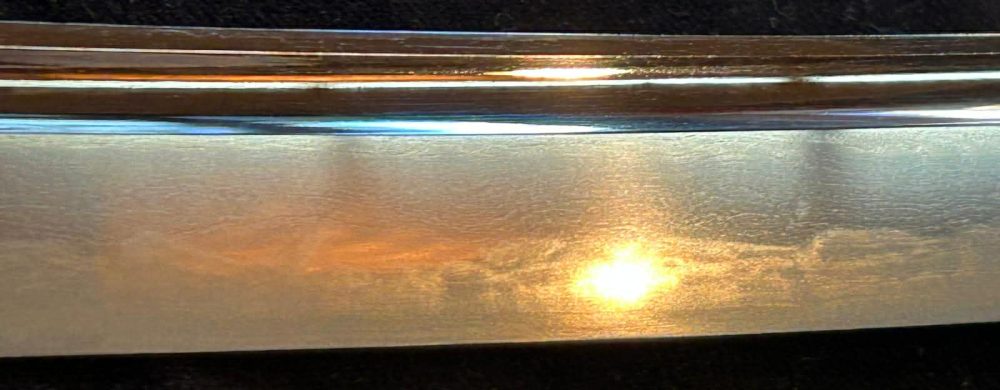
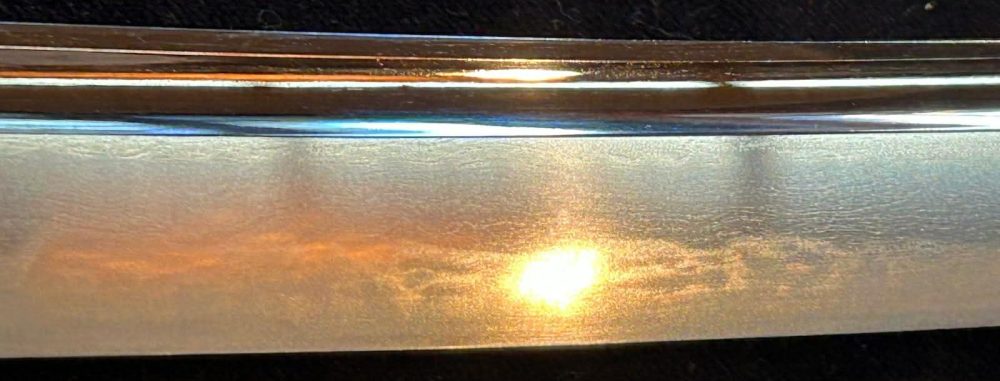
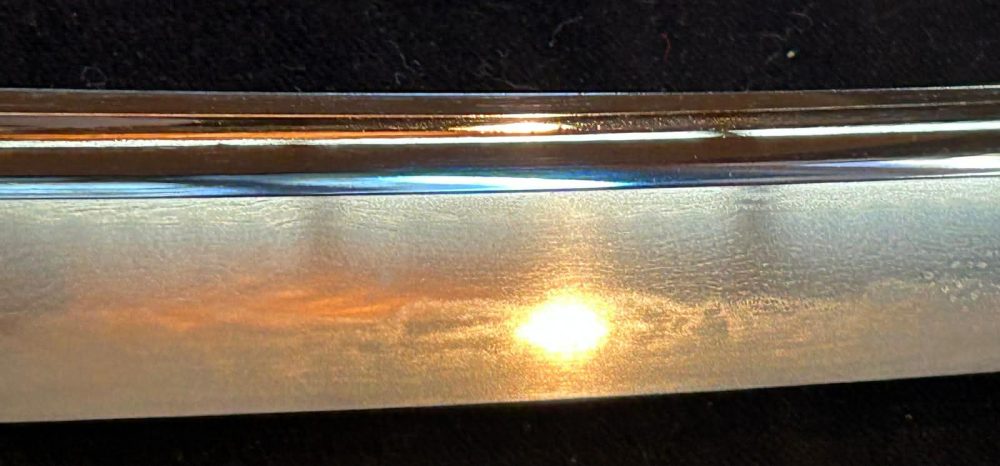
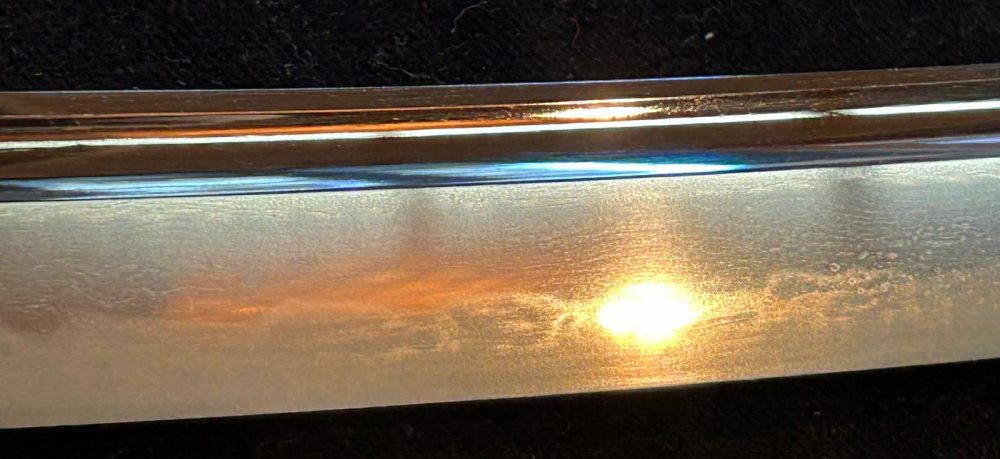
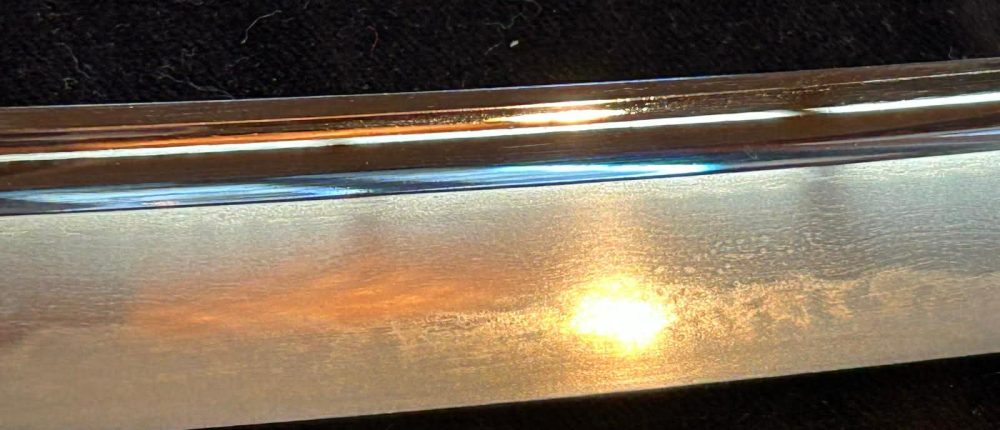
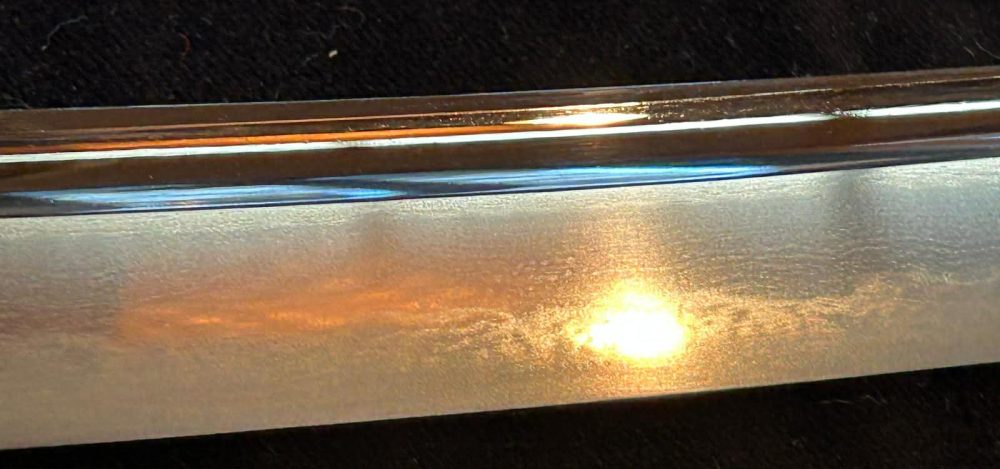
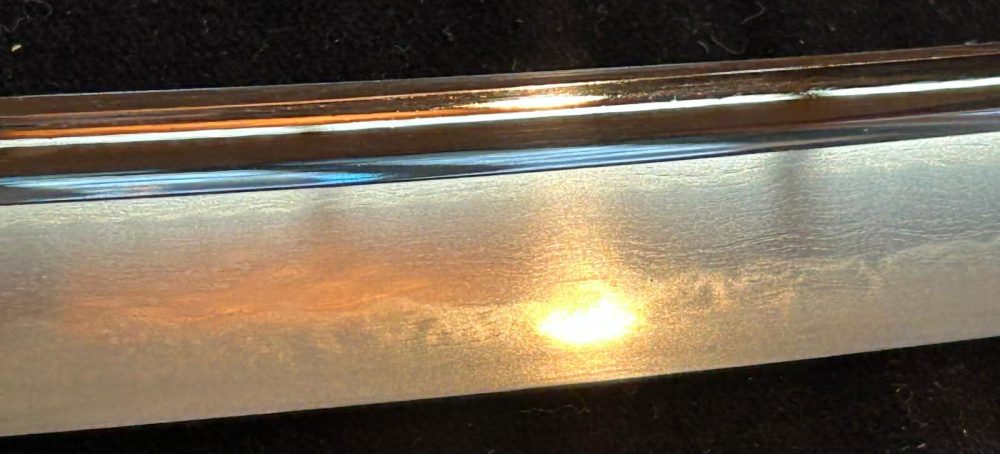
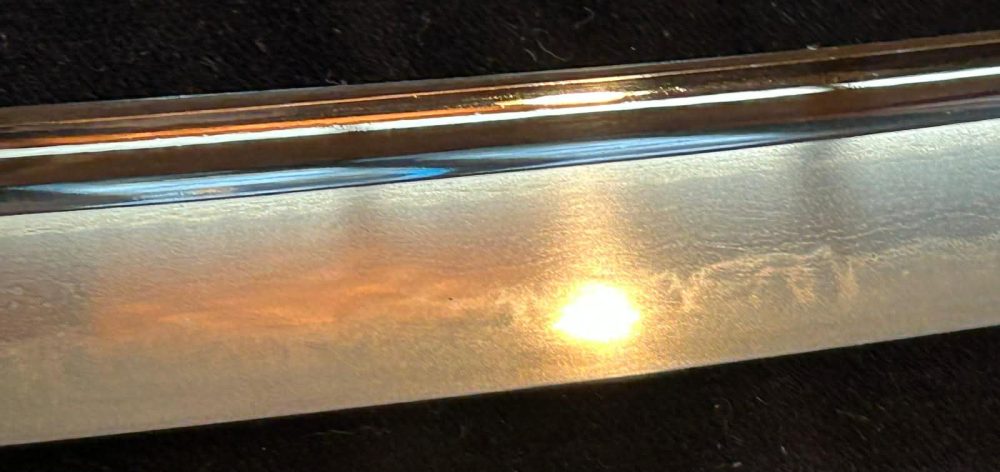
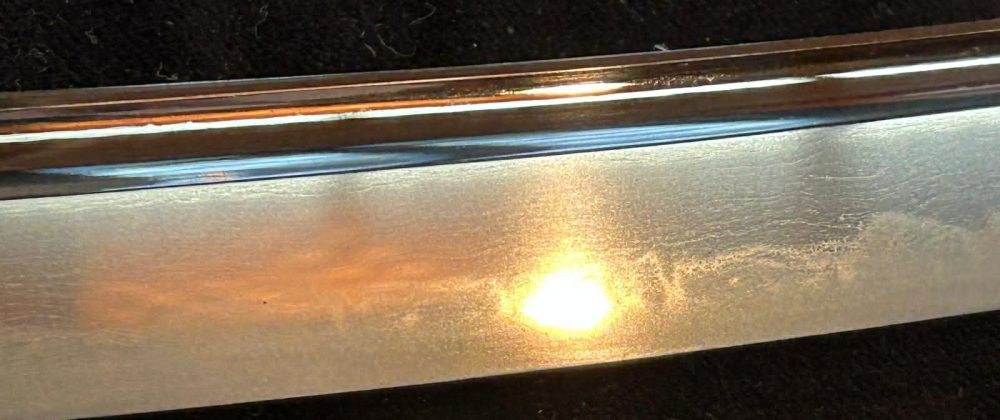
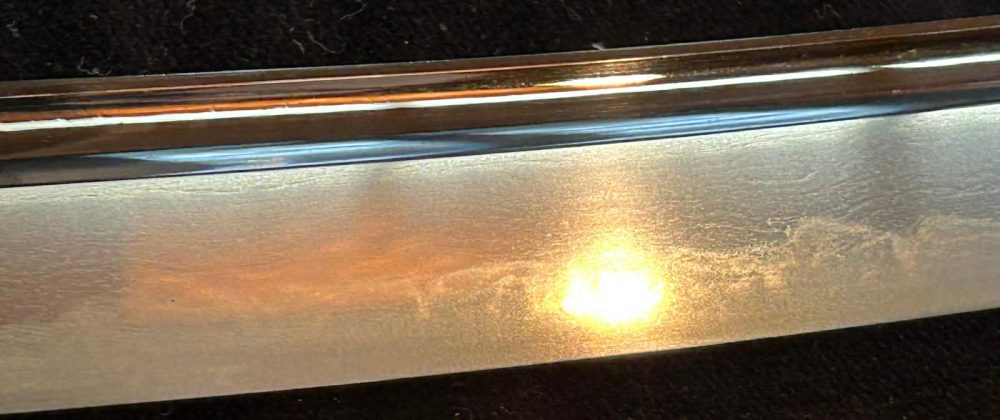
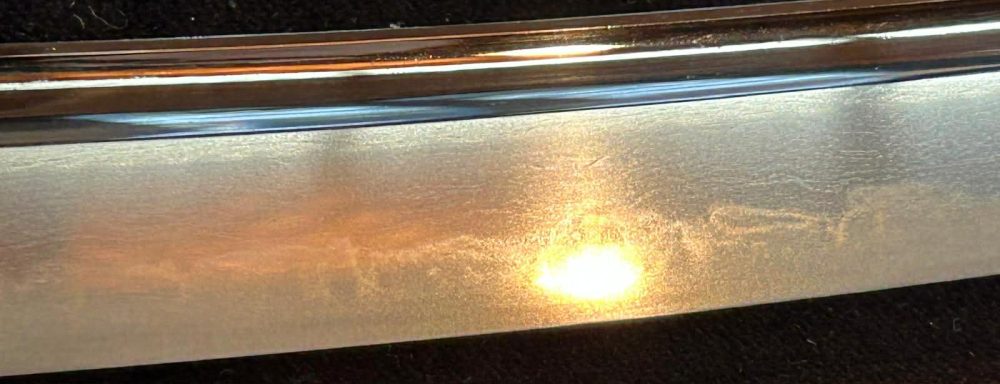
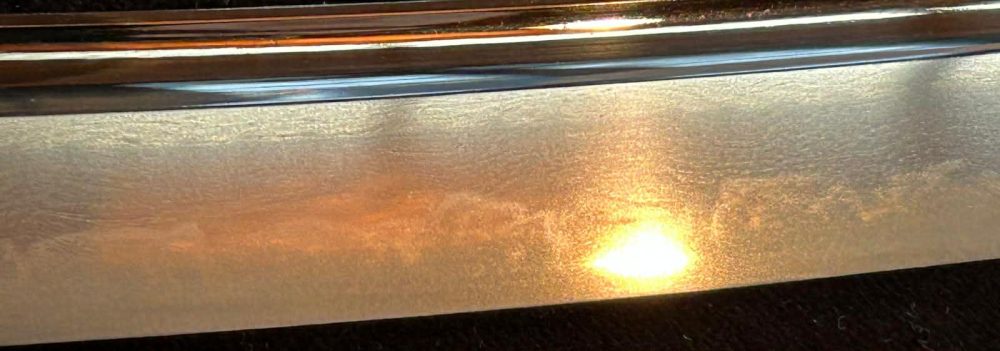
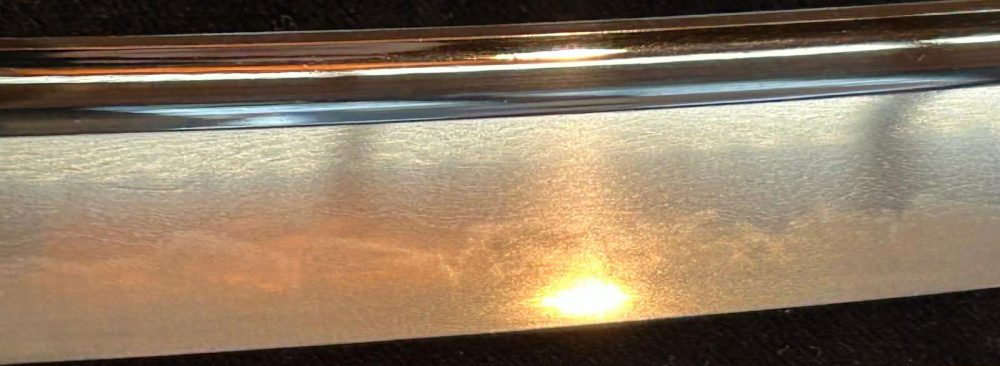
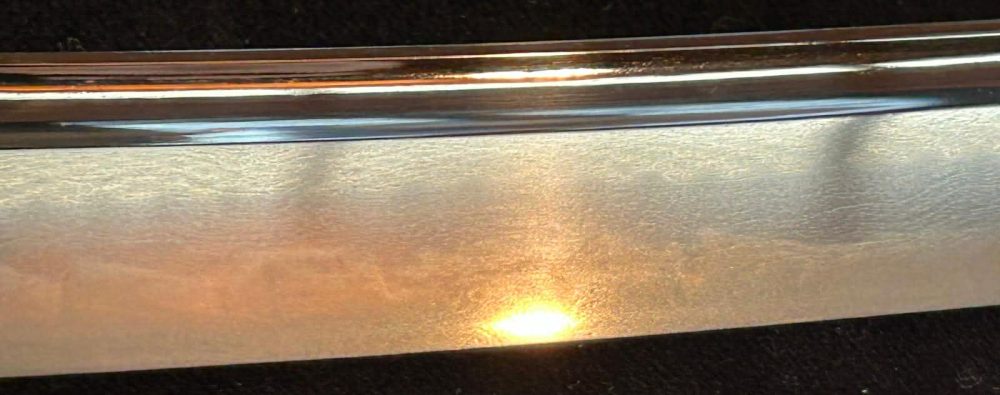
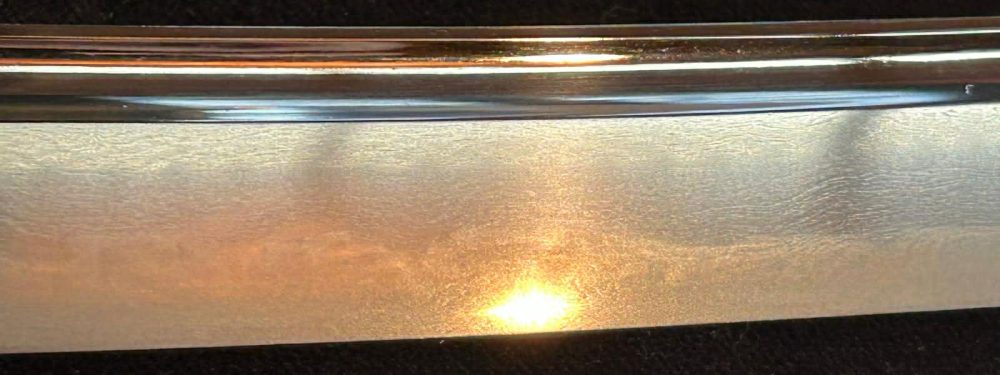
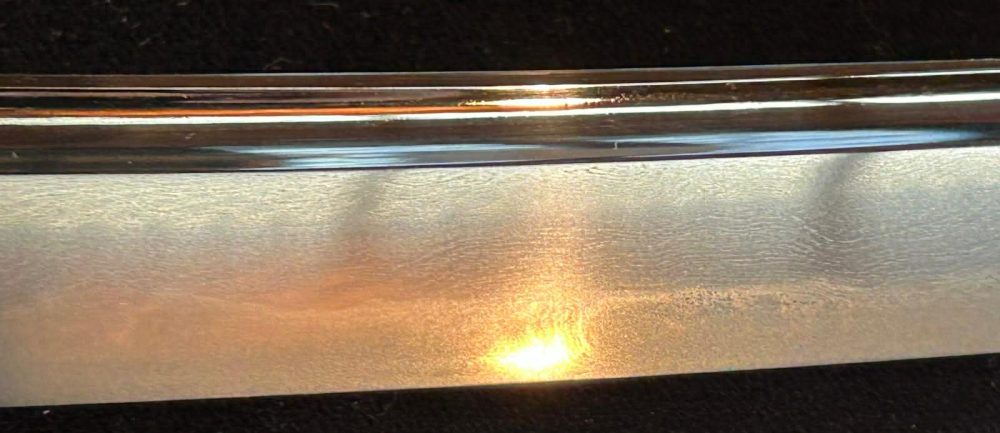
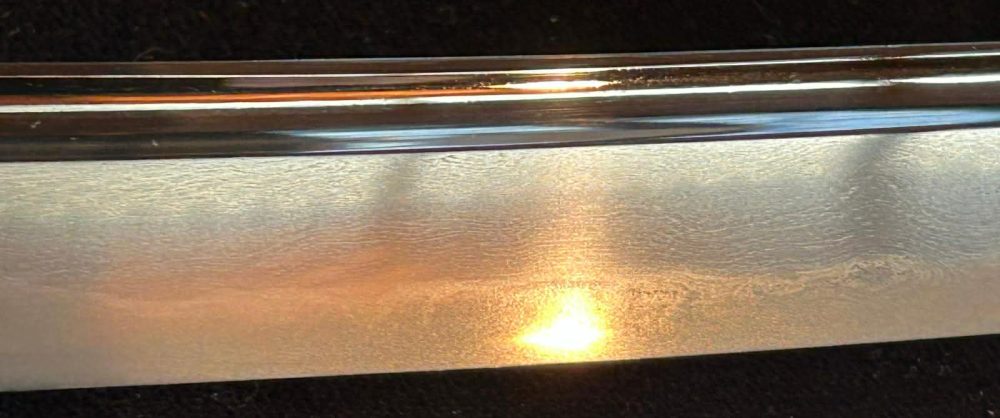
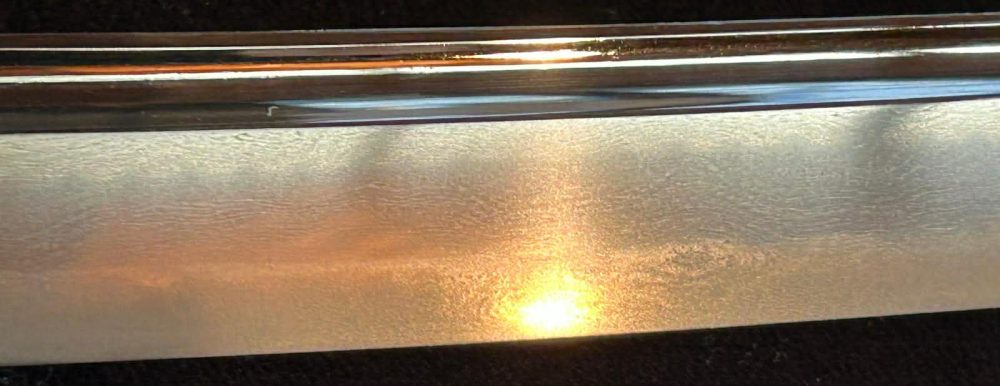
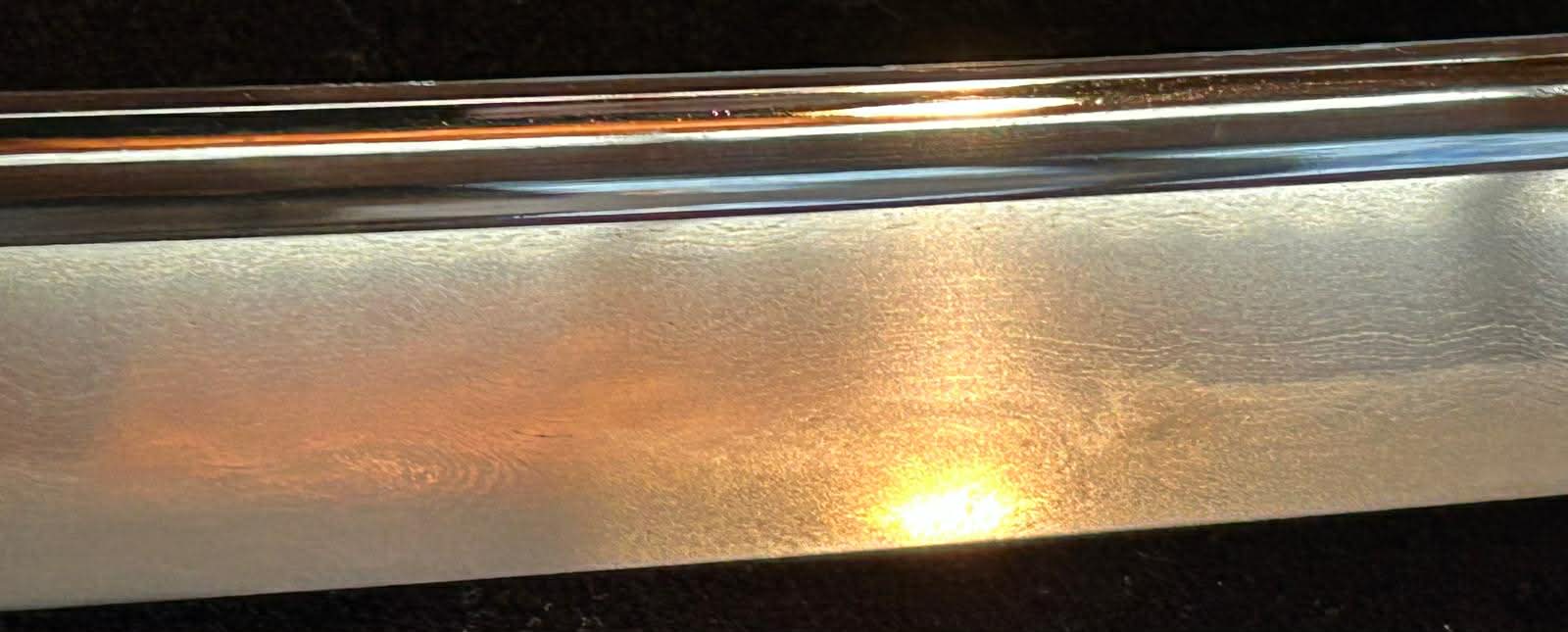
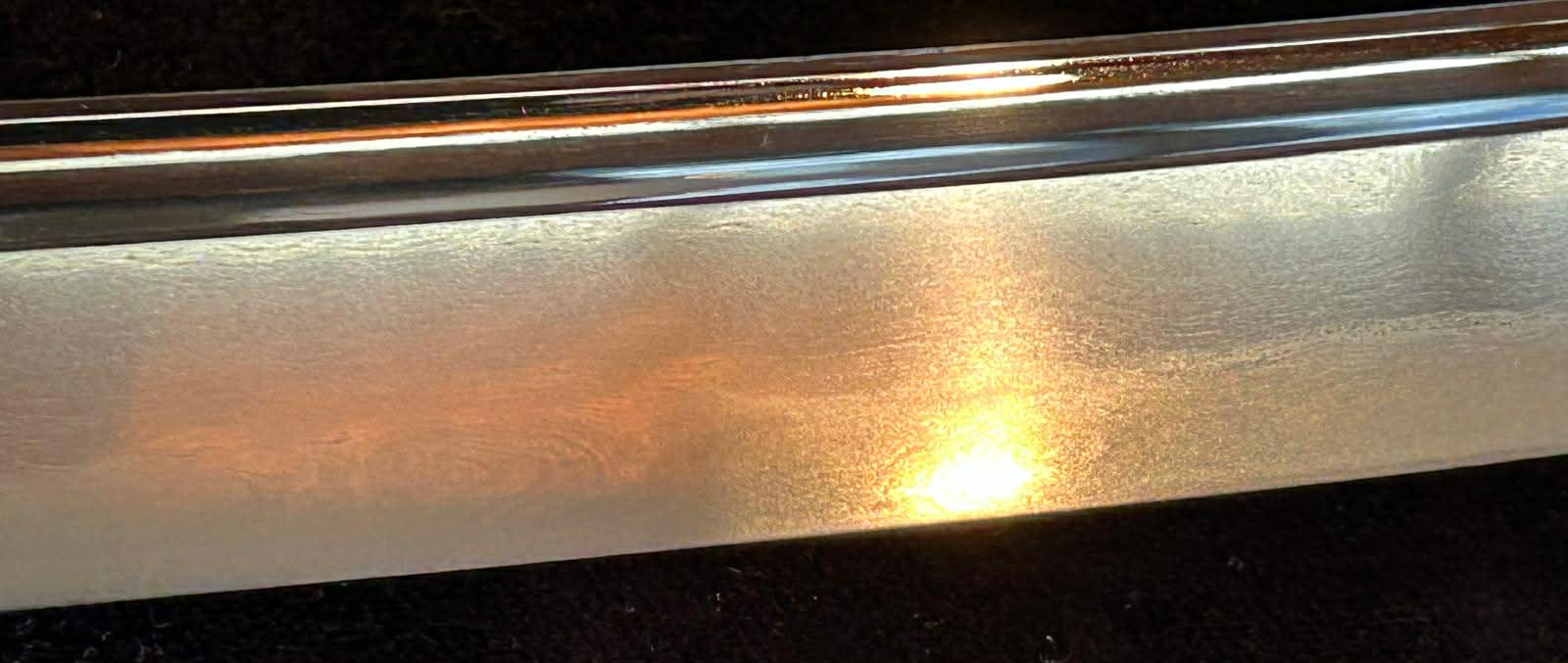
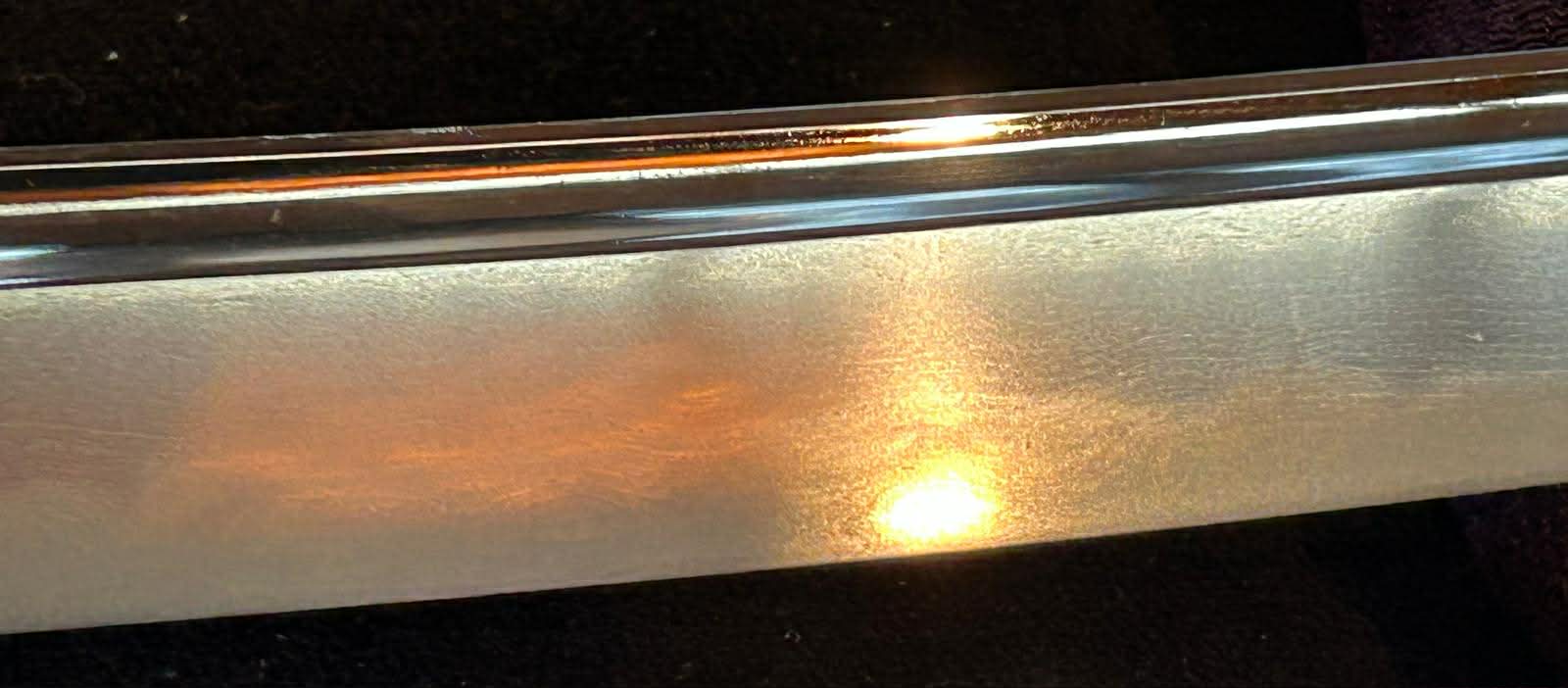
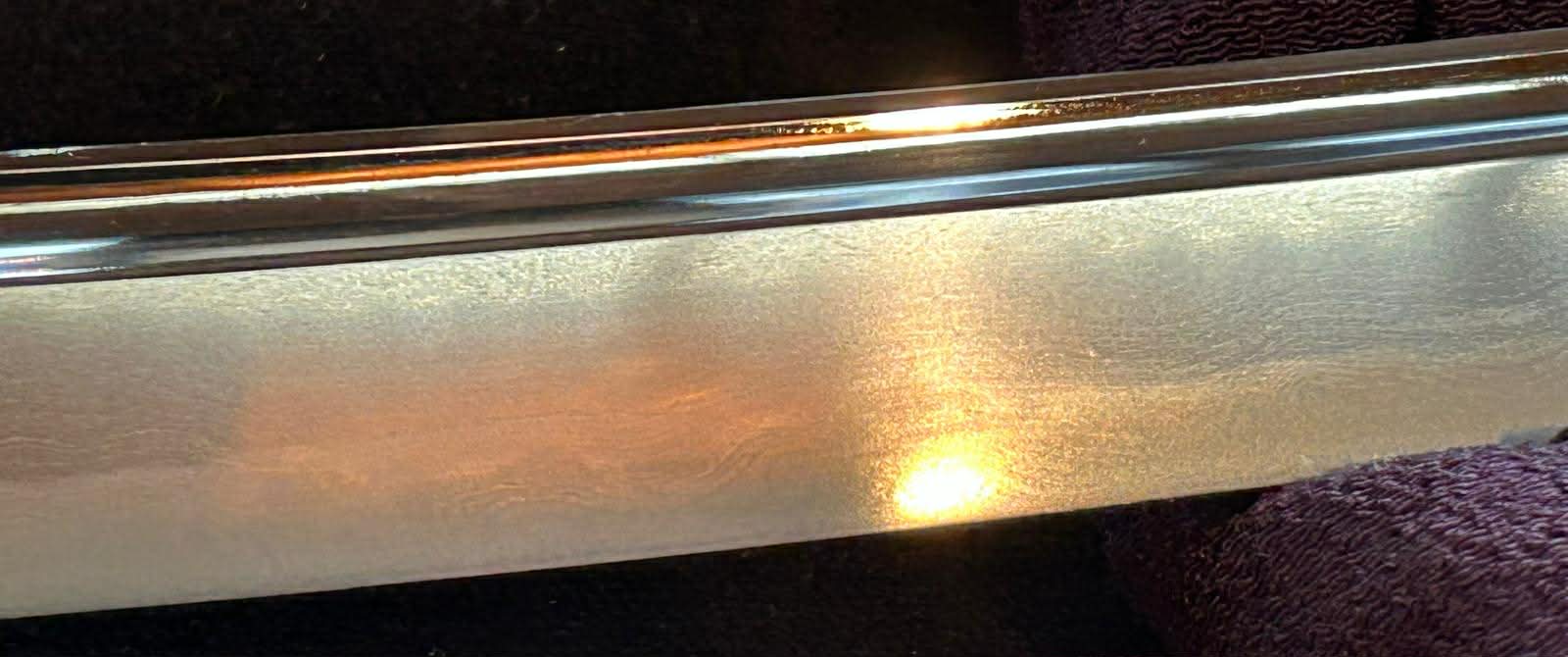
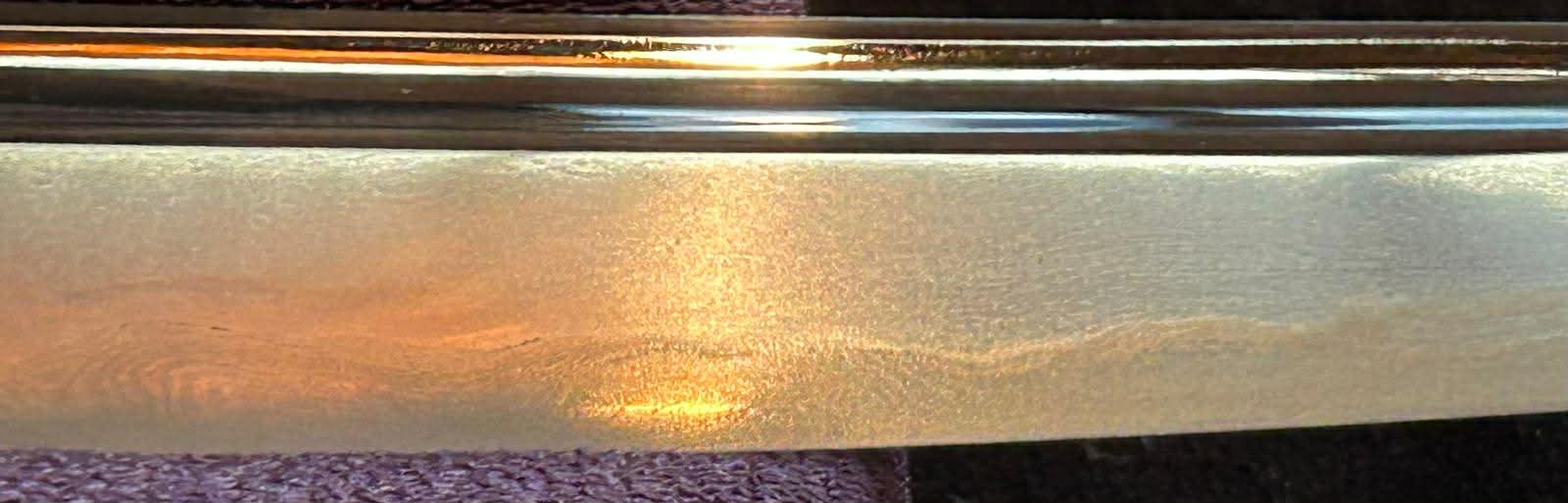
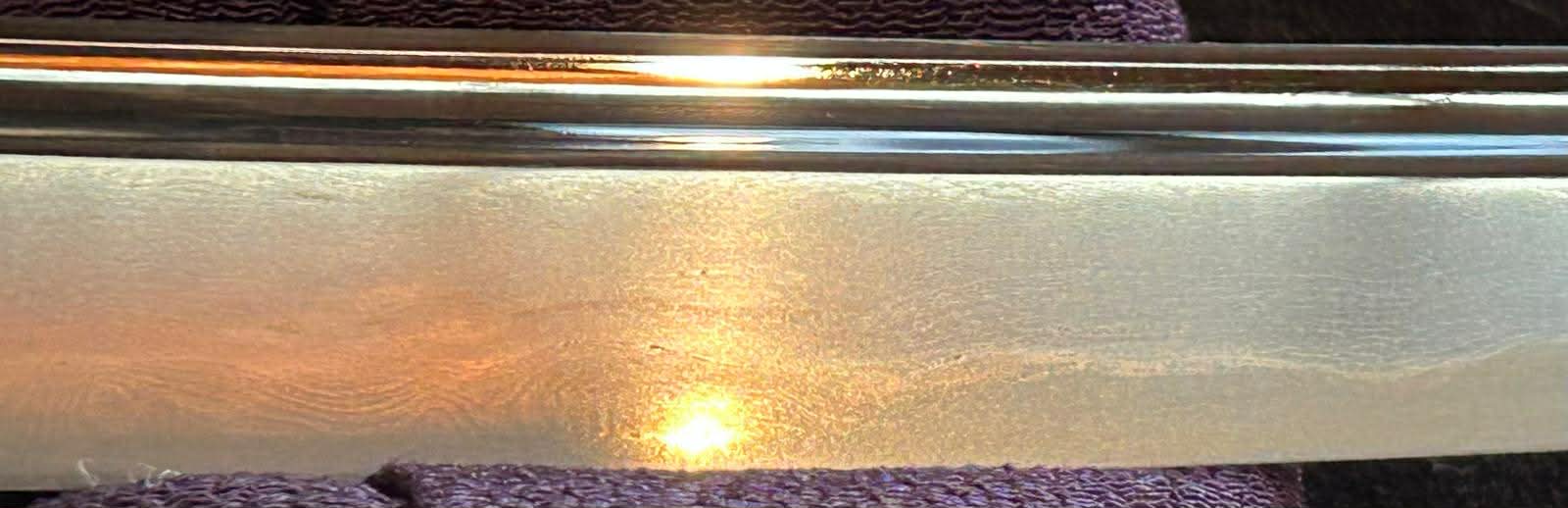
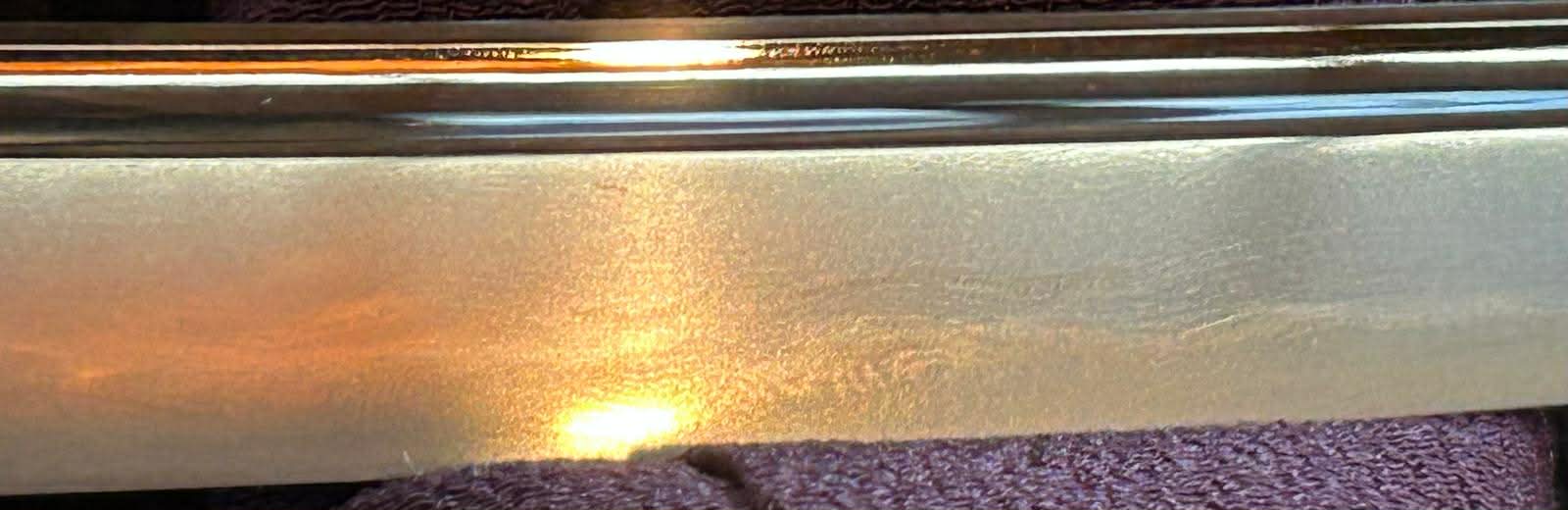
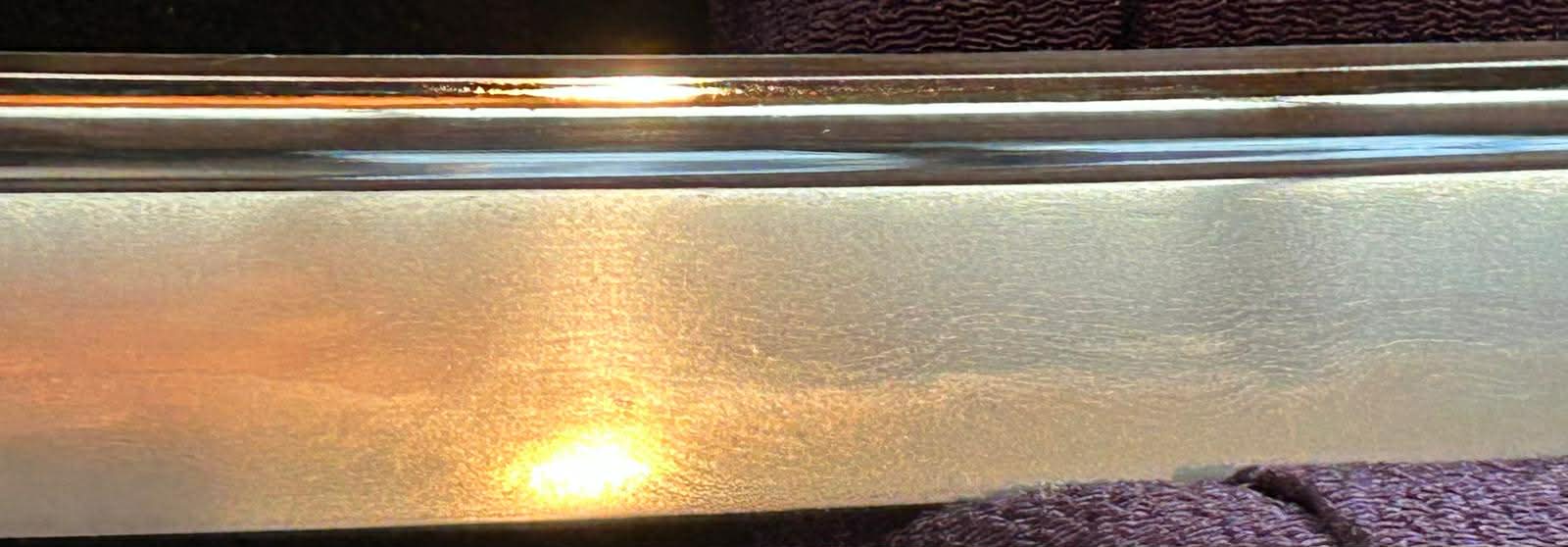
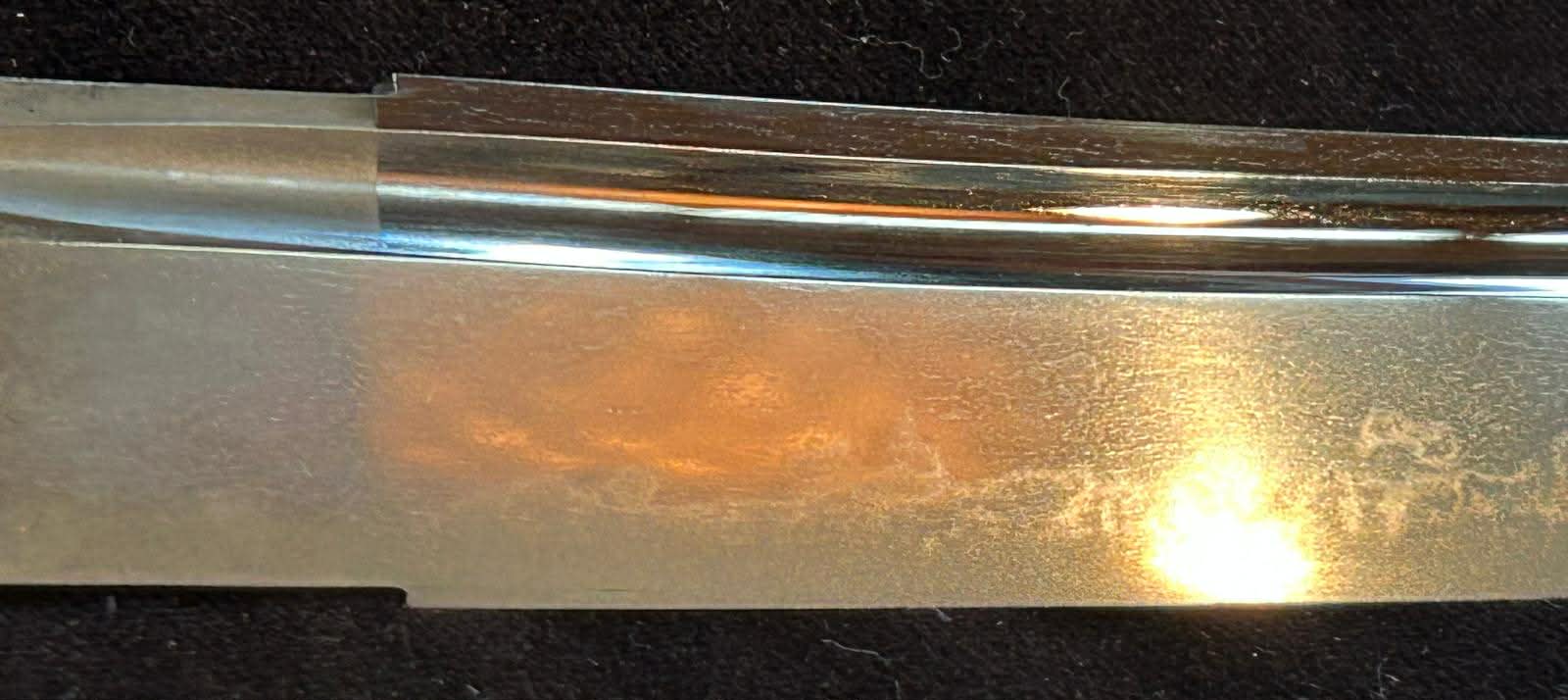
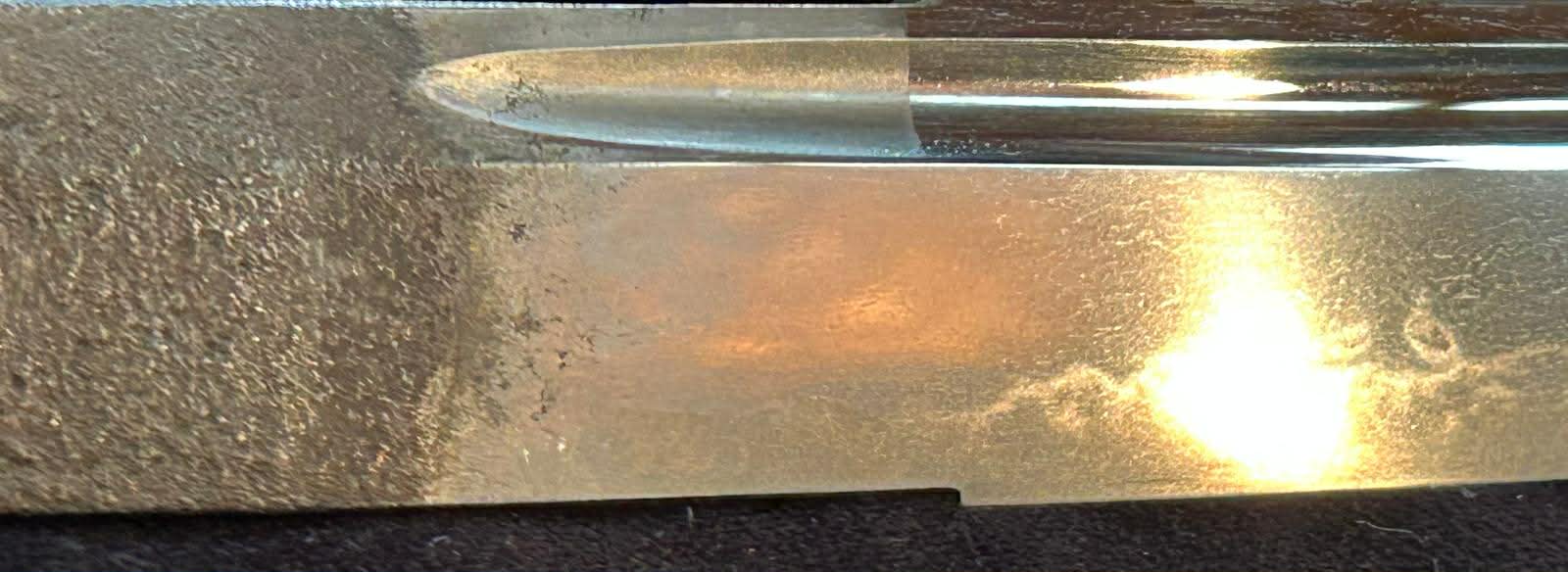
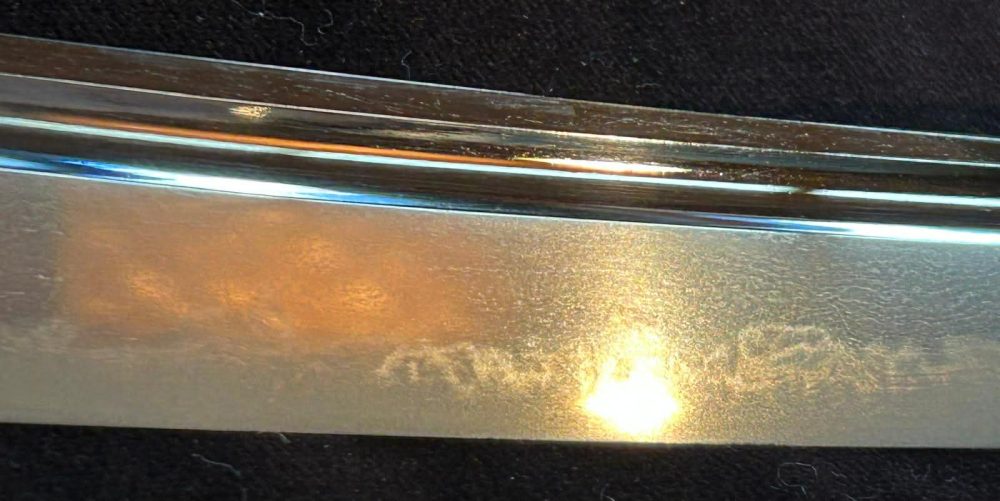
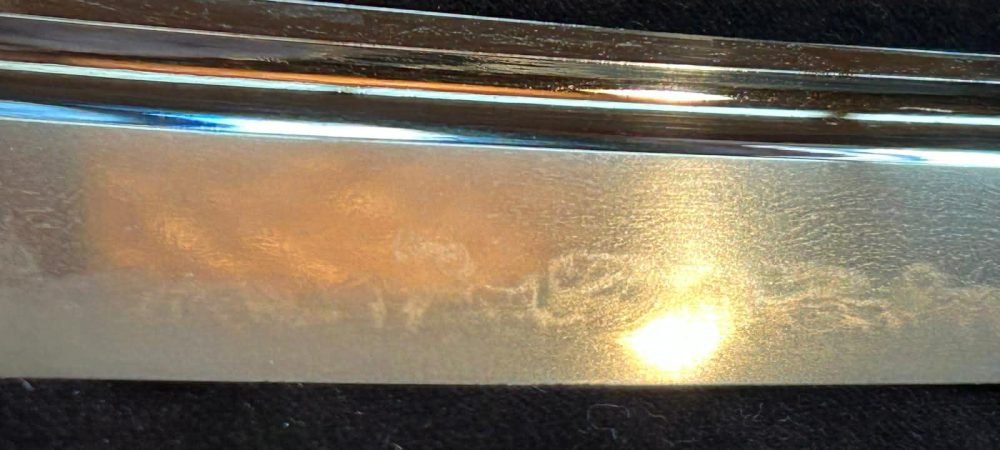
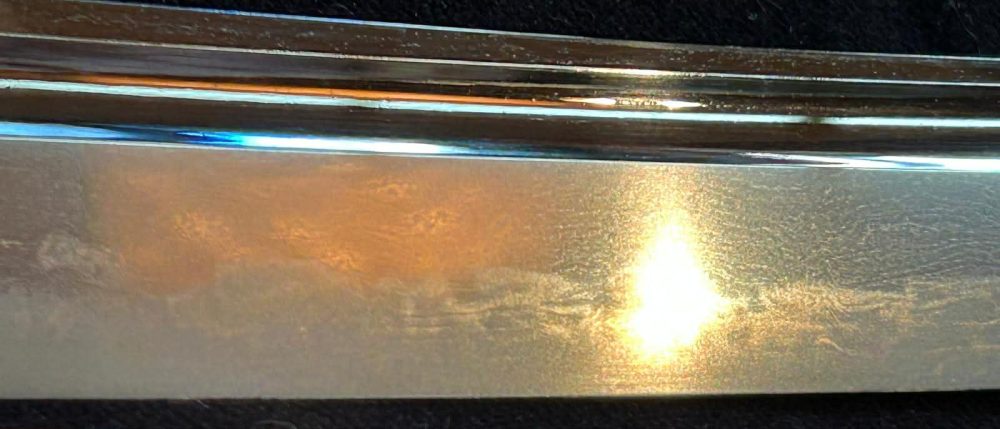
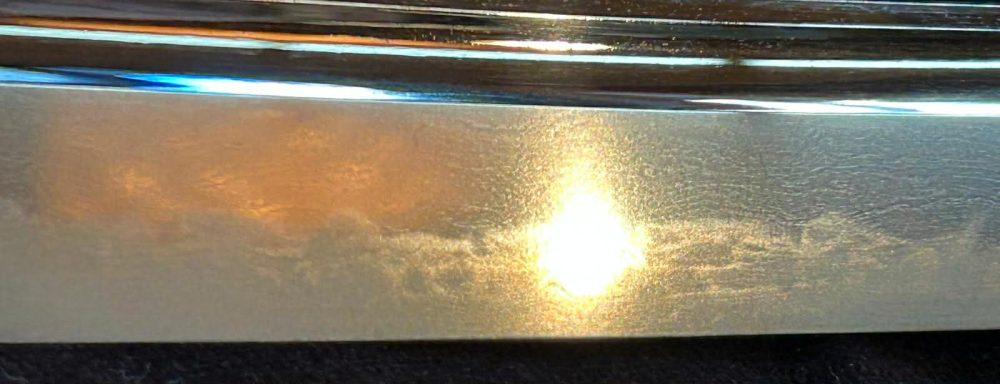
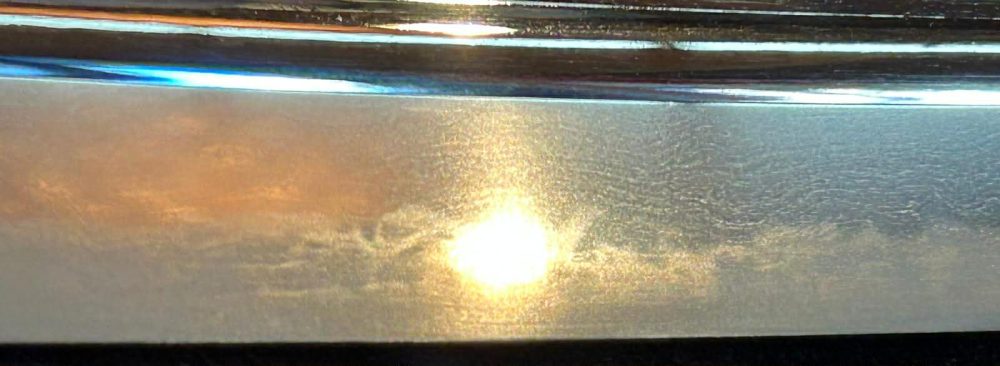
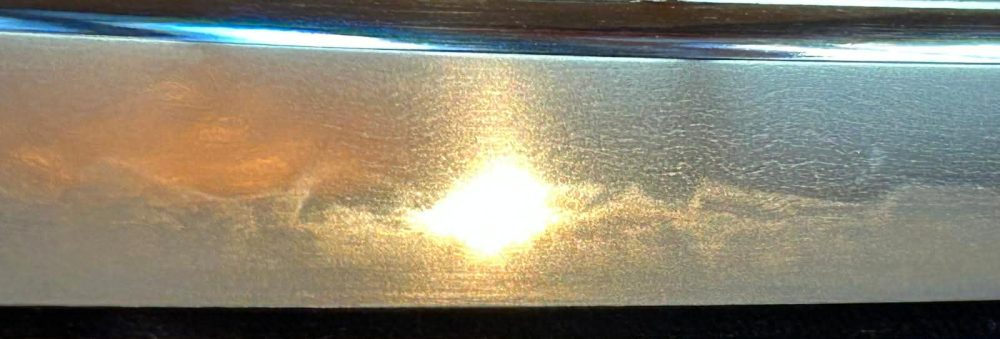
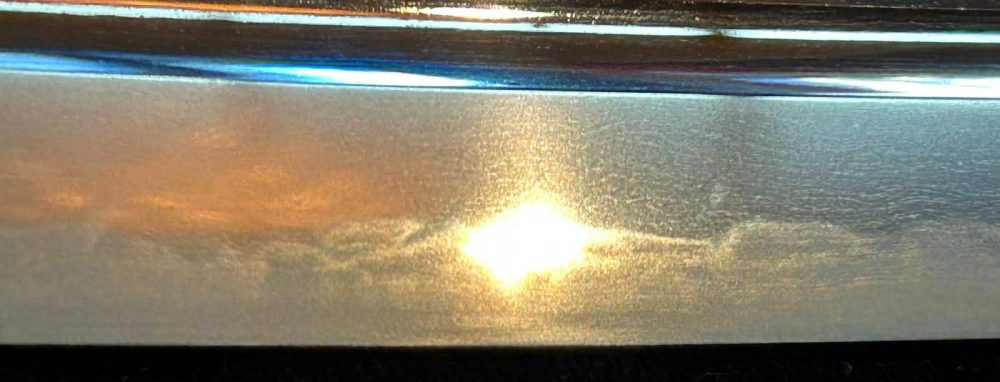
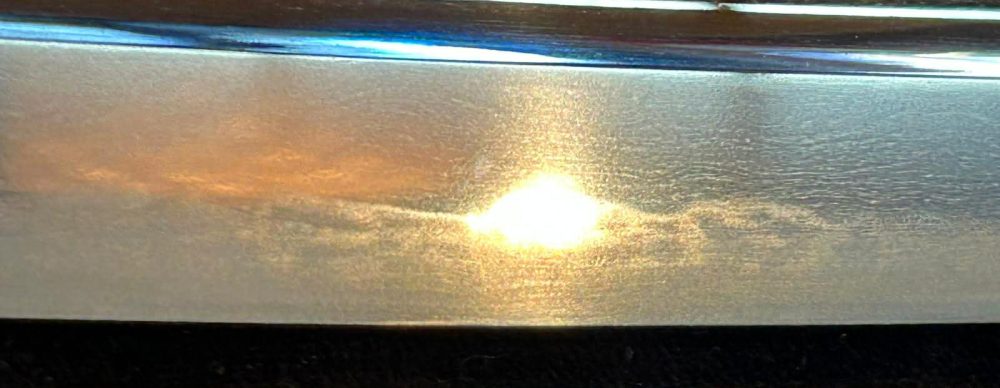
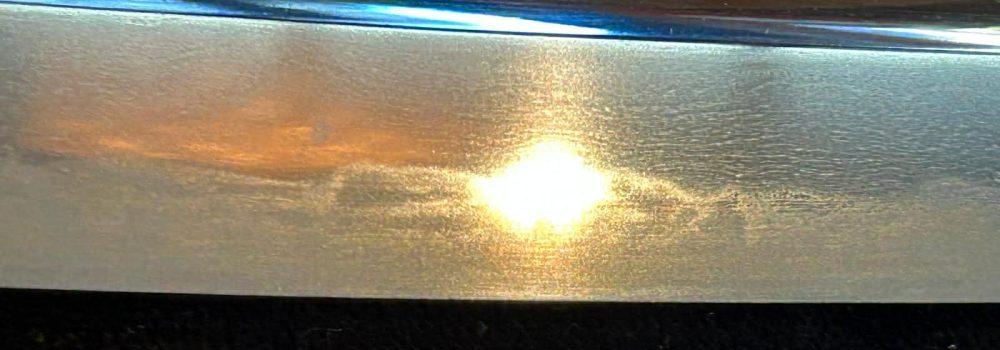
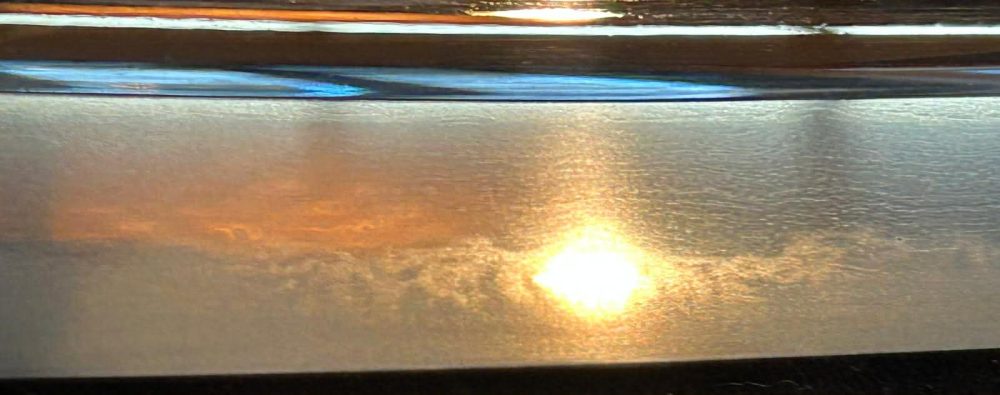
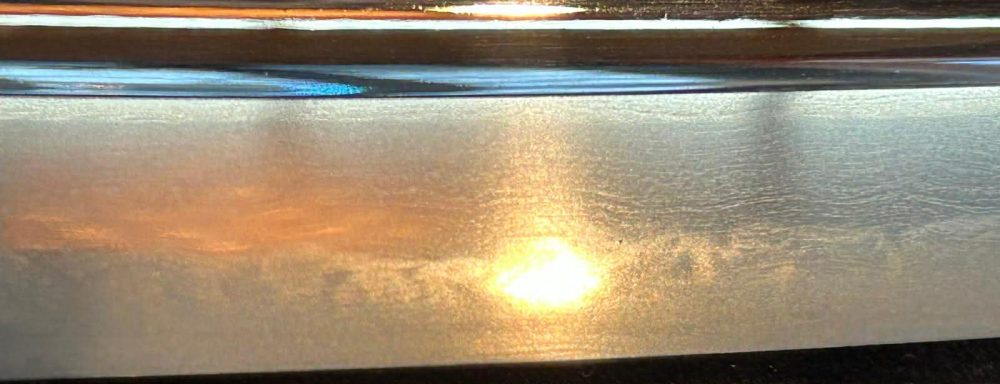
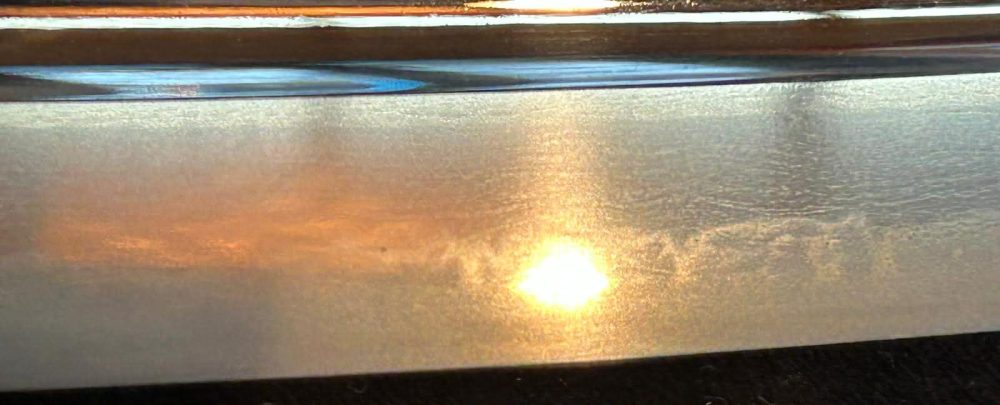
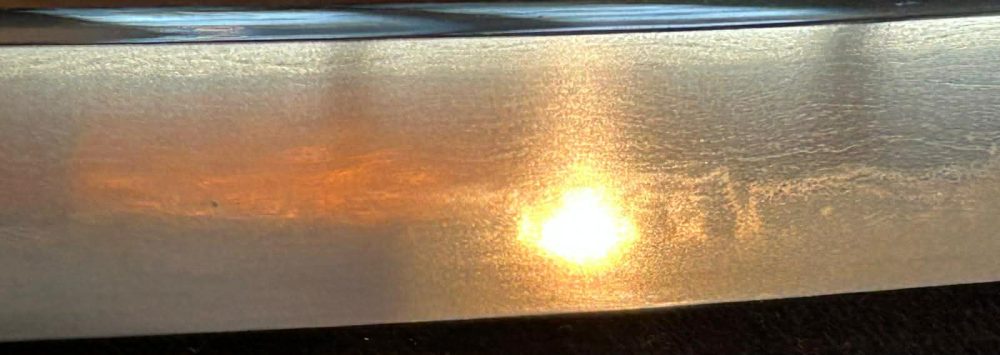
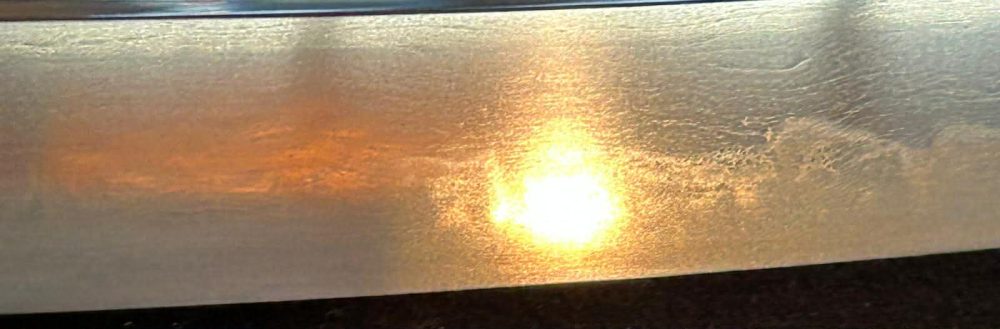
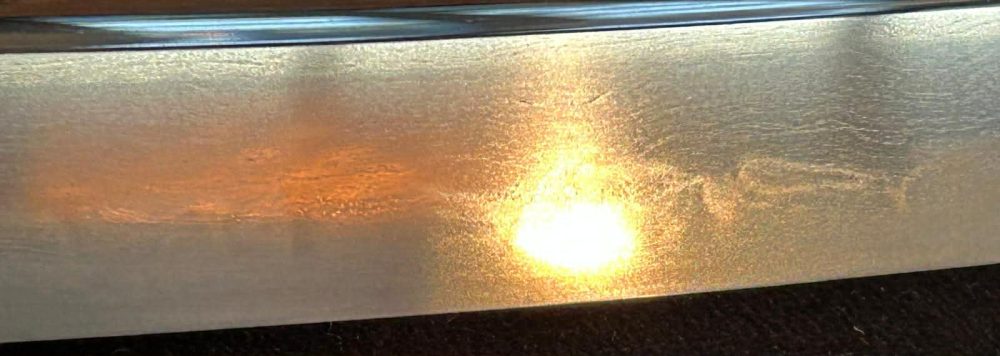
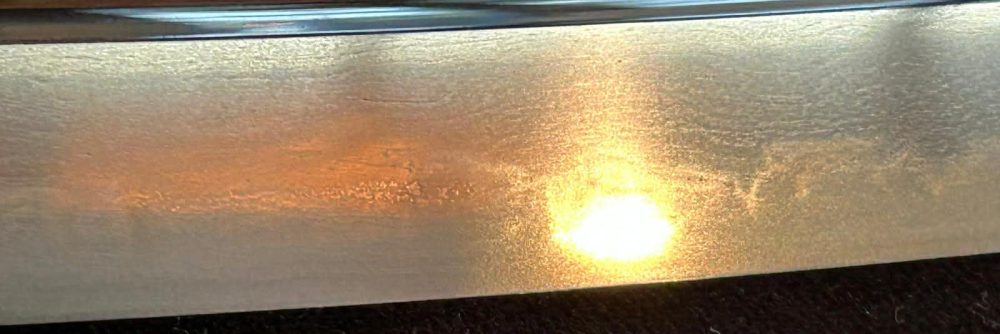
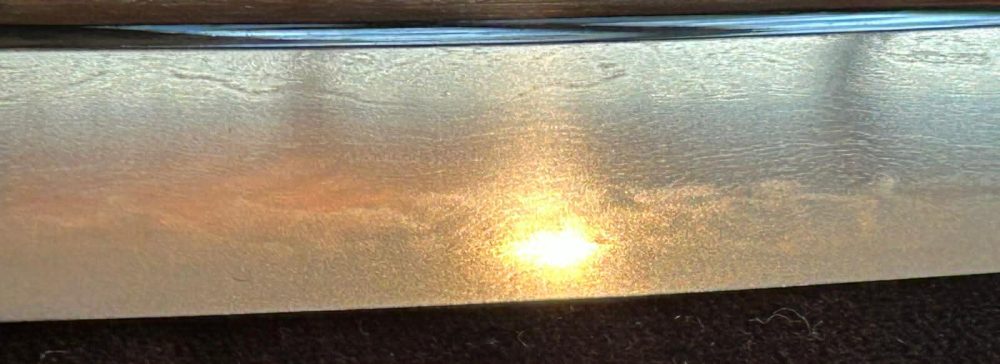
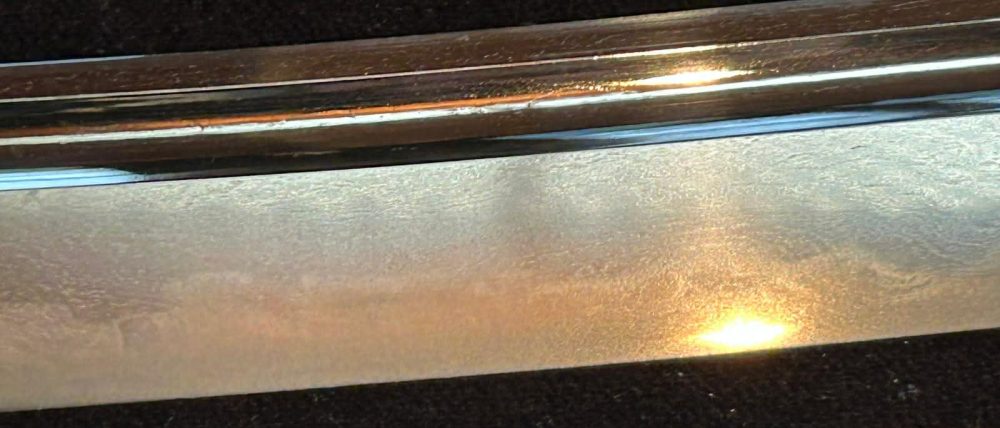
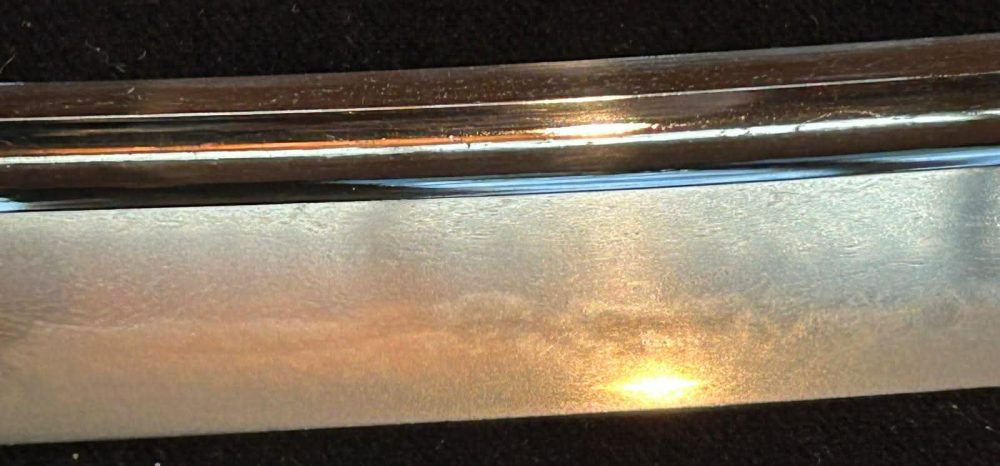
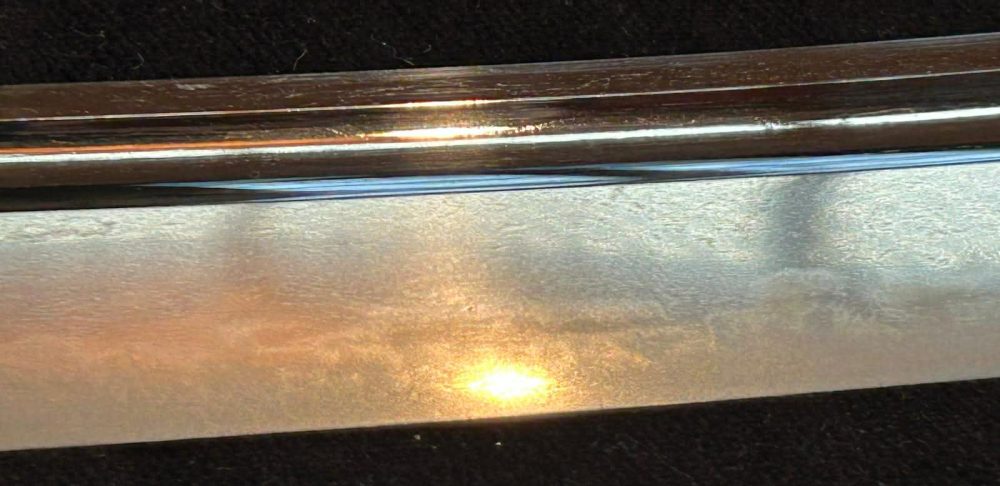
The blade is of the finest quality forging and is superb. The Hamon is a very complex Hamon packed with Hataraki
The Blade comes with Shirasaya with Lengthy Sayagaki by Japans leading appraiser Tanobe Sensei on both sides of the Shirasaya detailing the sword as (A highly tasteful masterwork that combines a classical
approach with refined elegance.)
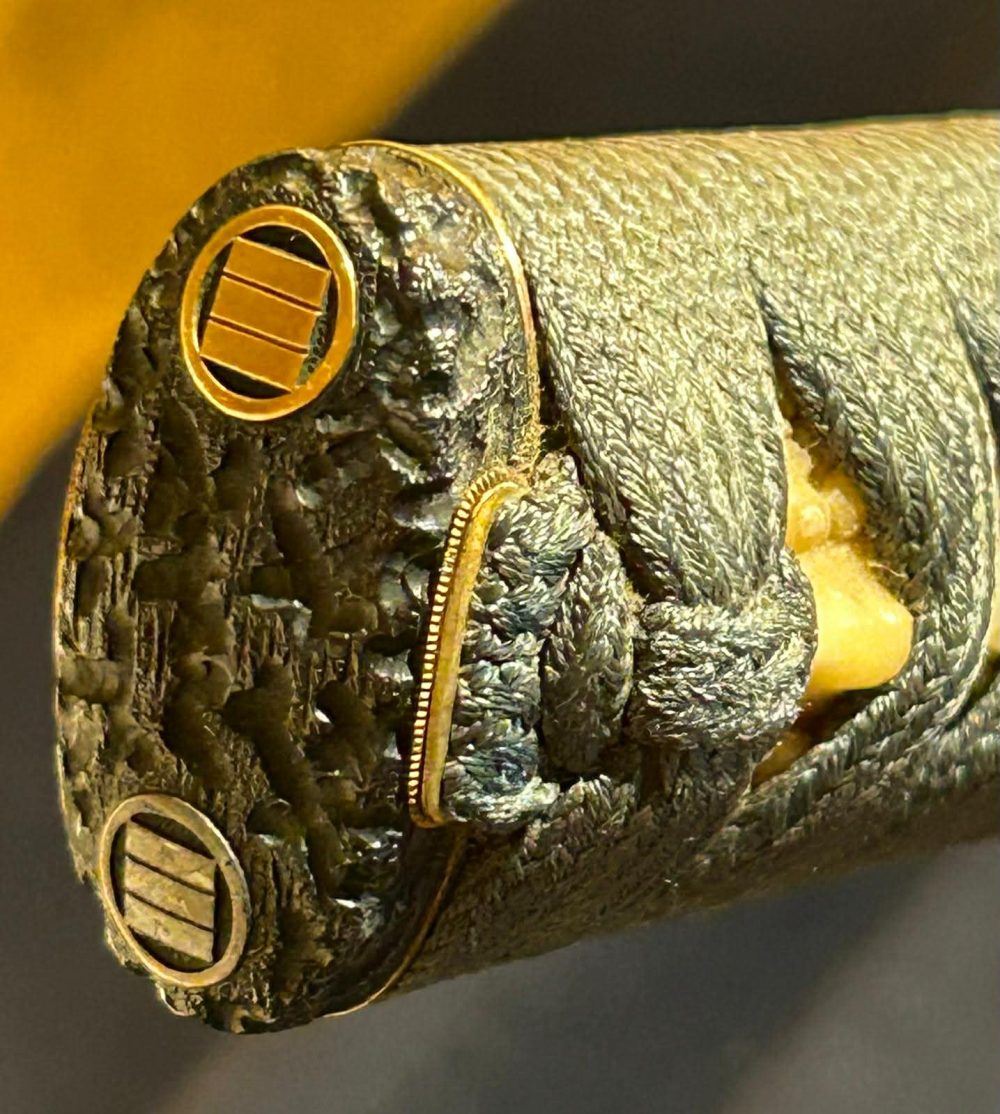
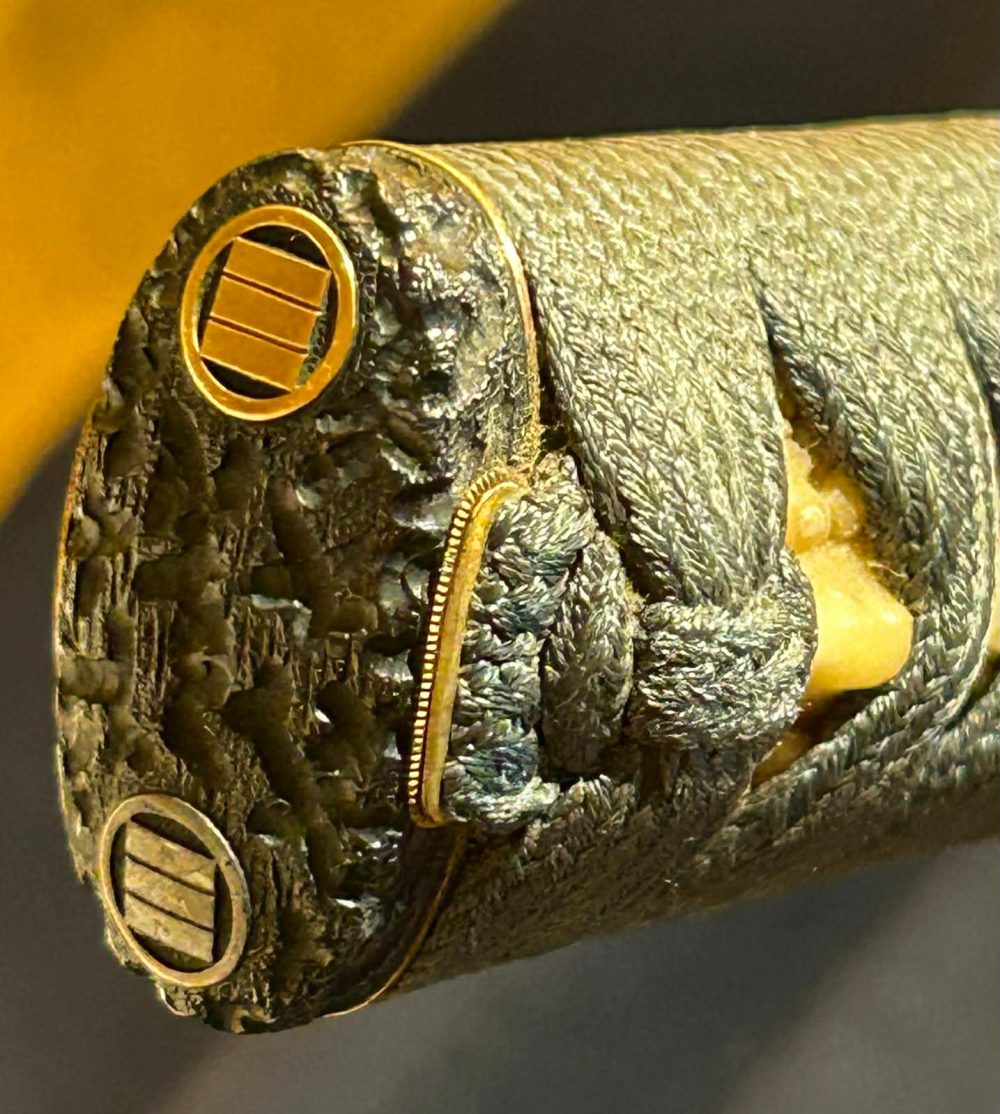
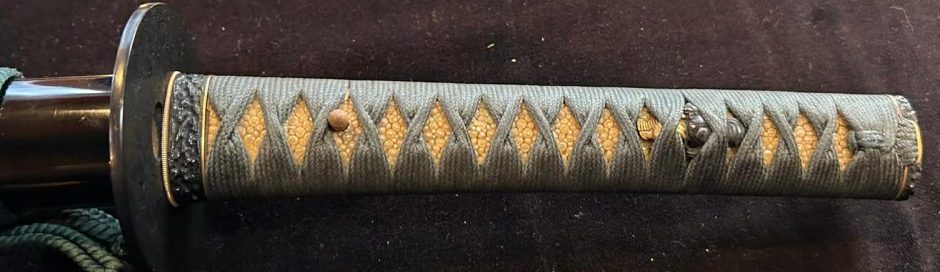
The sword also has Koshirae with Excellent quality Matching Shakudo fittings with Gold Kamon in an Ishime ground.
Jūyō-Tōken at the 70th Jūyō Shinsa from November 6, 2024
Katana, mumei: Ayanokōji Sadayoshi (綾⼩路定吉)
Measurements
Tamura Ken (⽥村健)
Nagasa 70.7 cm, sori 2.6 cm, motohaba 2.7 cm, sakihaba 1.9 cm, kissaki-nagasa 3.2 cm, nakago-nagasa
20.4 cm, nakago-sori 0.3 cm
Description
Keijō: shinogi-zukuri, iori-mune, normal mihaba, relatively noticeable taper, moderate kasane,
plenty of hira-niku, deep toriizori, chū-kissaki
Kitae: itame that is mixed with nagare and that features ji-nie and fine chikei
Hamon: hiro-suguha-chō in nie-deki that is mixed with ko-chōji, ko-midare, many angular elements,
plenty of ashi, Kyō-saka-ashi, and yō, and with tobiyaki, yubashiri, and an abundance of kinsuji and
sunagashi
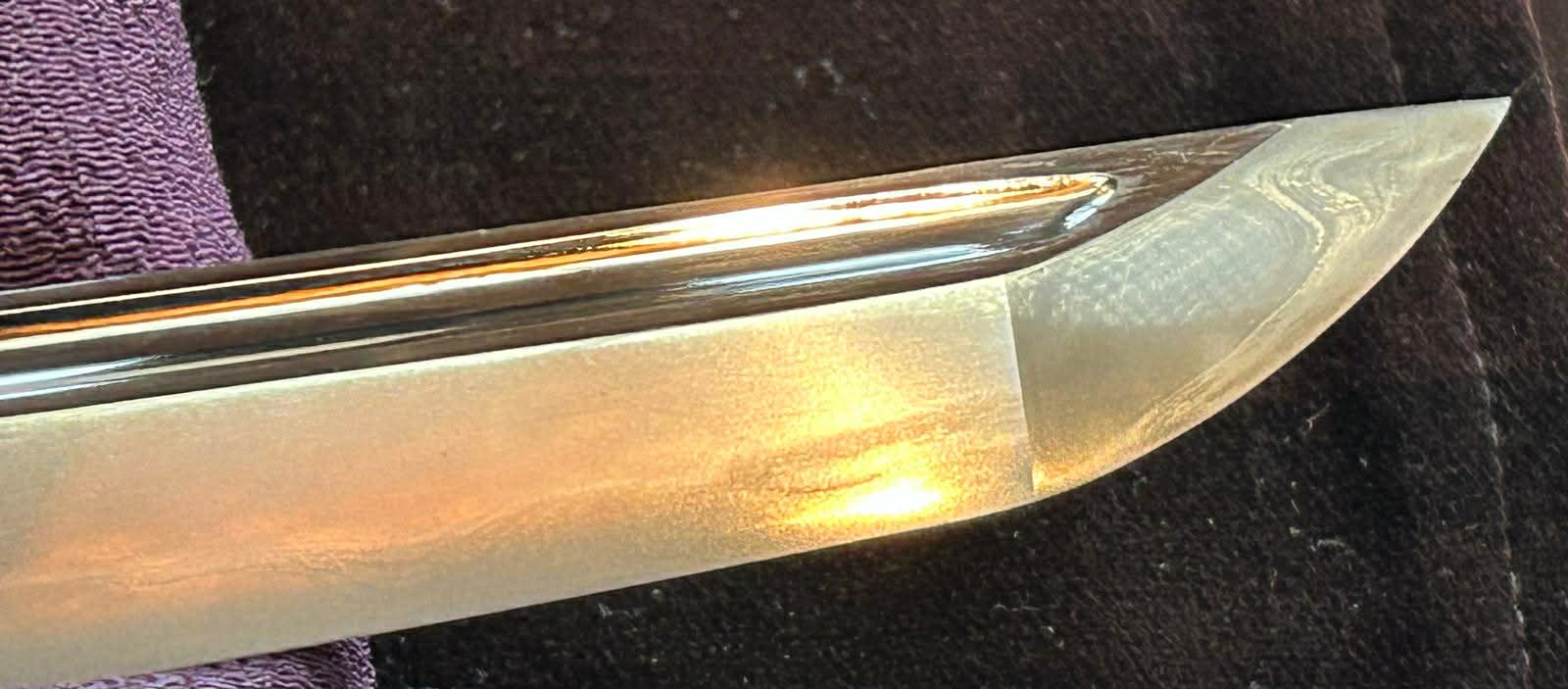
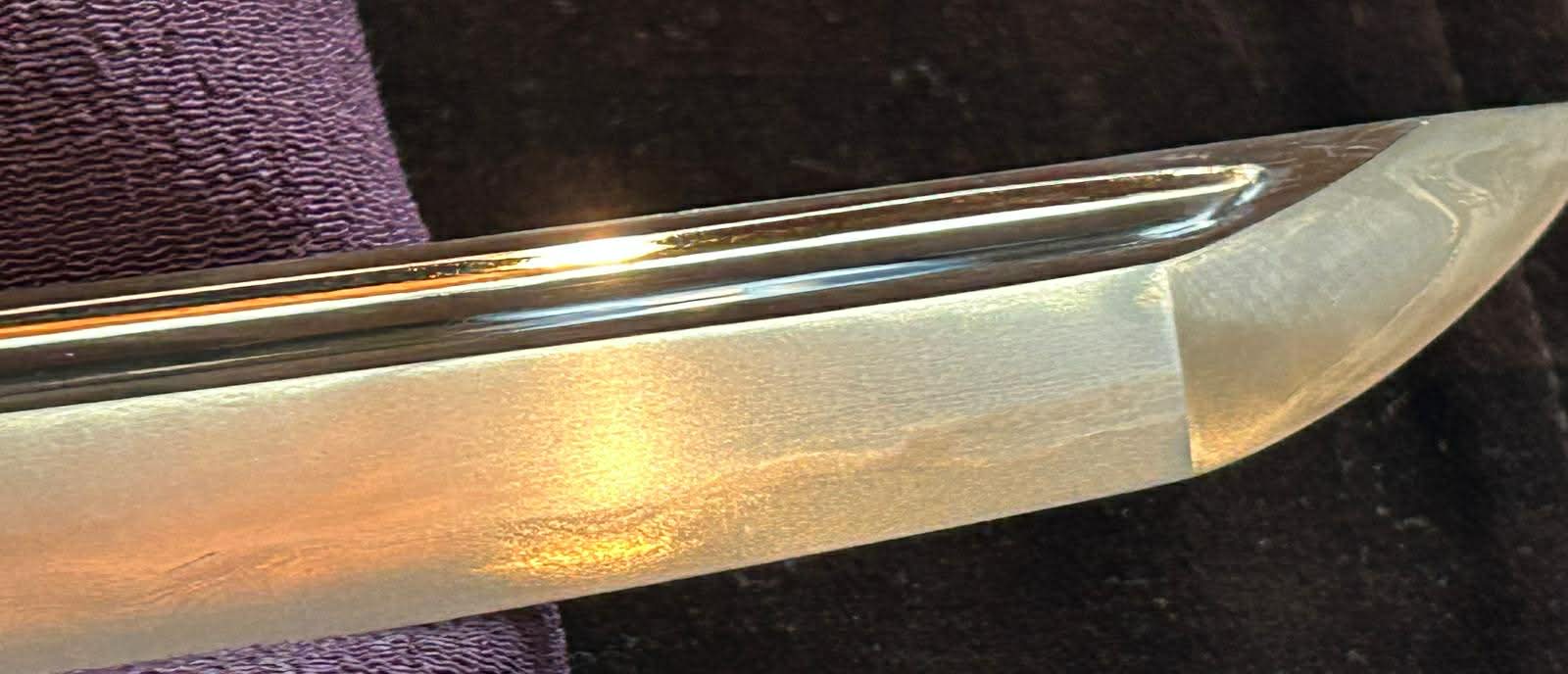
Bōshi: prominently midare-komi with much hakikake and tending to kaen
Horimono: on both sides a bōhi that runs as kaki-nagashi into the tang
Nakago: ō-suriage, kurijiri, gently slanting katte-sagari yasurime, two mekugi-ana, mumei
Explanation
There was a group of swordsmiths comprised of makers like Sadatoshi (定利) and Sadayoshi
(定吉) active along the Ayanokōji (綾⼩路) street in Kyōto. The meikan date Sadatoshi around
Bun’ei (⽂永, 1264–1275), and a tradition has it that he was living in close proximity to Rai
Kuniyuki (来国⾏), and that both smiths made daisaku works for each other. The workmanship of
Sadatoshi and Sadayoshi, however, is more classical than that of Rai Kuniyuki and closer to that
of earlier local Kyōto works (Ko-Kyō-mono) of the Sanjō (三条) and Gojō (五条) schools. That is,
they hardened in a complex midare that is composed of densely arranged and smaller elements
with intermittent small tobiyaki above of the yakigashira that form a kind of nijūba, and that features
a somewhat subdued nioiguchi, which places said smiths earlier than the active period they are
traditionally associated with.
The meikan list Ayanokōji Sadayoshi as son of Sadatoshi and as active around Kōan (弘安,
1278–1288). Signed works of his are rare, and his workmanship and signature style are principally
very similar to that of Sadatoshi, and also some blades of his exist that have a wide mihaba.
This blade has a normal mihaba and a toriizori, and the kitae is an itame that is mixed with nagare
and that features ji-nie and fine chikei. The hamon is a hiro-suguha-chō that is mixed with ko-gunome,
ko-chōji, ko-midare, many angular elements, plenty of ashi, Kyō-saka-ashi, and yō. With this
interpretation, plus the abundance of ha-nie and the hataraki along the habuchi, the blade can be
attributed to Sadayoshi. With the great variety of said hataraki along the habuchi, this blade
provides many highly tasteful aesthetic highlights.
Jūyō No. 15068
Certificate
Katana, mumei: Ayanokōji Sadayoshi (綾⼩路定吉)
Measurements: nagasa 70.7 cm, sori 2.6 cm
Shape: shinogi-zukuri, iori-mune, normal mihaba, relatively noticeable taper, deep toriizori, chū
kissaki
Kitae: itame that is mixed with nagare and that features ji-nie and fine chikei
Hamon: hiro-suguha-chō in nie-deki that is mixed with ko-chōji, ko-midare, angular elements, ashi,
Kyō-saka-ashi, yō, tobiyaki, yubashiri, kinsuji, and sunagashi
Bōshi: midare-komi with hakikake and tending to kaen
Horimono: on both sides a bōhi
Nakago: ō-suriage, gently slanting katte-sagari yasurime, two mekugi-ana
According to the result of the Shinsa committee of our society we judge this work as
authentic and rank it as Jūyō Tōken.
November 6, 2024
[Juridical Foundation] Nihon Bijutsu Tōken Hozon Kyōkai, NBTHK
[President] Sakai Tadahisa (酒井忠久)
Tōrokushō Register Information:
Registered with: Tōkyō Board of Education
Registration No.: 326554
Registration date: July 15, 2023
Below Tanobe Sensei Sayagaki and English Translation
城州綾⼩路定吉
⼤磨上無銘也笠⽊反⾼ク猪⾸鋒ノ凜トシタル佇マイヲ⾒セ板⽬ガ総体ニ流レテ約ミ地沸ヲ敷ク
肌合ニ廣直刃調ニ⼩丁⼦・⼩互乃⽬・⼦乱交ジリノ刃⽂ヲ焼キ乱間近ク⼩模様ヲ呈シ⾜・葉繁
ク⼩沸厚ク輝キ佩表ハ京逆⾜トナリ更ニ焼頭ニ⼩サナ⾶焼ヲ頻リニ加ヘ帽⼦ハ掃掛ケテ⽕炎⾵
トナルナド古様サト雅サヲ備フル味ワイ深キ優品也
刃⻑弐尺参⼨三分有之
定吉ハ定利ノ近親者デ⼀説ニ⼦トモ云フ有銘作ハ尠ナク中ニ本⼑ニ強ク結バレル作⾵ノ者ガ存
在ス猶本⼑ヲ嘱⽬スレバ定利ヤ来国⾏ニモ近キトコロアレド前者ハ焼幅ノ點デ後者ハ帽⼦ノ状
デ相違ガミラレ
峕令和癸卯暦葉⽉穀旦探⼭観⽽誌之「花押」
Jōshū Ayanokōji Sadayoshi
Ō-suriage mumei nari. Kasagi-sori takaku inokubi-kissaki no rin to shitaru tadazumai o mise itame ga sōtai
ni nagarete tsuzumi ji-nie o shiku hada-ai ni hiro-suguha-chō ni ko-chōji, ko-gunome, ko-midare majiri no
hamon o yaki midare machikaku ko-moyō o tei-shi ashi, yō shigeku ko-nie atsuku teruki haki-omote wa Kyō
saka-ashi to nari sara ni yakigashira no chiisa na tobiyaki o shikiri ni kuwae bōshi wa hakikake kaen-fū to
naru nado koyō-sa to ga-sa o sonauru ajiwai fukaki yūhin nari.
Hachō ni-shaku san-sun san-bu kore ari
Sadayoshi wa Sadatoshi no kinshinsha de ichisetsu ni ko to mo iu yūmei saku wa sukunaku naka ni hontō
ni tsuyoku musubareru sakufū no mono ga sonzai-su nao hontō o shokumoku-sureba Sadatoshi ya Rai
Kuniyuki ni mo chikaku tokoro are do zensha wa yakihaba no ten de kōsha wa bōshi no jō de sōi ga mirare.
Toki ni Reiwa mizunoto-udoshi hazuki kokutan Tanzan kore o mite shikamo shirushite kaō
Ayanokōji Sadayoshi from Yamashiro province
This blade is ō-suriage mumei. It is of a magnificent shape with a deep kasagi/toriizori and an ikubi
kissaki and displays a forging structure in a dense itame that tends along the entire blade to nagare
and that features ji-nie. The hamon is a hiro-suguha-chō with plenty of sparkling ko-nie that is mixed
with ko-chōji, ko-gunome, and ko-midare. The midare elements are densely arranged and small
dimensioned, and also many ashi and yō, on the haki-omote side some Kyō-saka-ashi appear, and
above of the yakigashira many smallish tobiyaki can be seen. This combined with the bōshi tending
with its hakikake to kaen, we have here a highly tasteful masterwork that combines a classical
approach with refined elegance.
Blade length ~ 70.6 cm
Sadayoshi was closely related to Ayanokōji Sadatoshi, and one theory has it that he was actually
his son. Signed works of his are rare, but some do exist that are very close in style to this blade.
There are also similar blades by Sadatoshi and Rai Kuniyuki, but which differ in terms of the
width of the yakiba in case of the former, and in terms of the interpretation of the bōshi in case of
the latter.
Examined and written by Tanzan [Tanobe Michihiro] on a lucky day in August in the year of the
hare of the Reiwa era (2023) + monogram.
KANTEI 4 – YAMASHIRO #5 – Ayanokôji (綾小路) School
Sadatoshi (定利) is regarded as the de facto founder and, in practical terms, also as the almost solitary representative of the Ayanokôji School. It is not exactly clear where he came from, scholastically speaking, but records say since olden times that he lived in the Ayanokôji district of Kyôto what earned his school or group its name. There is the tradition that Sadatoshi was the son-in-law of a certain Nagamasa (永昌), the legendary ancestor of the school. Some say that Nagamasa came originally from Tôtômi province and then there was also a northern Môgusa smith of the same name who was allegedly active in the late Heian period. As seen in the genealogy presented below, Nagamasa was suceeded by his heir Sukesada (介定) and then Sueyuki (末行) followed as next head Ayanokôji main line. Also we see that as far as records are concerned, the school had quite a wide genealogy and it seems that it must had been very much flourishing back then. But for whatever reason, not a single blade has survived of any other Ayanokôji smith than of Sadatoshi and Sadayoshi (定吉) and “funny” is, that Sadayoshi does not even appear in the earlier genealogies of the school. Another problem we are facing with the Ayanokôji School is that all the handed down active periods seem to be too late. Experts agree in the meanwhile that Sadatoshi was probably active earlier than it is stated in the old records, which date him around Bun’ei (文永, 1264-75). In concrete terms, the shape and first and foremost very classical workmanship of his blades rather suggests early than mid Kamakura. This in turn would place Nagamasa somewhere from the end of the Heian to the early Kamakura period, what matches more with the handed-down active period of Môgusa Nagamasa, Heiji (平治, 1159-1160), than with that of Ayanokôji Nagamasa, which is Kenchô (建長, 1249-1256). The pushing back of Sadatoshi’s handed down active period is also supported by another factor, namely his relation to Rai Kuniyuki (来国行), the earliest Rai smiths of whom works are extant. There are theories that Ayanokôji Sadatoshi and Rai Kuniyuki made daisaku works for each other and that Kuniyuki was Sadatoshi’s son, i.e. that they really worked very closely together. The degree of truth of all that might never be found out but what we can say is that their workmanship has indeed many things in common. And due to a relative good evidence base of dated works of Kuniyuki’s son Kunitoshi, we can date Rai Kuniyuki around Shôgen (正元, 1259-1260) and going from there, again Ayanokôji Sadatoshi’s handed down active period of Bun’ei (文永, 1264-75) seems to be too late as his works are for sure more classic and a little older than that of Rai Kuniyuki. Tanobe sensei sums it up with: “When we take into consideration all extant blades of Sadatoshi, we can see more common points in terms of sugata and jiba with classic Ko-Kyô-mono like Sanjô or Gojô than with Rai Kuniyuki. And the majority of Kuniyuki’s works looks at least one generation younger than those of Sadatoshi. But it is possible that the later active period of Sadatoshi overlapped with the early active period of Kuniyuki.” For the sake of completeness, I also want to forward some other approaches concerning the background of Sadatoshi. It is namely also said that he was the son of the Yamato Senju’in smith Tôgorô Sadamune (藤五郎定宗) who was active around Jôô (貞応, 1222-1224). This would kind of match in terms of his actual active period but there is hardly any Yamato influence seen in Sadatoshi’s blades. Also it is speculated that Sadatoshi might not have been an Ayanokôji smith at all. That means, he rather worked in the vicinity of the early Awataguchi and the very beginning of the Rai School and his only connection to the “real” Ayanokôji School was that he was married to Nagamasa’s daughter and eventually moved to their place in Ayanokôji. In other words, the rather “below-the-radar” group of smiths around Nagamasa and Sukesada that worked in Kyôto’s Ayanokôji only made it into the records because of Nagamasa being connected via his daughter to the, obviously very active and Awataguchi/Rai-related grandmaster Sadatoshi and not the other way round.
Well, the true connections of the earliest Yamashiro smiths might be lost forever in the mists of time so let’s go over to what is tangible, and that is Ayanokôji Sadatoshi’s workmanship. Sadatoshi made tachi with a noticeable taper, funbari, a deep koshizori that bends down towards the tip, and that end in a ko-kissaki. So all in all, his tachi are sender and of a very classical elegance. I might sound like a broken record but as long as we find ourselves in pre mid-Kamakura times, we will come over and over again terms like “elegant” and “classical.” Back to Sadatoshi. I have mentioned that we can see similarities in workmanship to Rai Kuniyuki but that does not necessarily apply to the sugata. That means, if you have a blade where you hover between Sadatoshi and Kuniyuki, go back again one step and take another look at the sugata. Kuniyukis tachi, at least those which are interpreted in a more slender manner, don’t taper that much, rather show a torii than a koshizori, and feature a ko-kissaki comes with a hint of chû or ikubi. In short, Sadatoshi’s tachi tend more towards Heian than to mid-Kamakura. As for the jigane, Sadatoshi’s steel is described as toromekite (蕩めきて, lit. “melted, sticky, syrupy”) and nebaki-yô ni mietari (粘きように見たり, lit. “has a sticky/viscous look”) in old sources. That means his jigane looks soft, “sticky” and a little subdued, compared to the bright and clear steel of Awataguchi and Rai works for example. The kitae is an excellently forged itame to ko-itame that can be mixed with some mokume and that shows plenty of ji-nie and occasionally also some fine and unobtrusive chikei. Sometimes the hada also stands out and the ji-nie might tend to nie-utsuri with jifu whereas some works show an approach of shirake. Sadatoshi usually hardened a ko-nie-laden mix of ko-midare, ko-chôji and ko-gunome whose elements are rather densely arranged and might connect to groups of several ko-chôji or ko-gunome in places. Along these connected groups, the ha usually appears as suguha-chô but apart from that, we see ups and downs and also some togari. The nioiguchi as well as the entire ha are altogether rather subdued. In addition, we usually see ko-ashi, yô, fine kinsuji and sunagashi. And the partially connected, partially disconnected, but often quite prominent yubashiri, the small tobiyaki, and the nijûba elements create that classical, “layered” and subjectively ancient look that ties Sadatoshi more to the Sanjô and Gojô Schools than to a technical mid-Kamakura background with its noticeable more sophisticated and magnificent interpretations. Another important kantei point are the mostly strong hakikake and nie-kuzure in the bôshi. The bôshi itself is suguha-chô to midare-komi and has a ko-maru-kaeri, a frayed tip where it is hard to define how the turnback is formed, or runs out as yakitsume.

Picture 1: Characteristic features of Ayanokôji Sadatoshi’s workmanship.
The ubu tangs of Sadatoshi are finished in kijimomo-gata or at least tend to kijimomo and show sujikai-yasurime. Sadatoshi always signed with a niji-mei which is chiselled in a beautifully ancient-looking manner. The character for “Sada” is in its cursive style quite peculiar and is noticeably larger than the character for “toshi.” The mei itself is always arranged pretty close to the nakago-mune and sits at blades with a bôhi below of where the groove runs out as kaki-nagashi. Well, the range of extant Sadatoshi signatures differs a little but Tanobe says that they all show about the same dymanic ductus and can be traced back to the same craftsman, although to different stages in his active period. Tsuneishi suggests that those mei which are overall somewhat smaller and where the character for “toshi” is noticeably larger or of the same size as the character for “Sada” are works of the 2nd generation Sadatoshi who signed his name in early years with the characters (定俊). And Satô Kanzan mentions a signed (almost sunnobi) hira-zukuri tantô from the possessions of the Gotoh Museum (五島美術館) which shows a pure suguha and which is somewhat inferior in quality than the extant Sadatoshi tachi. But he says that the mei does not look gimei at all and that this blade might thus actually be a work of the 2nd generation Sadatoshi. Incidentally, Tsuneishi quotes pretty specific differences in workmanship between the first and second generations Sadatoshi. He says that the second generation mostly hardened a more calm suguha-hotsure with lesser nie-hataraki and prominent hajimi, and that his itame is mixed with masame, stands more out, is mixed with ô-hada, and shows more shirake. He also says that the second generation made more kodachi than tachi.
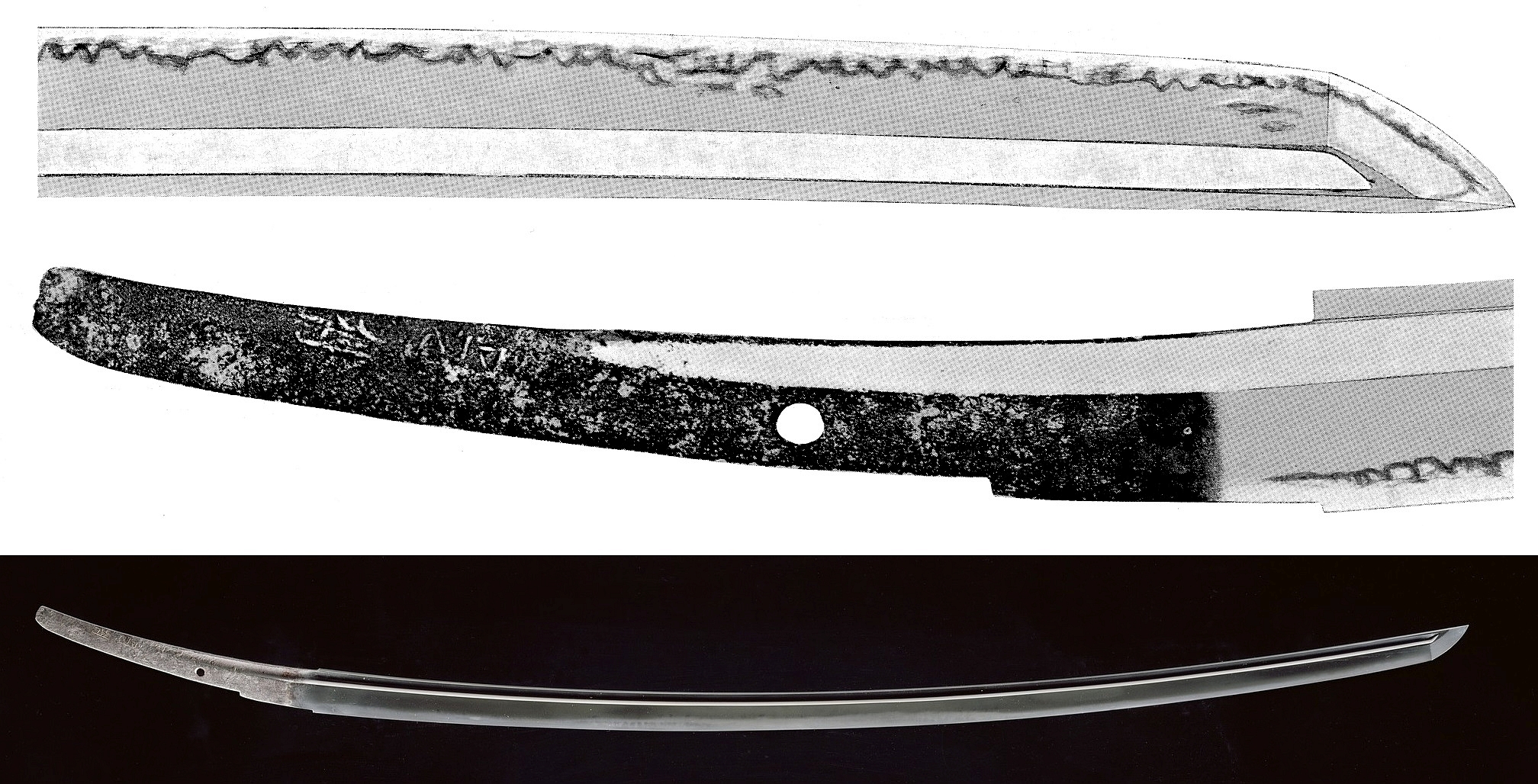
Picture 2: kokuhô, tachi, mei “Sadatoshi” (定利), nagasa 78.8 cm, sori 3.0 cm, shinogi-zukuri, iori-mune, this blade is regarded as the best extant work of Sadatoshi [former heirloom of the Abe (阿部) family, the daimyô of the Bingo Fukuyama fief (福山藩), today preserved in the Tôkyô National Museum]
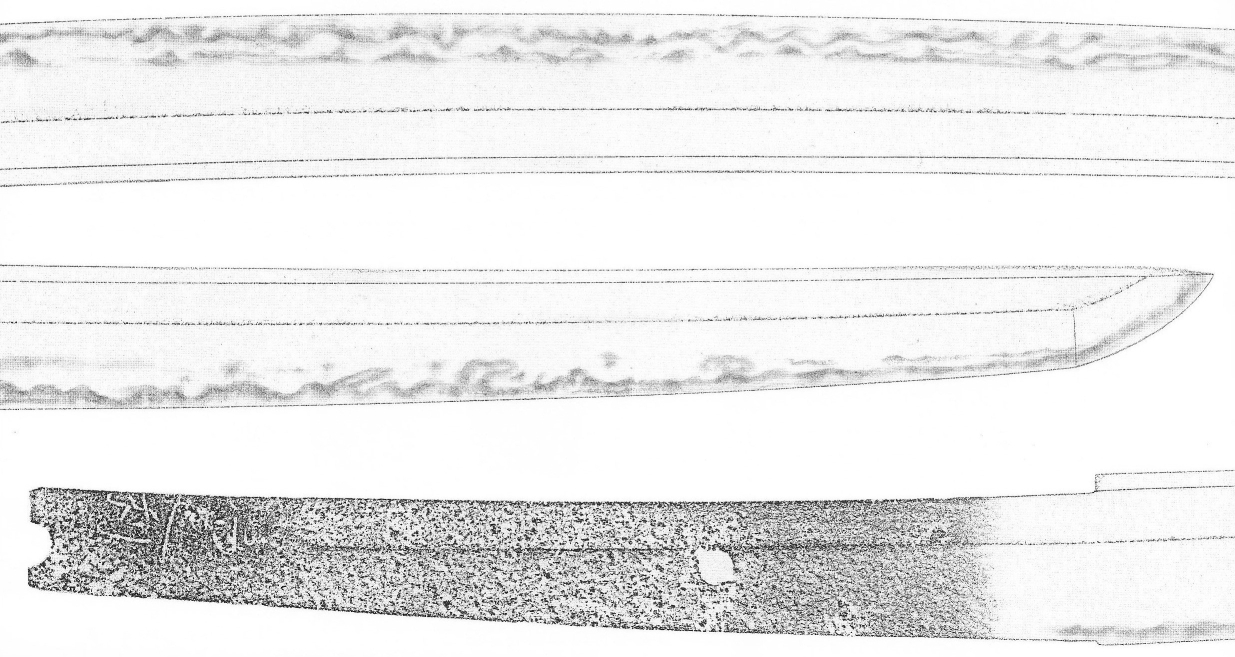
Picture 3: jûyô, tachi, mei “Sadatoshi” (定利), nagasa 67.7 cm, sori 2.0 cm, shinogi-zukuri, iori-mune, this blade shows one of the most classical deki of Sadatoshi and Tanobe writes that it “establishes intuitively as well as objectively a connection to Sanjô or Gojô” [former heirloom of the Naitô (内藤) family, the daimyô of the Echigo Murakami (村上藩) fief]

Picture 4: tokubetsu-jûyô, tachi, mei “Sadatoshi” (定利), nagasa 71.8 cm, sori 1.1 cm, shinogi-zukuri, iori-mune
*
Now to Sadayoshi (定吉). He is listed as son, student, or contemporary of Sadatoshi, in short, we don’t know fore sure how he was related to the latter. He is traditionally dated around Kôan (弘安, 1278-1288) but this has to be seen with the traditional Bun’ei (文永, 1264-75) dating of Sadatoshi which is, as mentioned, no longer sustainable. His works are as classical as Sadatoshi’s and Satô states that he knows two tachi of Sadayoshi which really look like works of Sadatoshi at a glance in terms of tachi-sugata and interpretation of the jiba. One of them is shown in picture 5. It shows a classically elegant tachi-sugata with funbari and a ko-kissaki. The kitae is a dense ko-itame with fine ji-nie and the hamon a ko-nie-laden mix of ko-chôji-midare with kinsuji and some protruding kawazu no ko-chôji along the monouchi. The nioiguchi is subdued and the bôshi is a shallow notare-komi with a ko-maru-kaeri. The tang comes in a kijimono-gata with sujikai-yasurime like at Sadatoshi and please note that also the signature is executed in a very similar way, i.e. showing a cursive-style character for “Sada” and the second character being smaller than the first one.

Picture 5: tachi, mei “Sadayoshi” (定吉), nagasa 77.3 cm, sori 3.0 cm, shinogi-zukuri, iori-mune [preserved in the Tôkyô National Museum]
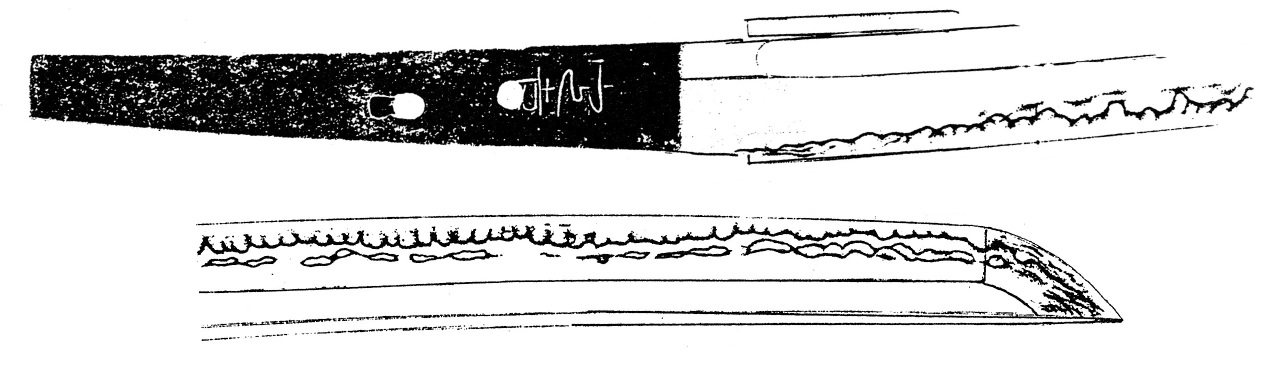
Picture 6: jûyô-bunkazai, tachi, mei “Sadayoshi” (定吉), nagasa 70.4 cm, sori 2.7 cm, shinogi-zukuri, iori-mune. This blade was initially attributed to the Chikuzen Sa smith of the same name but recent studies have revealed, that because of its jiba and signature style, it is most likely a work of Ayanokôji Sadayoshi.
*

Ko-choji.