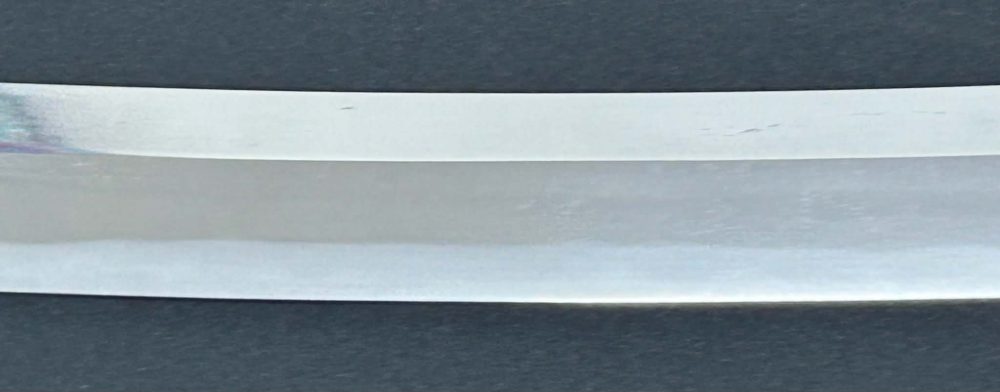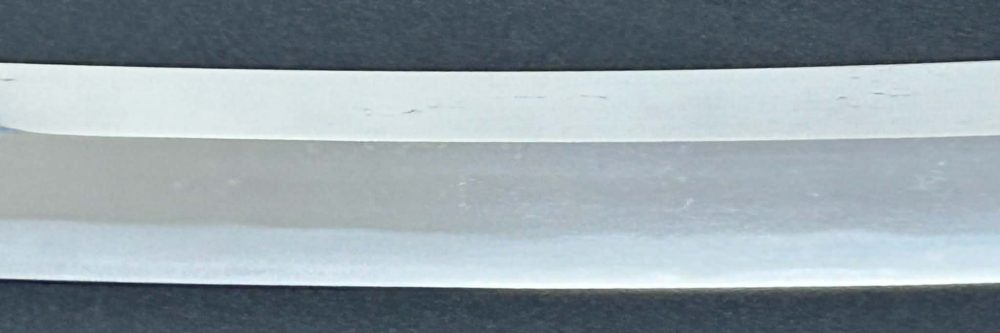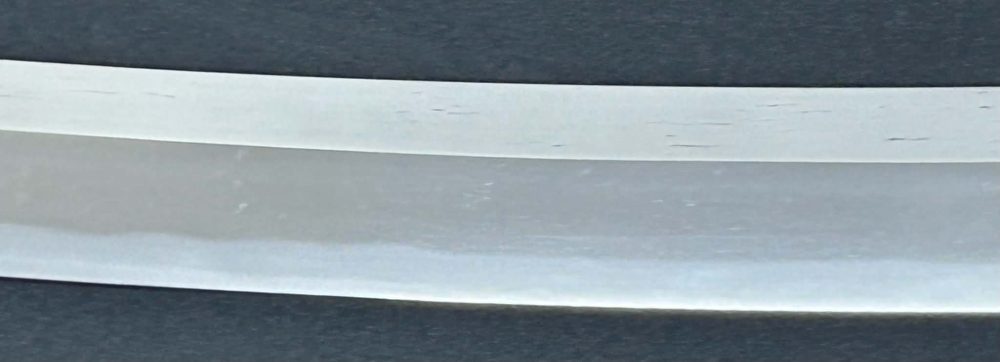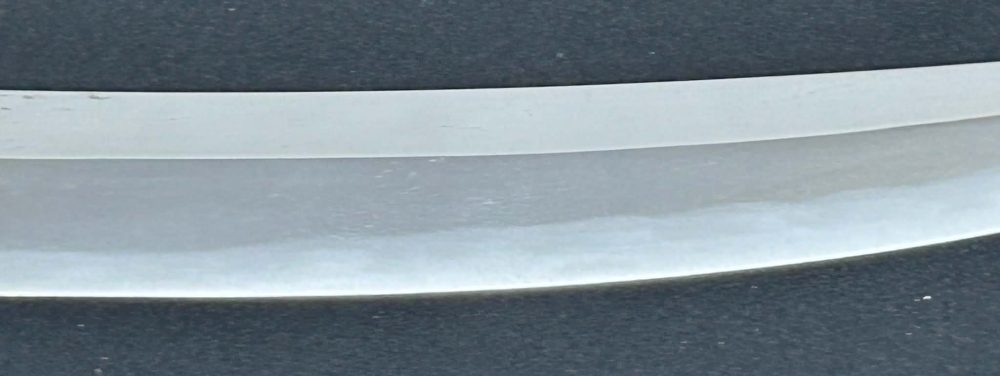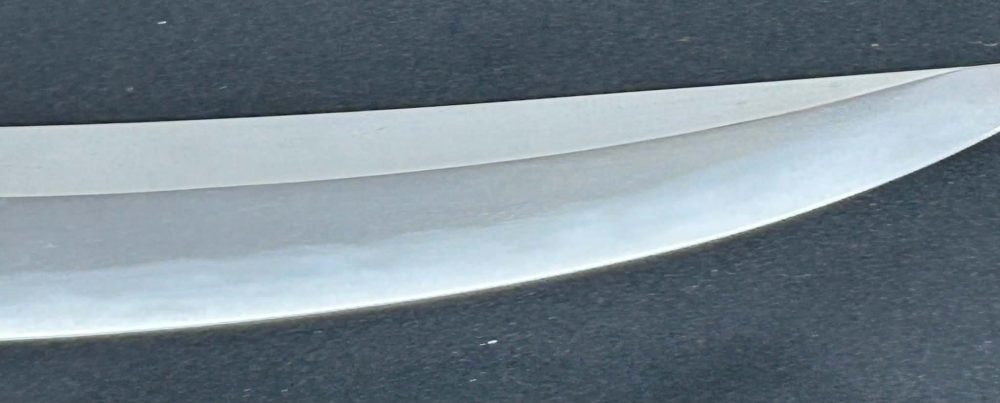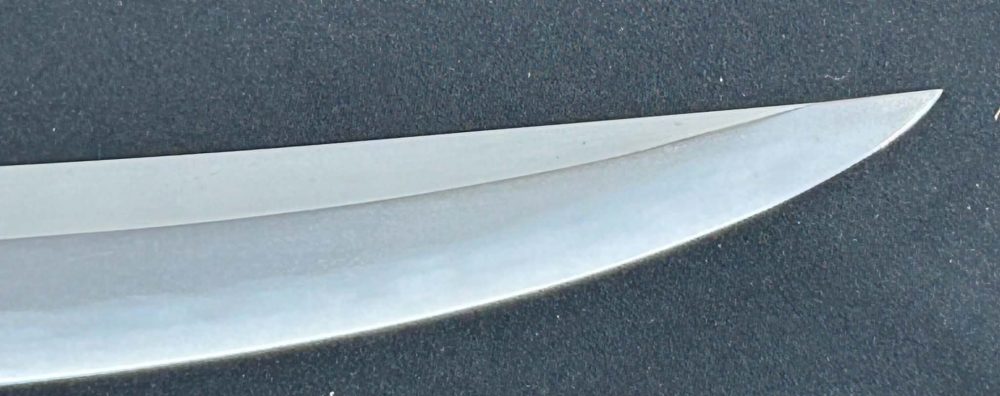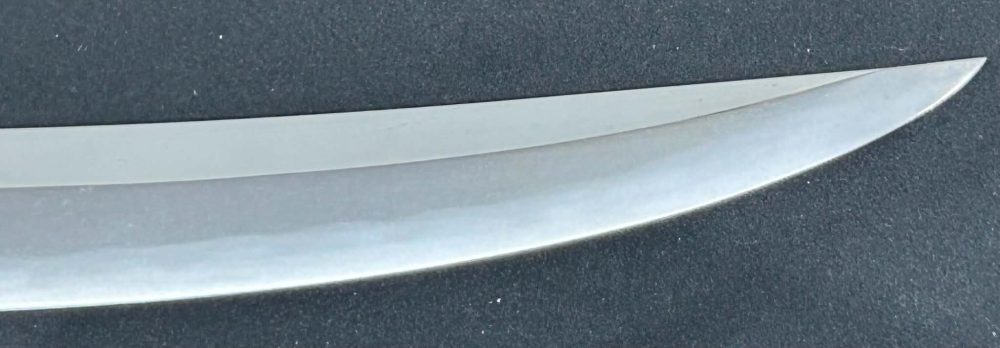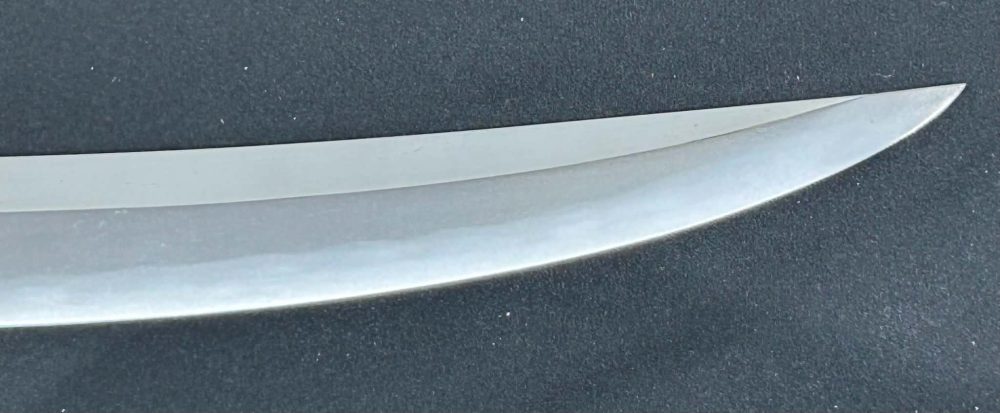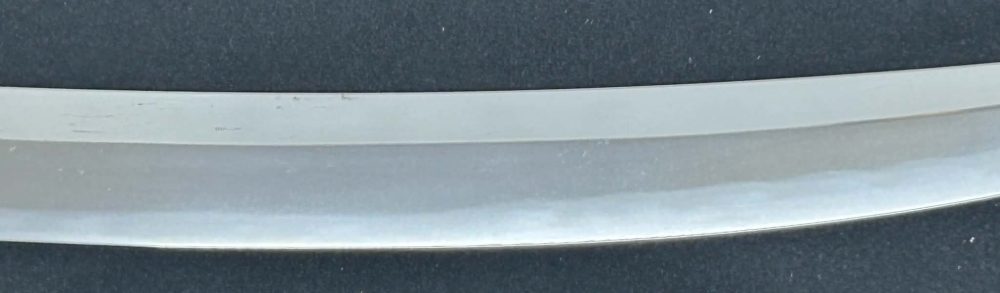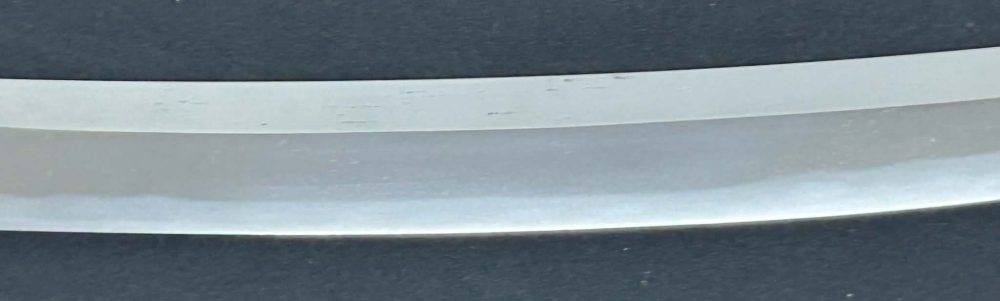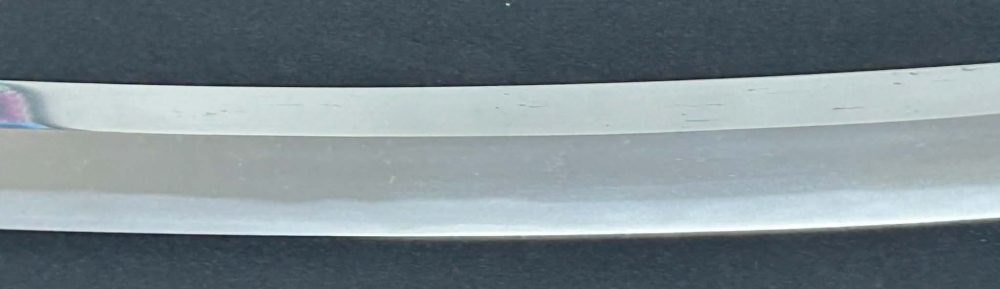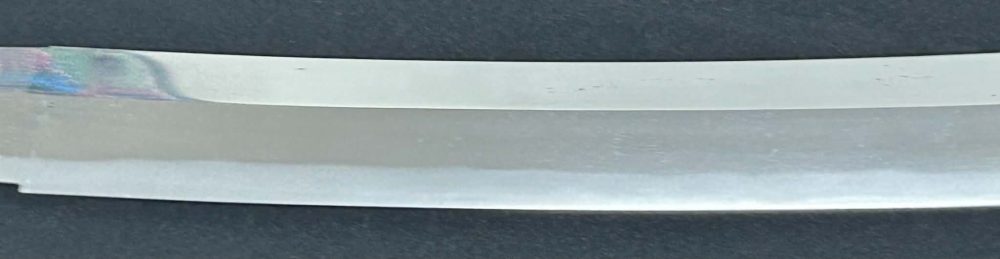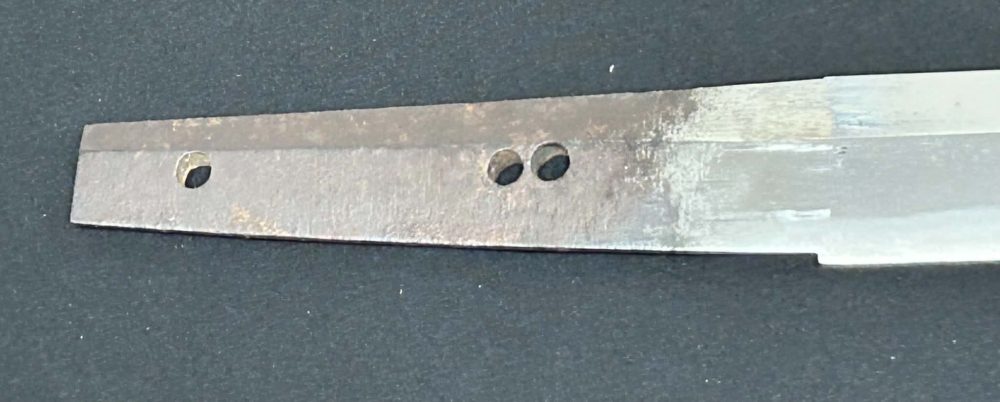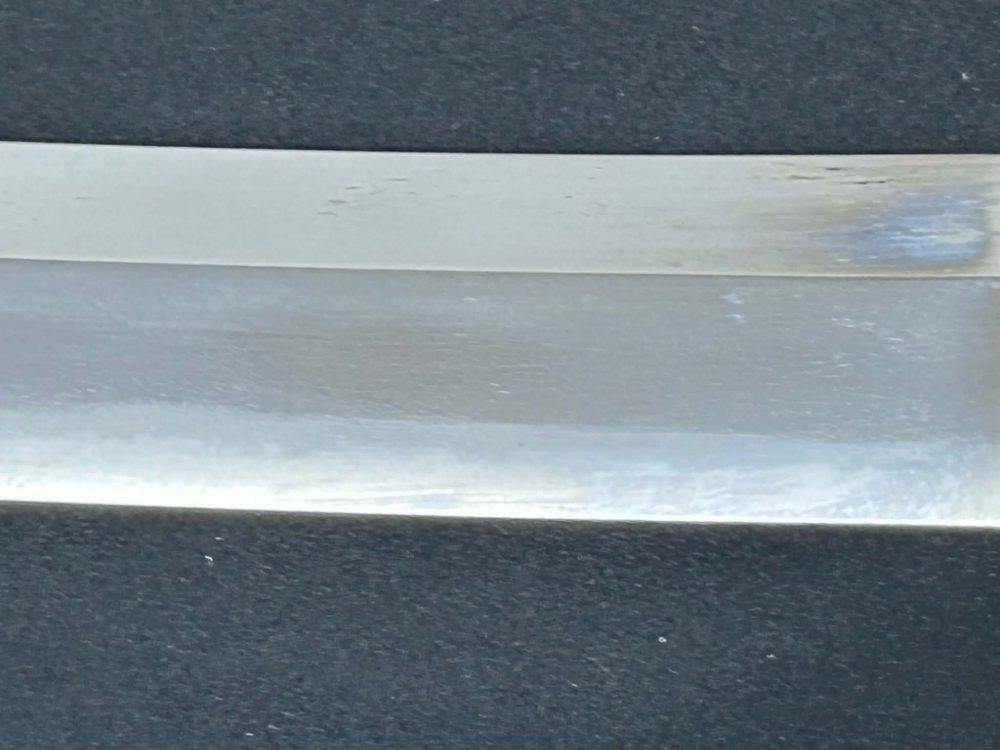

An excellent Mumei Wakizashi attributed to Motoshige by the NBTHK. Mounted in Shirasaya. NBTHK Tokubetsu Hozon Certificate
MOTOSHIGE (元重), Kenmu (建武, 1334-1338), Bizen – “Bishū Osafune Motoshige” (備州長船元重), “Bishū
Osafune-jū Motoshige saku” (備州長船住元重作), “Bishū Osafune-jū Motoshige” (備州長船住元重), honorary title
Ōkura no Suke (大蔵允). Depending on tradition the younger brother of Morishige (守重), the older brother of
Shigezane (重真), the grandson of Moriie (守家), and a student of Sōshū Sadamune (貞宗). He was also one of the
“Three Students Great of Sadamune” (Sadamune no Santetsu, 貞宗三哲). Because of his long active period – we know
date signatures from the fifth year of Shōwa (正和, 1316) until the second year of Jōji (貞治, 1363) – there exists a two
generations theory. The exact origins of Motoshige are unclear what further complicates the matter. Osafune Motoshige
displays a workmanship with strong ha-nie as well as with kinsuji and sunagashi, that means we can clearly see the influence
of the Sōshū tradition (= Sōden-Bizen), this would also support the tradition that he was a student of Sadamune. But
besides of a Bizen-like gunome or angular gunome he also hardened a suguha that is mixed with angular gunome and saka-ashi
which strongly resembles works of the Aoe school from the neighboring province of Bitchū. A connection to Aoe is
also supported by the occasional use of ō-sujikai-yasurime and katana-mei at tachi. Some sources list one Ko-Motoshige and
two generations Osafune-Motoshige. According to this approach, Osafune-Motoshige was the grandson of the 2nd gen.
Hatakeda Moriie (畠田守家), i.e. of the Moriie who had moved from Hatakeda to Osafune. Others say Motoshige was
the older brother of Shigezane (重真) who was supposedly a son of the 1st gen. Moriie but what is rather unlikely as he
was active even noticeably later than the 2nd gen. Moriie. The Kanchi´in Bon Mei Zukushi (観智院本銘尽) which was
published during the lifetime of Motoshige lists him in turn as son of Morishige. Maybe Shigezane was actually a son of
the 2nd gen. Moriie and his two brothers were Morishige and Motoshige, with Morishige as the oldest, what would make
sense when we just focus on the active periods of all these smiths. There are tantō extant from Moriie from the Kōan
(弘安, 1278-1288) and Einin eras (永仁, 1293-1299) which show an angular gunome that is mixed with kataochi-gunome
whose elements appear slanting in a kind of Aoe style. So also from the point of view of workmanship a connection of
Motoshige and the 2nd gen. Hatakeda Moriie makes sense. And the Sōshū-like interpretations of Motoshige could be
explained by the fact that the Sōshū tradition was then already prevailing and highly in fashion and he must not had
been a direct student of Sadamune. However, according to the two-generations theory, it was the 2nd gen. Motoshige
who studied under Sadamune. Around Jōji (貞治, 1362-1368) there was in Hōki a certain Hibara Motoshige (檜原元重)
active of which some sources say he was a student of the 1st gen. Osafune-Motoshige. But there are not enough blades
of Hibara Motoshige extant to either confirm or dismiss this approach. And in Mino there was a smith active around
Genkō (元享, 1321-1324) who signed with “Motoshige” too. There various theories on the connections of all these
Motoshige. A tradition says that Hibara Motoshige moved once from Kyūshū to Yamato and joined there the Senju´in
school. Later – to be more precise in the second year of Genkō (1322) – he moved to Seki and acted there as one of the
ancestors of the Seki smiths. So following this tradition Hibara Motoshige and Seki Motoshige were the same smith
experts assume that this or these smith or smiths respectively had nothing to do with Osafune Motoshige. saijō-ō
wazamono, jōjō-saku