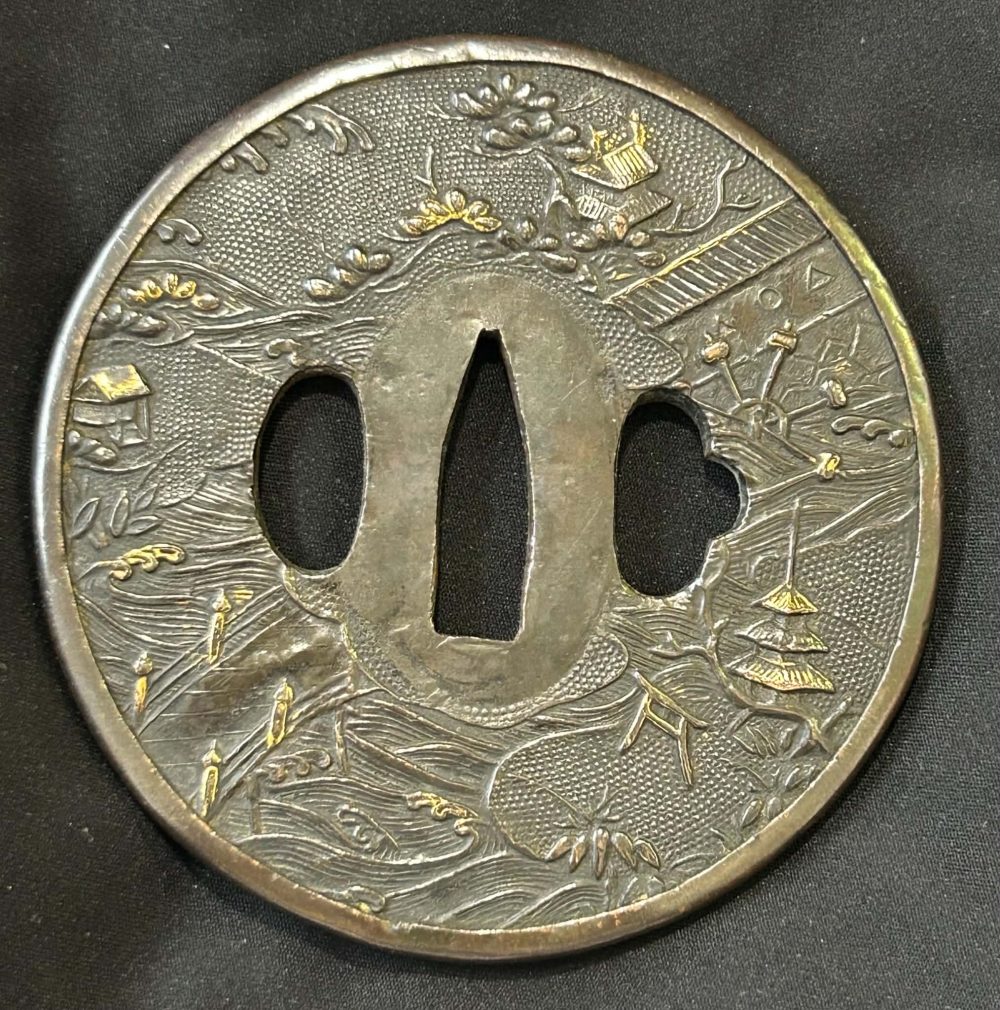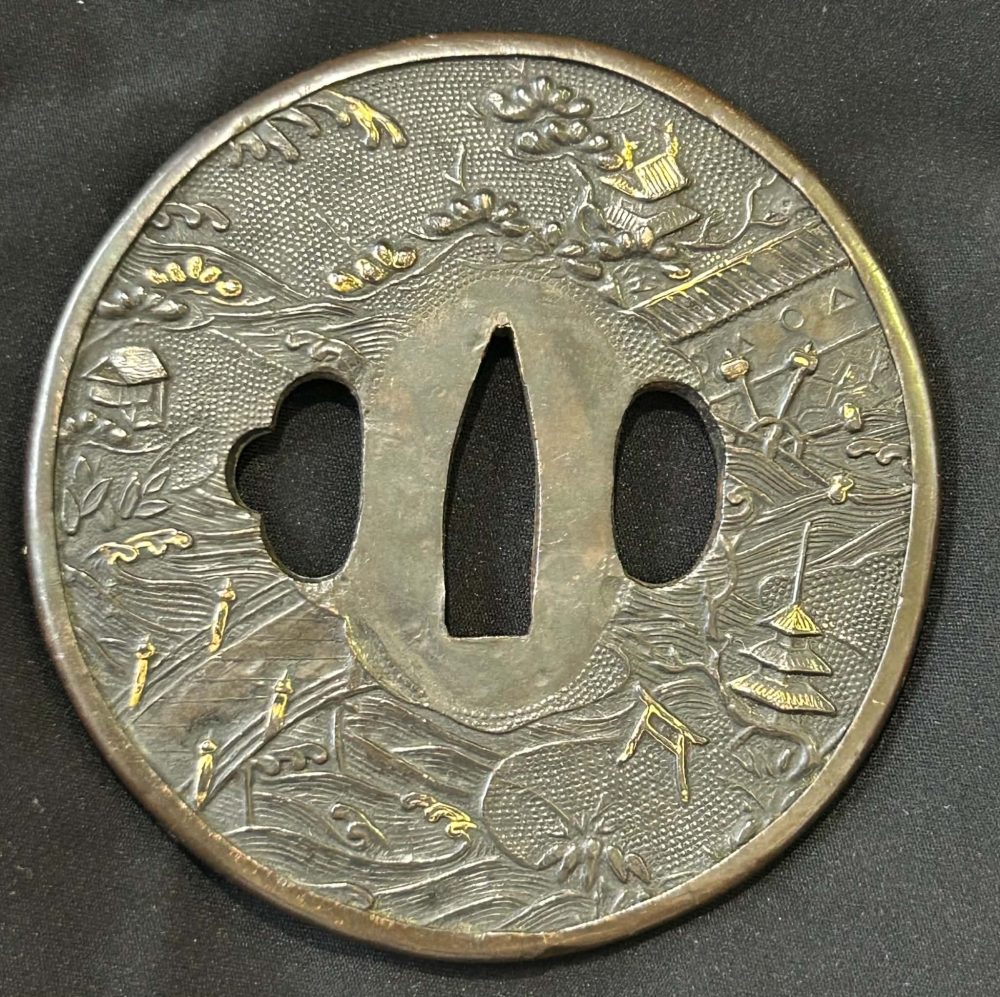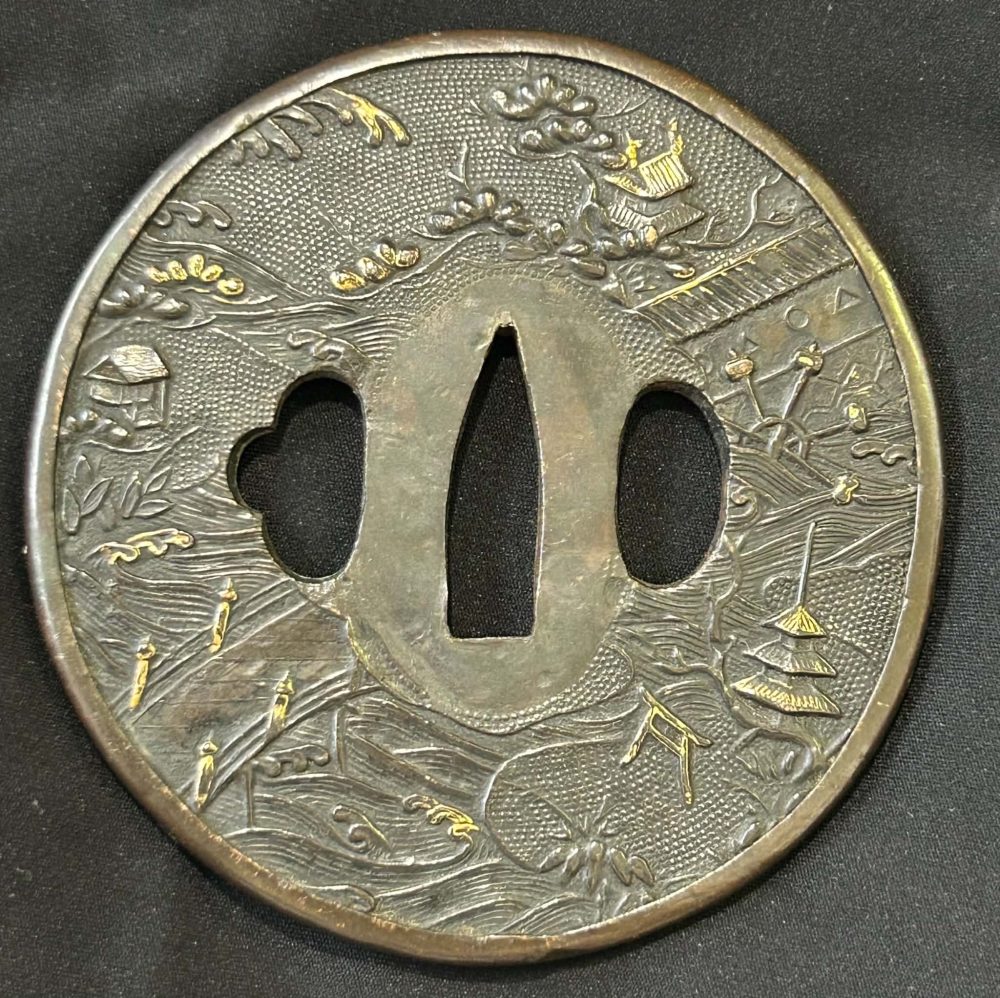
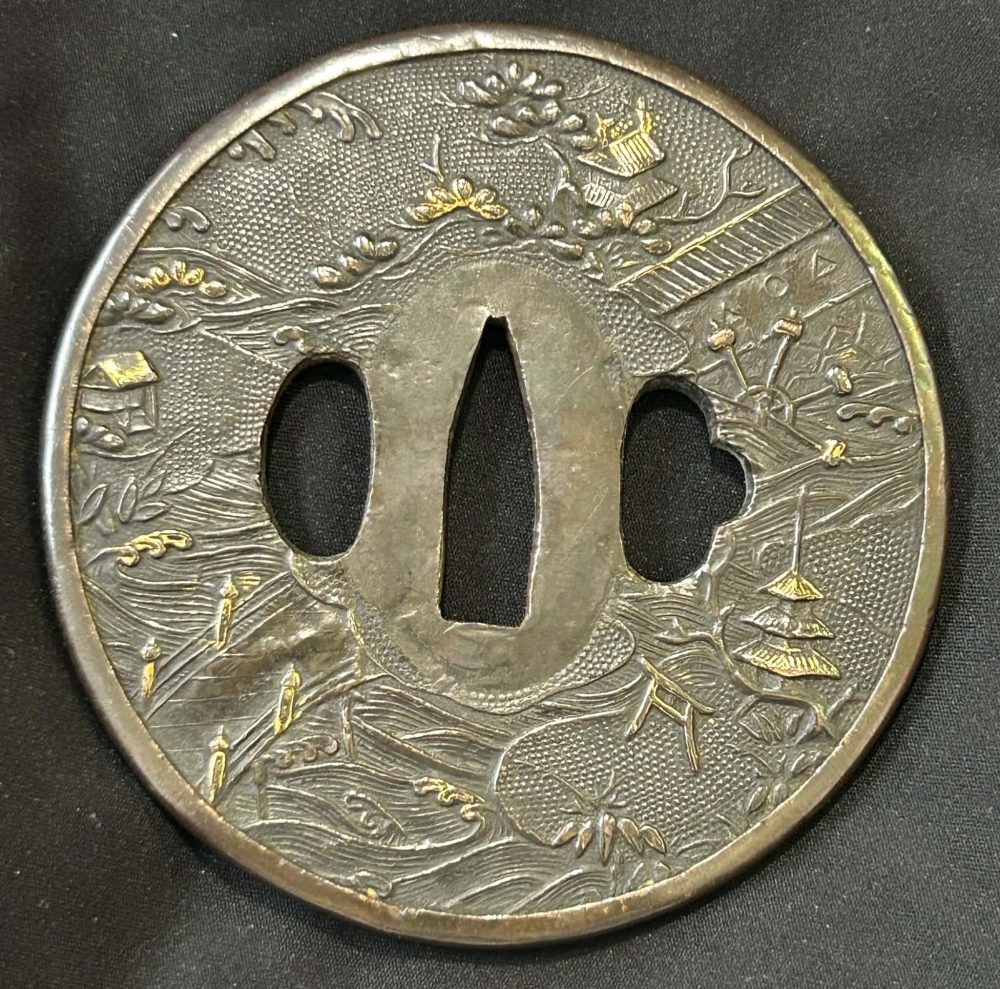
Early Edo period Sanmai Awase Tsuba. With motif of very detailed Japanese Scenery Temples,Gardens, Bridges
82 mm x 80 mm
A Sanmai-awase tsuba (三枚合せ鍔) is a traditional Japanese sword guard made from three sandwiched metal plates.
Construction & Materials
- Three Layers: It consists of two thin, embossed or cast outer decorative plates (often made of copper alloys like shakudo, shibuichi, or nigurome) and a central core plate (typically made of yamagane or raw copper).
- Motifs: Because the outer plates are often stamped or pressed using a master die, the design on the front (omote) and back (ura) of the tsuba are usually identical or mirror images.
- Edge Binding (Fukurin): A border or rim—frequently interwoven with fine shakudo or sentoku wire—is often wrapped around the perimeter (mimi) to hold the three plates together and prevent them from splitting or separating from the core.
- Historical Period: This style of construction is commonly associated with the Edo period (17th–18th centuries) and makers such as the Yasutsugu school.