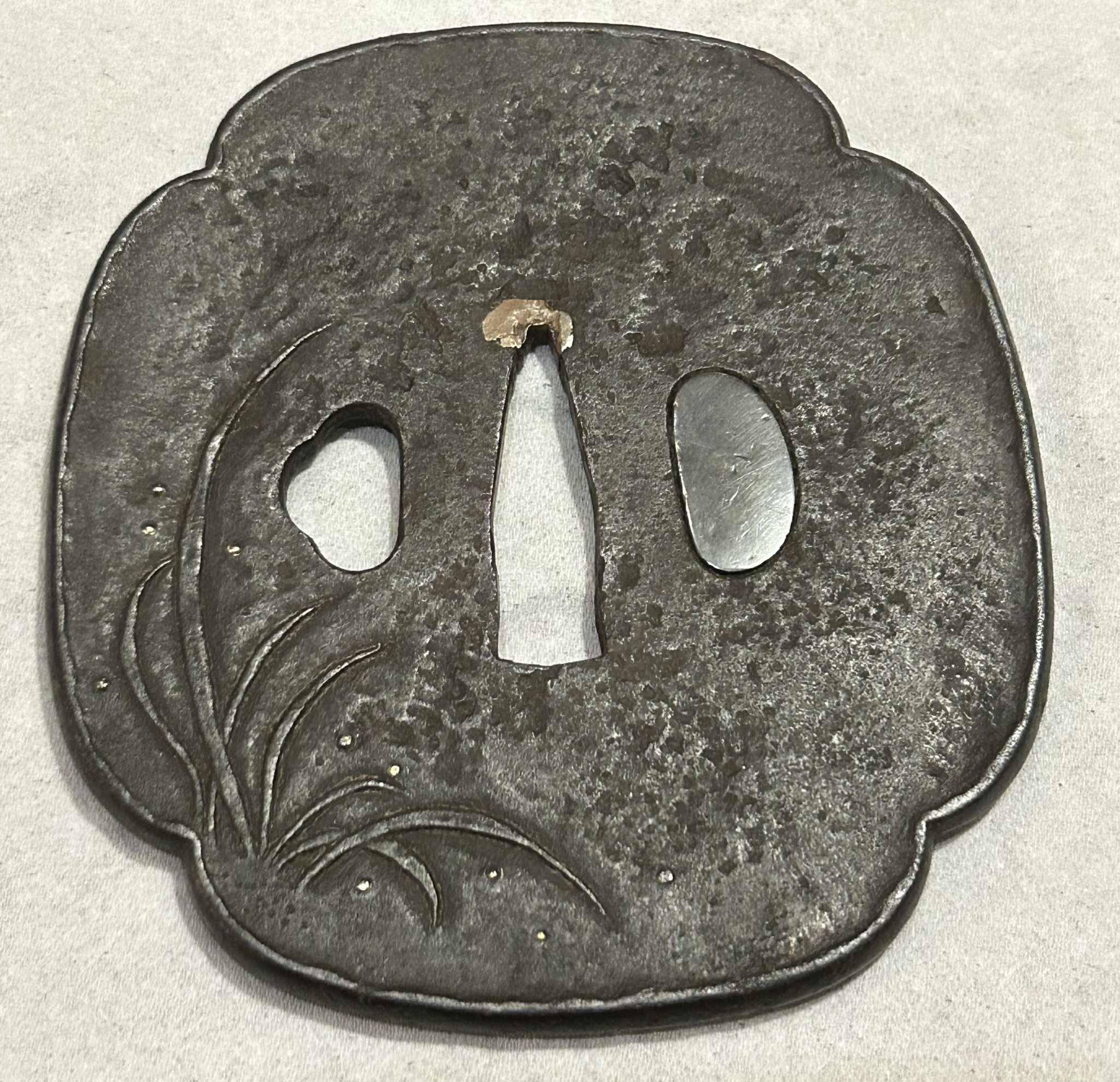
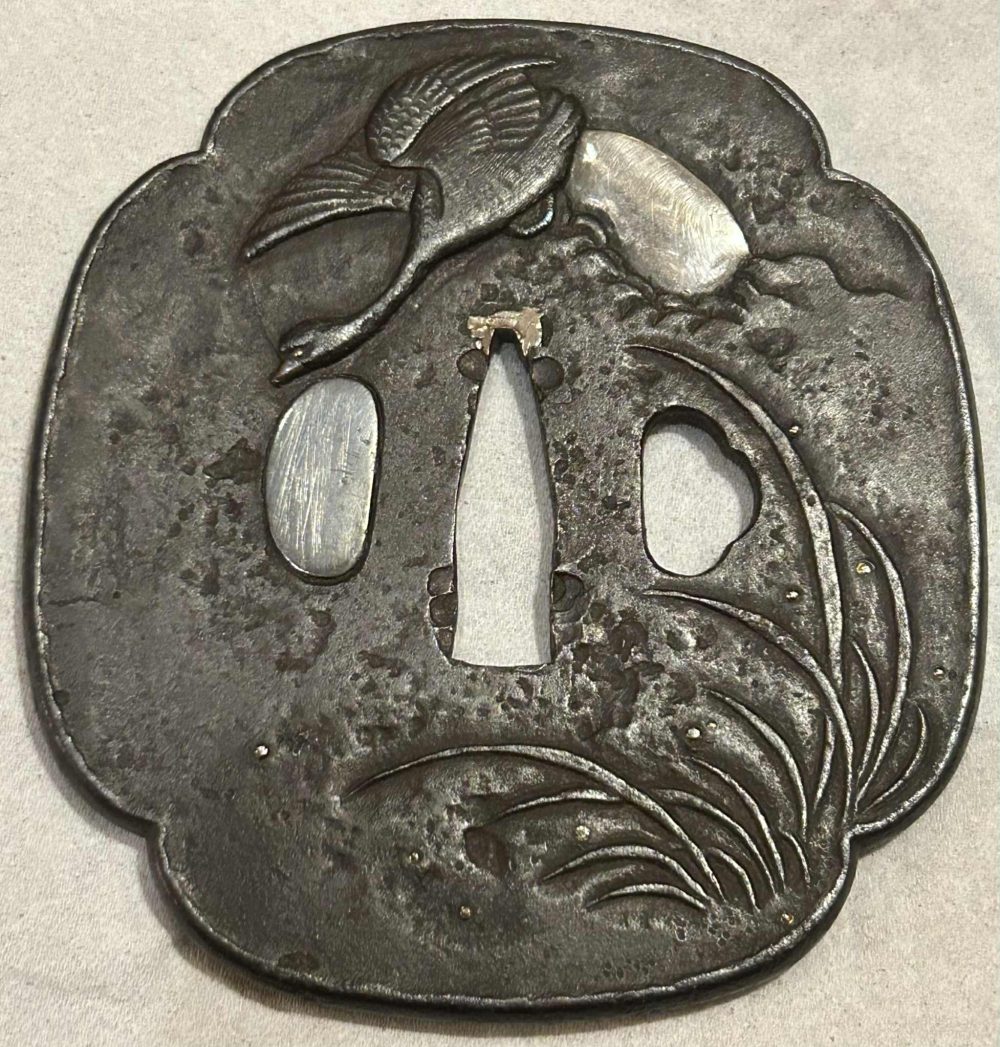
Large Tsuba with motif of Goose in flight with Silver full Moon in the background.
In Japan, wild geese and the full moon, often depicted together, symbolize the arrival of autumn and the harvest season. The geese represent the beginning of the autumn migration and, due to their reliable journeys, symbolize enduring reliability. The full moon, particularly the “mid-autumn moon” (Chūshū no meigetsu), is a symbol of gratitude for the harvest, abundance, and a time for the traditional Tsukimi (moon-viewing) festival.
-
Autumn and Harvest:
The full moon in the eighth month of the lunar calendar is particularly special and is associated with the peak of autumn and the year’s bountiful harvest.
-
Gratitude and Bounty:
Moon-viewing festivals (Tsukimi) are held to express gratitude for the harvest and to wish for future prosperity.
-
Impermanence:
The moon’s changing phases also serve as a powerful symbol of the impermanence of life.
-
Romantic and Spiritual Associations:
The mid-autumn moon has romantic associations and is a popular subject in poetry and art.
-
Autumn Migration:
The appearance of wild geese flying across the moon is a traditional symbol of the beginning of autumn.
-
Reliability:
The regularity of their seasonal migrations makes geese a symbol of enduring reliability.
-
Unsettled Existence:
Geese flying in formation can also represent an unsettled existence.
- The imagery of “wild geese flying across a crescent moon” or “wild geese flying under the full moon” is a classic and enduring motif in Japanese art, such as woodblock prints by artists like Utagawa Hiroshige .
- This combination captures the atmosphere of autumn, the changing seasons, and the reflective mood of the moon-viewing festival.