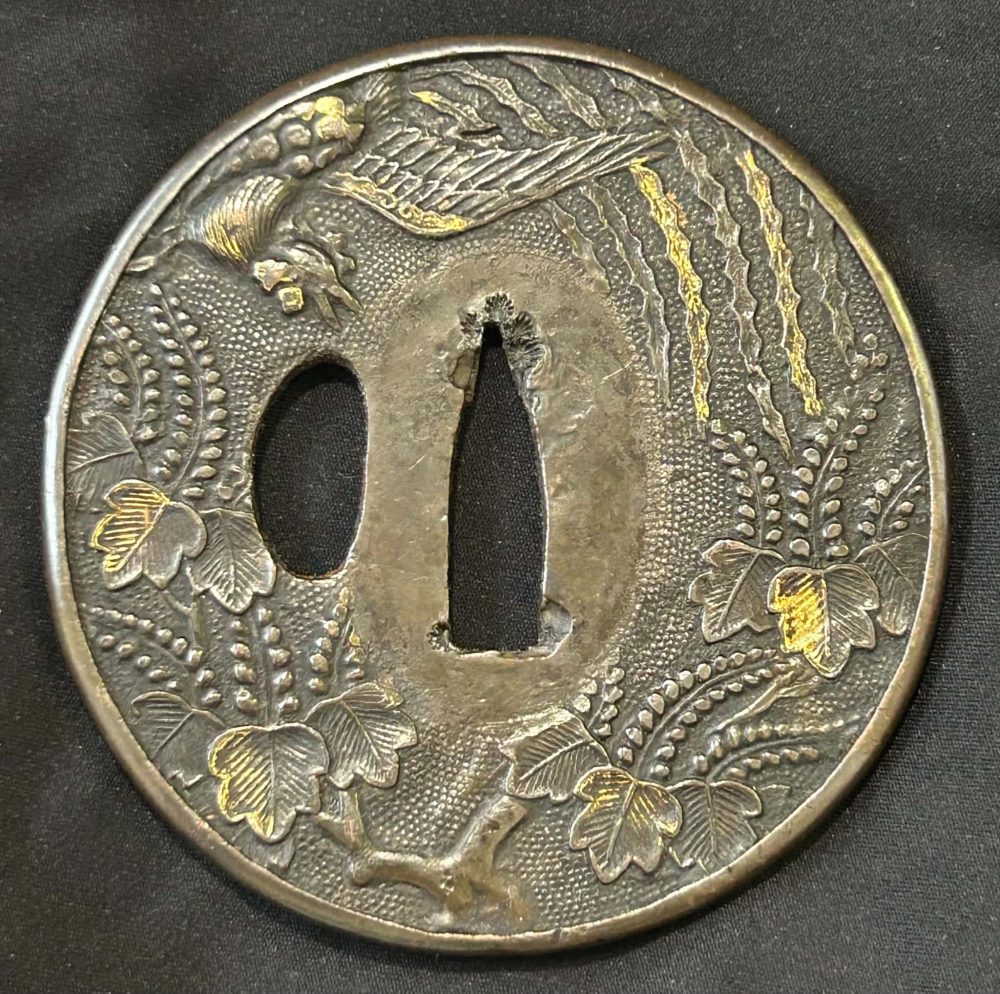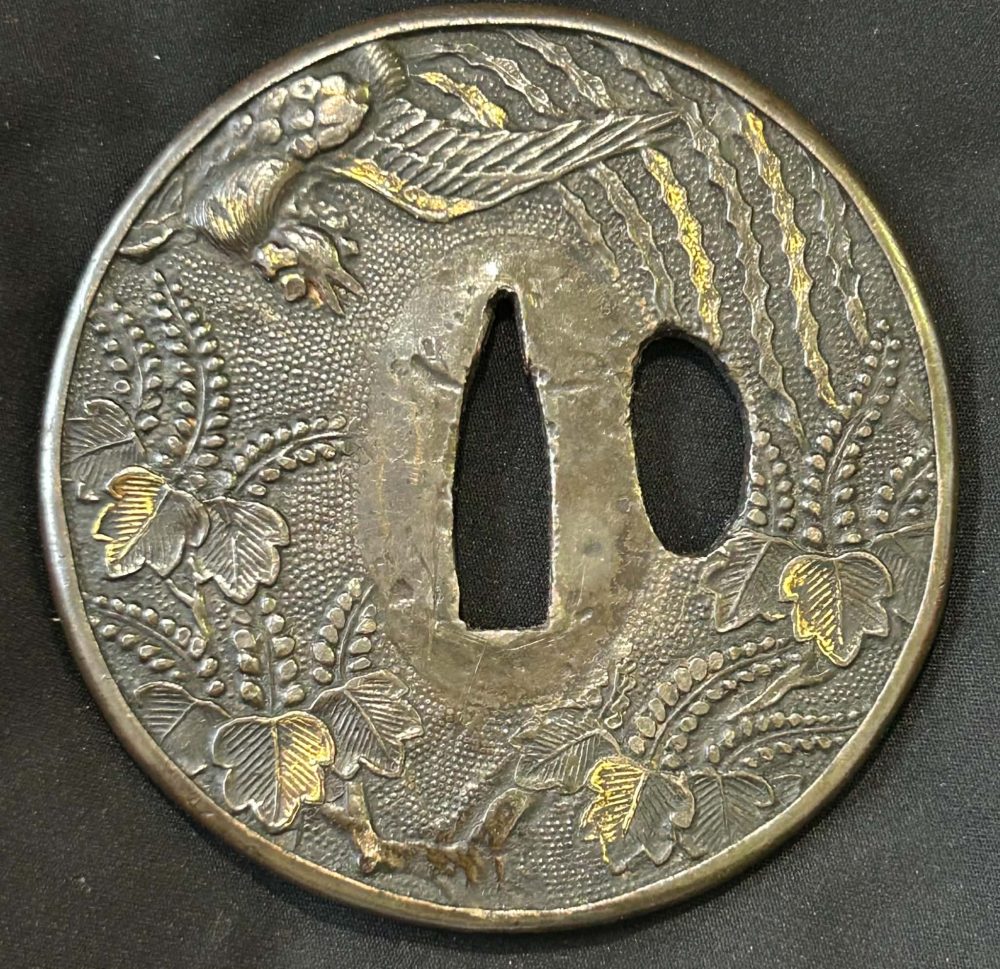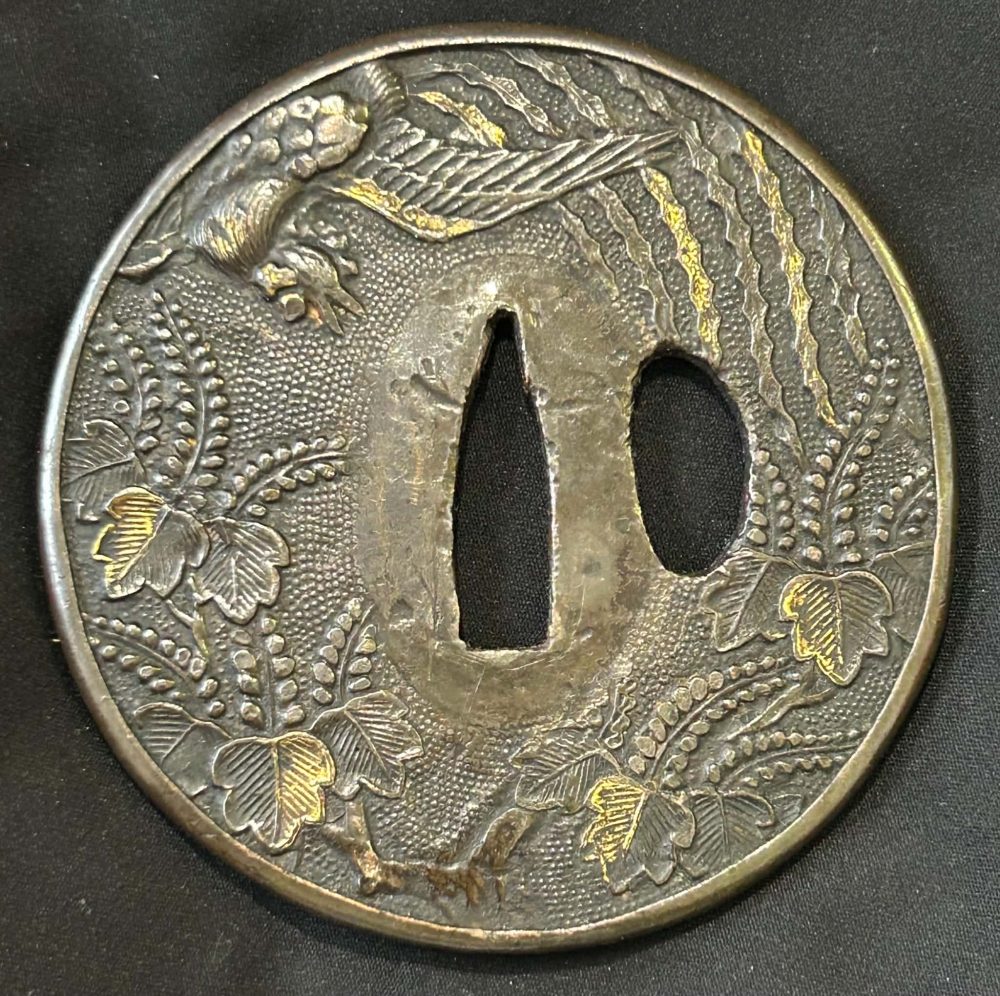
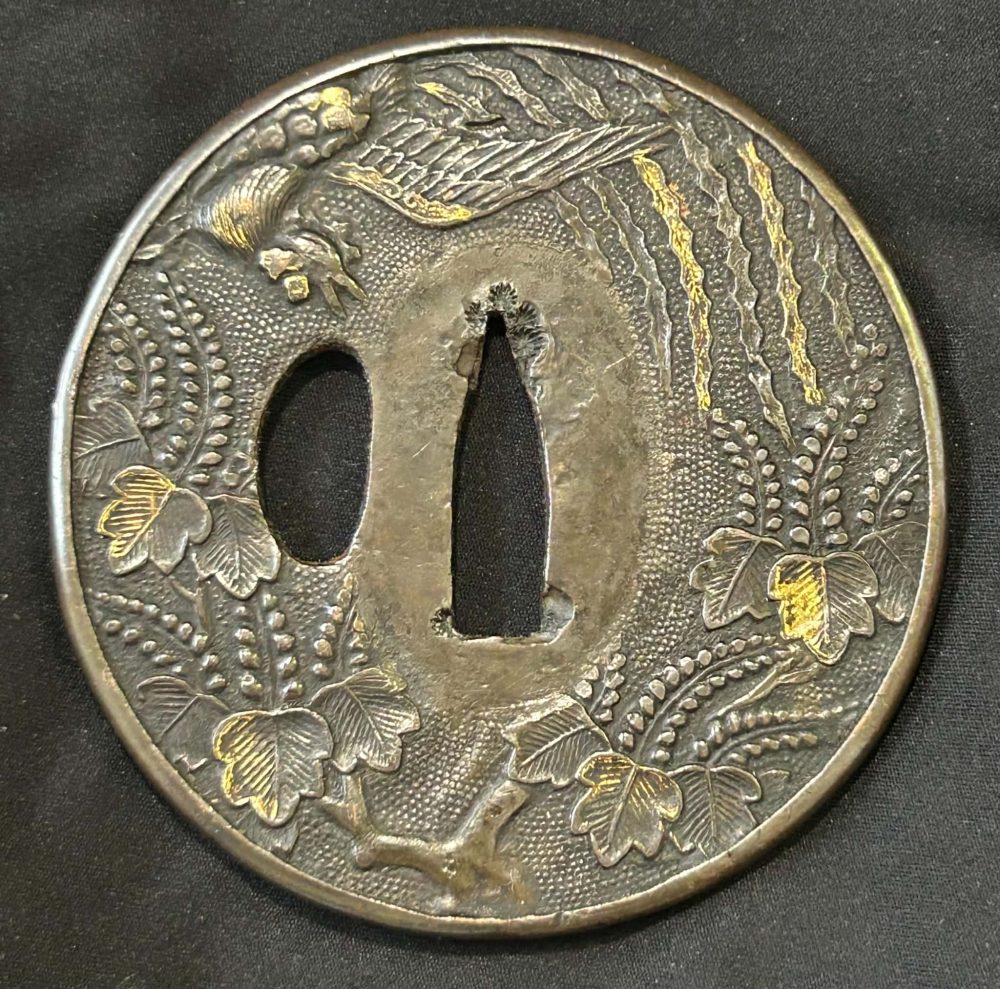
Early Edo Period Sanmai Awase Tsuba with Motif of Ho-o bird, Paulownia and Chinese bellflowers
80mm x 78 mm
A Sanmai-awase tsuba (三枚合せ鍔) is a traditional Japanese sword guard made from three sandwiched metal plates.
Construction & Materials
- Three Layers: It consists of two thin, embossed or cast outer decorative plates (often made of copper alloys like shakudo, shibuichi, or nigurome) and a central core plate (typically made of yamagane or raw copper).
- Motifs: Because the outer plates are often stamped or pressed using a master die, the design on the front (omote) and back (ura) of the tsuba are usually identical or mirror images.
- Edge Binding (Fukurin): A border or rim—frequently interwoven with fine shakudo or sentoku wire—is often wrapped around the perimeter (mimi) to hold the three plates together and prevent them from splitting or separating from the core.
- Historical Period: This style of construction is commonly associated with the Edo period (17th–18th centuries) and makers such as the Yasutsugu school.
The Hō-ō (鳳凰, sometimes spelled Ho-o or called the “ho ho bird”) is the Japanese version of the mythical East Asian Fenghuang, often loosely translated as the Japanese Phoenix.
Origins and Appearance
-
- Chinese Roots: It was introduced from China to Japan during the Asuka period (around the 7th century). The name combines the male (hō) and female (ō) elements of the mythological creature.
- Composite Body: It is depicted as a blend of multiple animals—featuring a rooster’s beak, swallow’s face/jaw, snake’s neck, tortoise’s back, crane’s legs, and a peacock’s tail.
- Five Colors: Its feathers display five traditional colors representing the Confucian moral virtues (duty, propriety, faith, mercy, and rectitude/justice).
Symbolism and Culture
- Peace and Prosperity: According to tradition, the Hō-ō only appears to herald times of great peace, harmony, or the birth of a virtuous ruler. When the world falls into chaos, it flies away.
- Not a Rebirth Phoenix: Unlike the Western/Arabian phoenix that burns to ashes and is reborn from them, the Hō-ō is a guardian spirit that watches, protects, and brings balance rather than cycling through death and fire-resurrection.
- Imperial Association: It has long been tied to the Japanese Imperial Family (particularly the Empress) and appears prominently in traditional art, architecture—such as the famous Phoenix Hall (Byōdō-in) in Kyoto—and cultural designs.