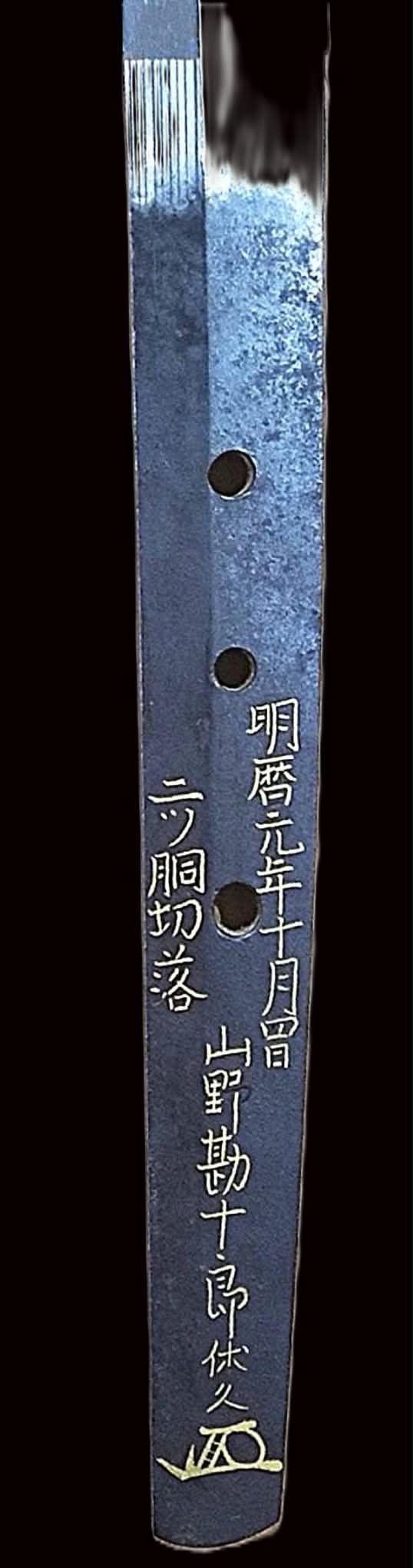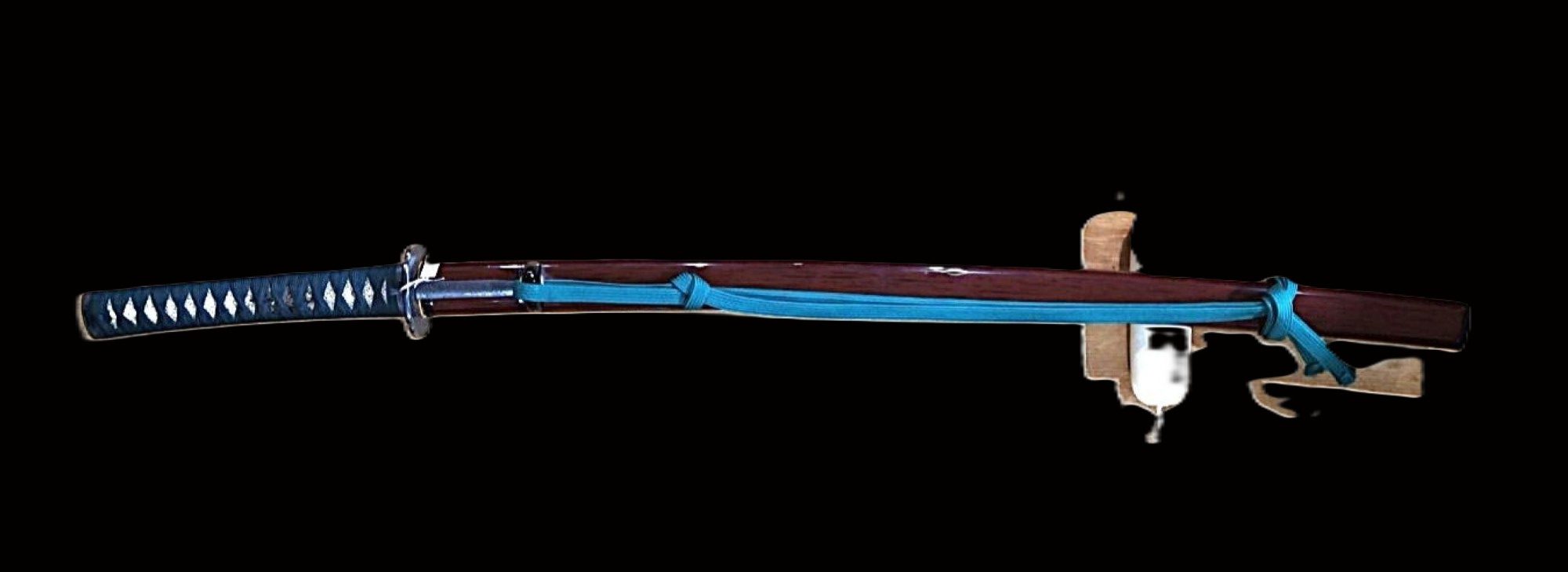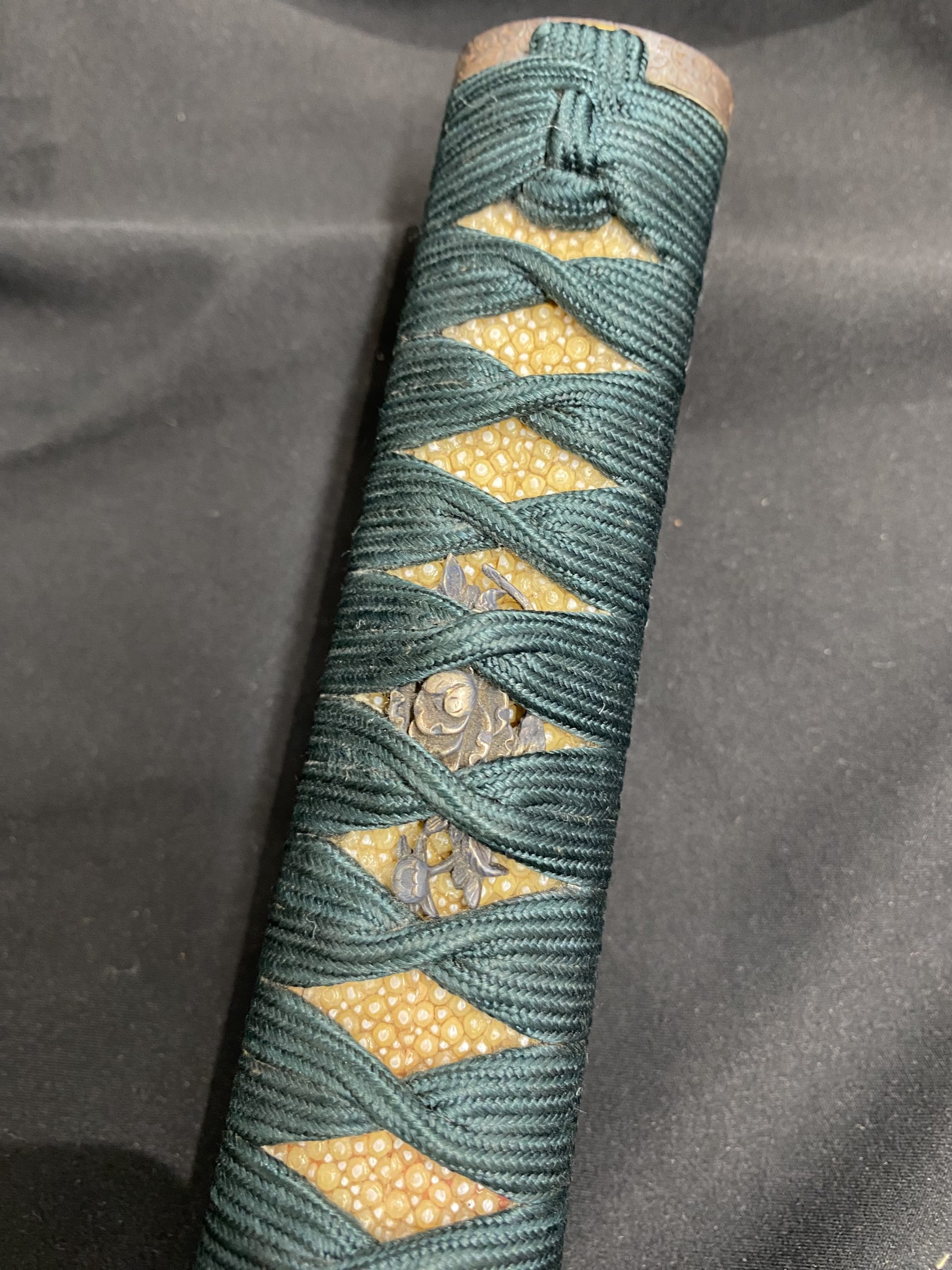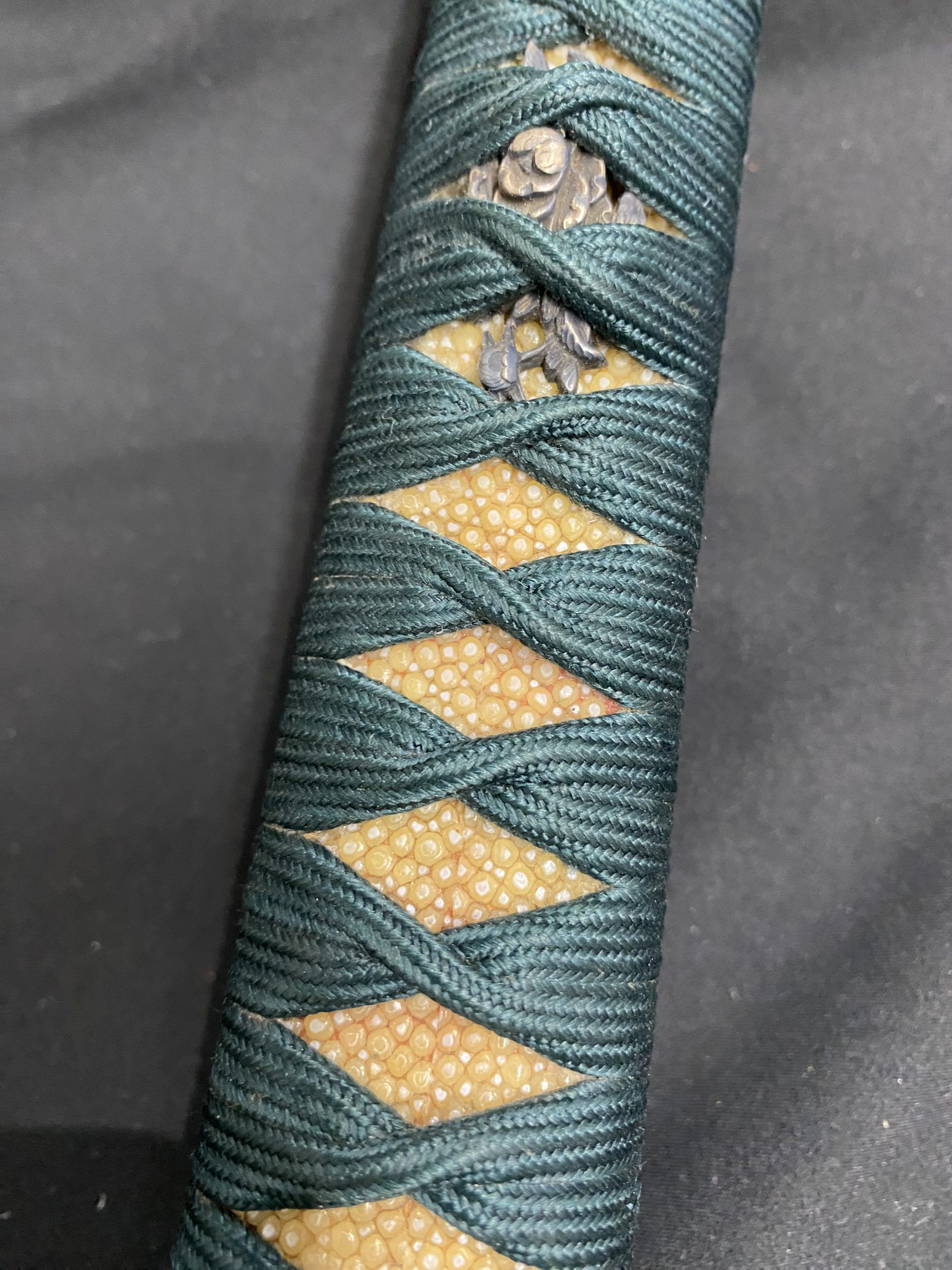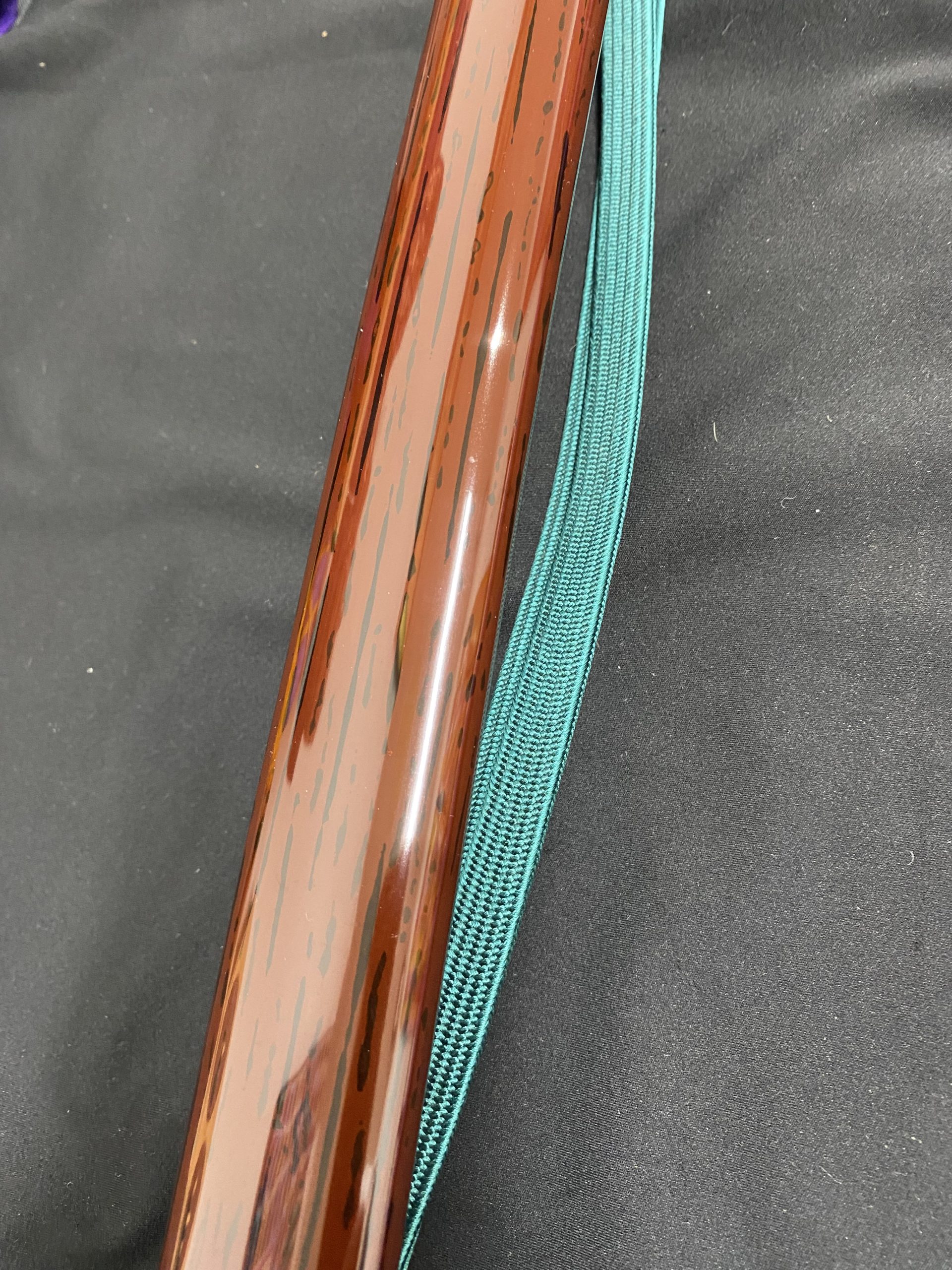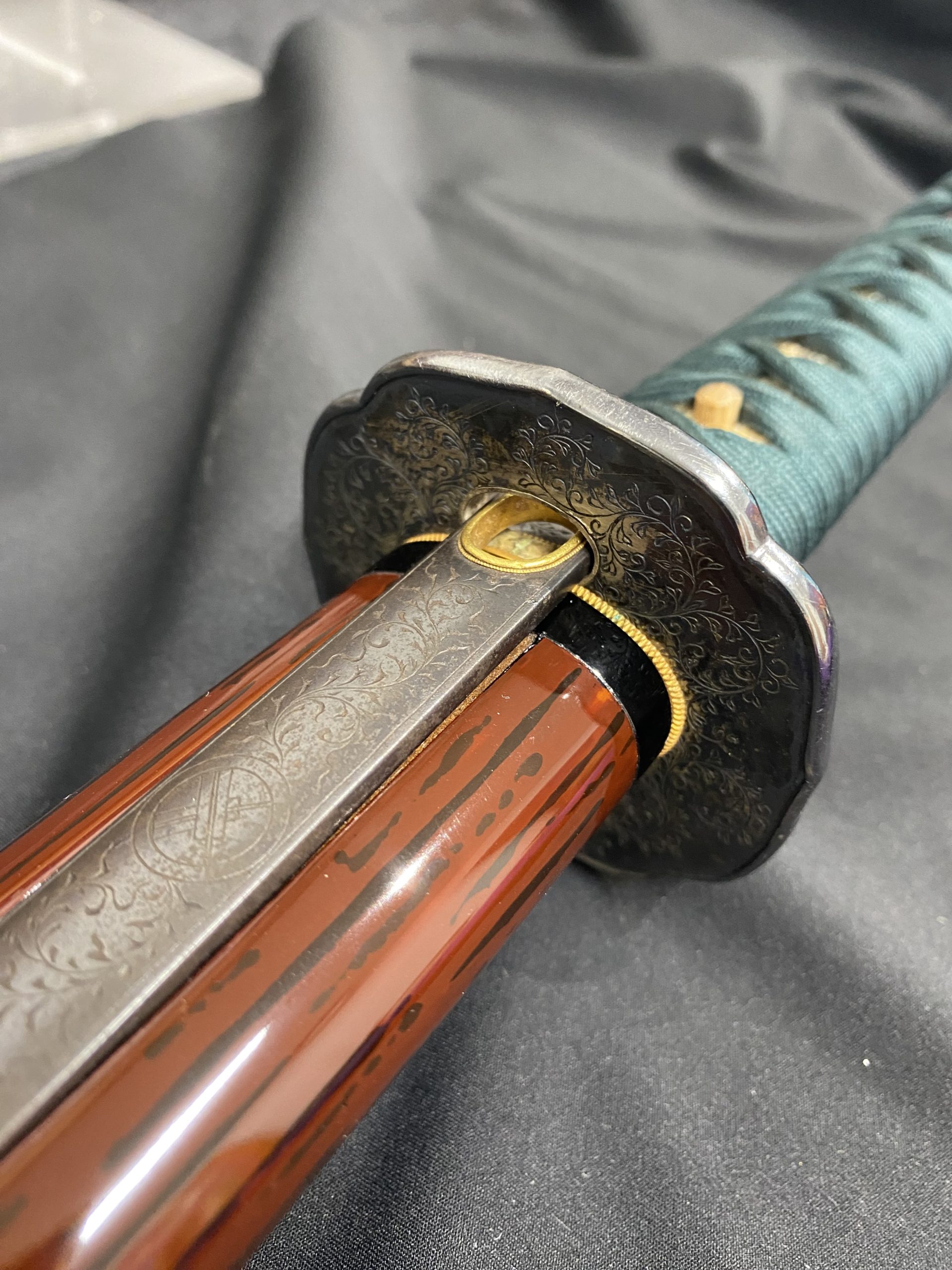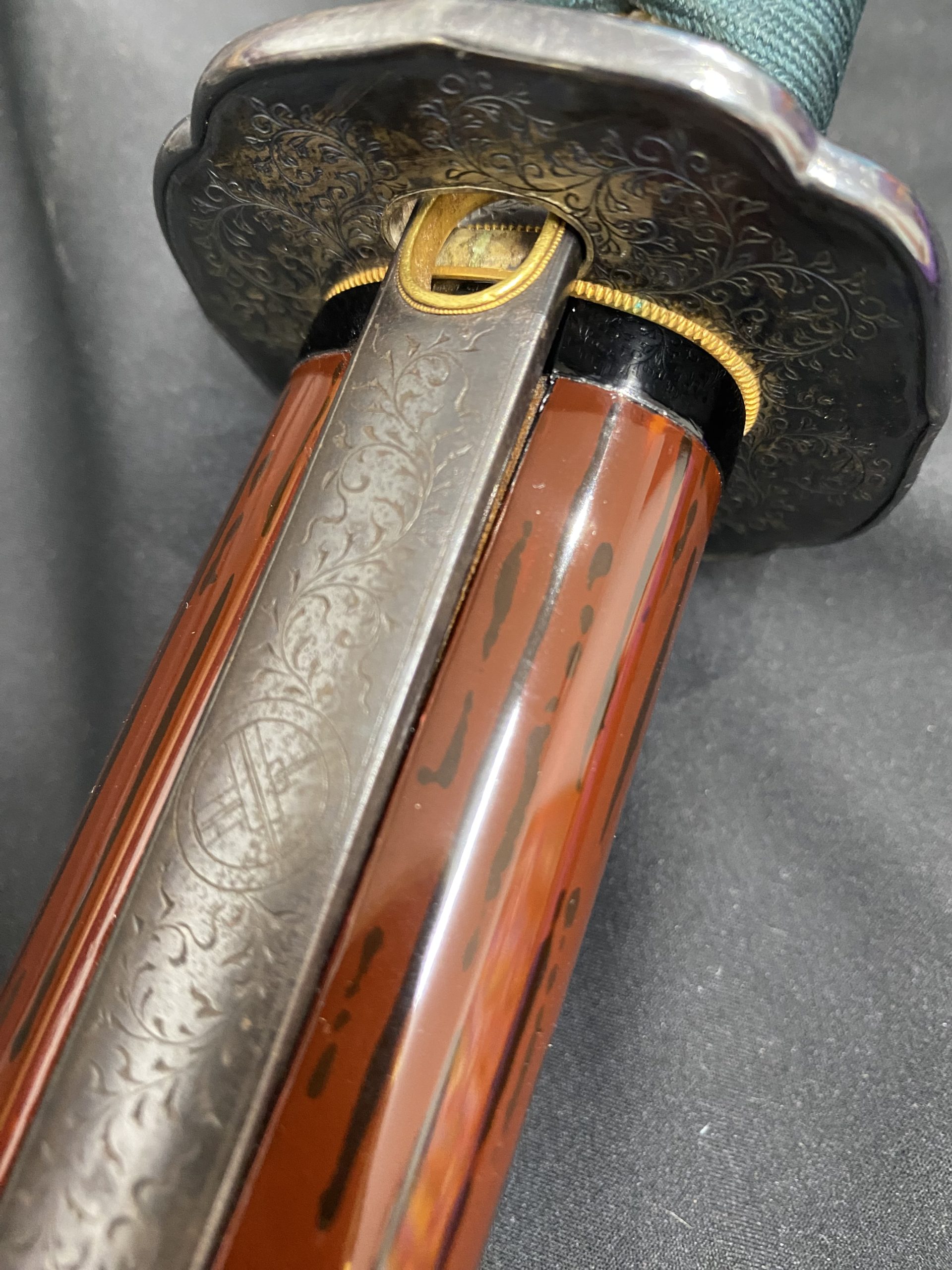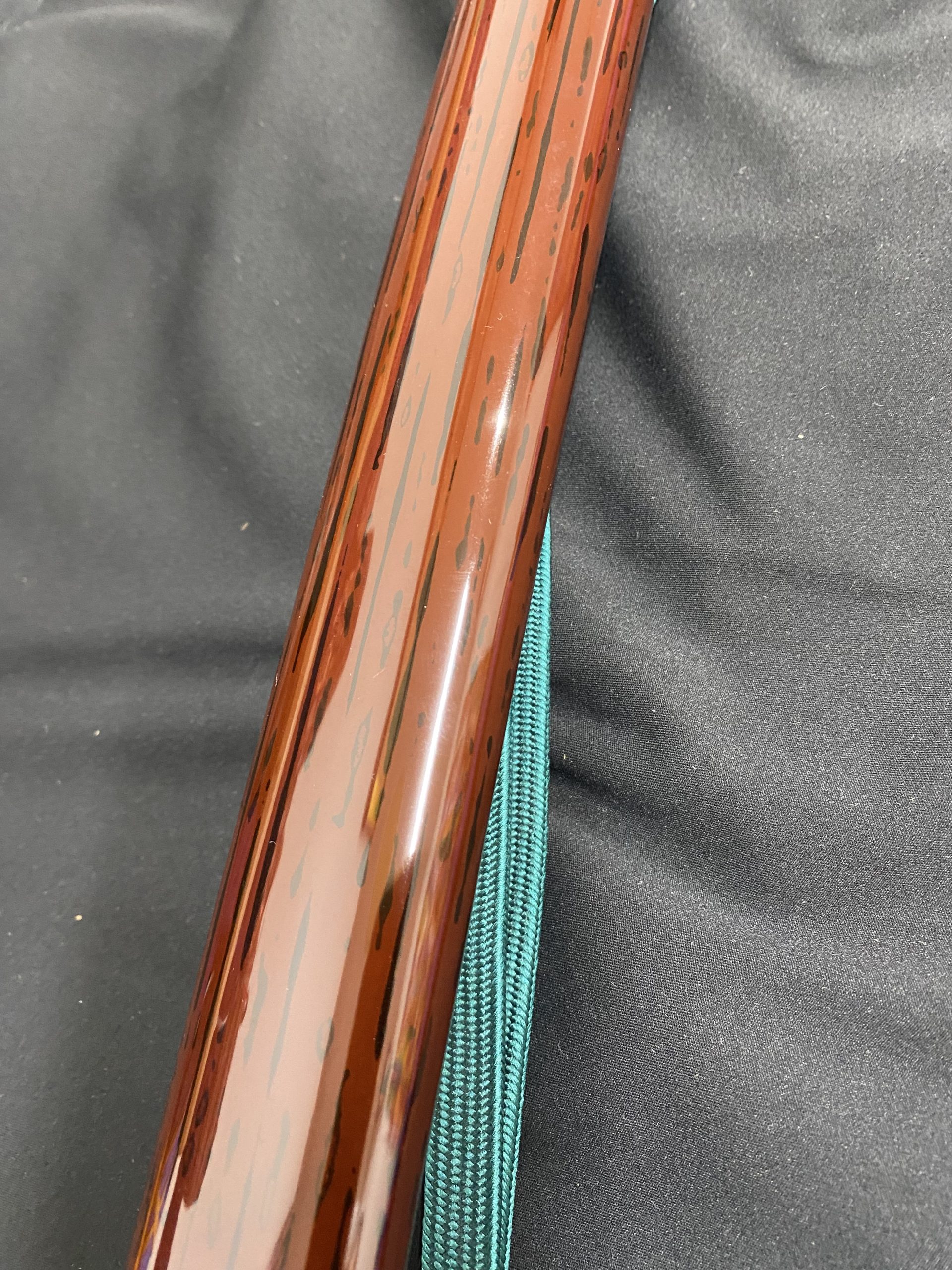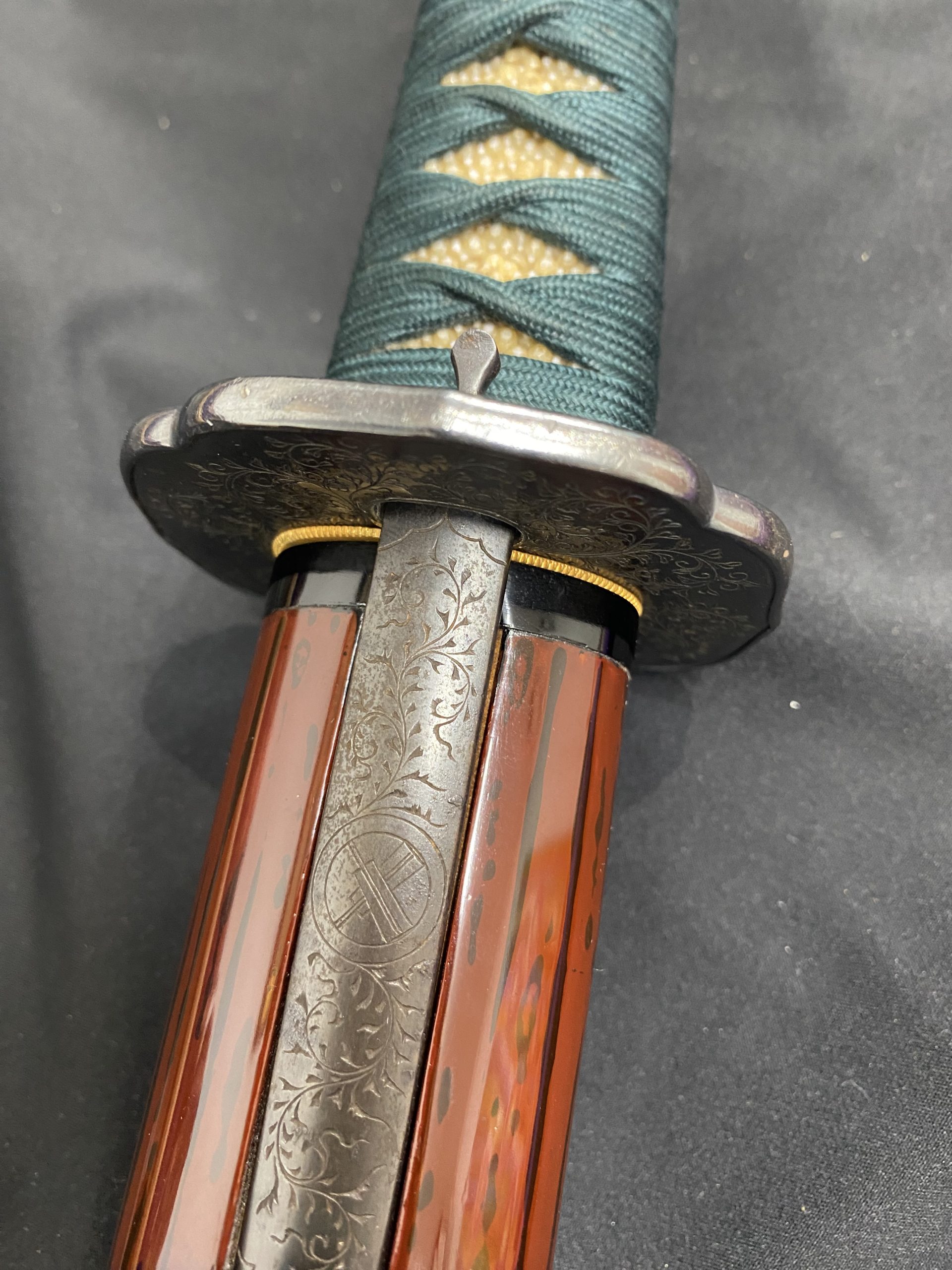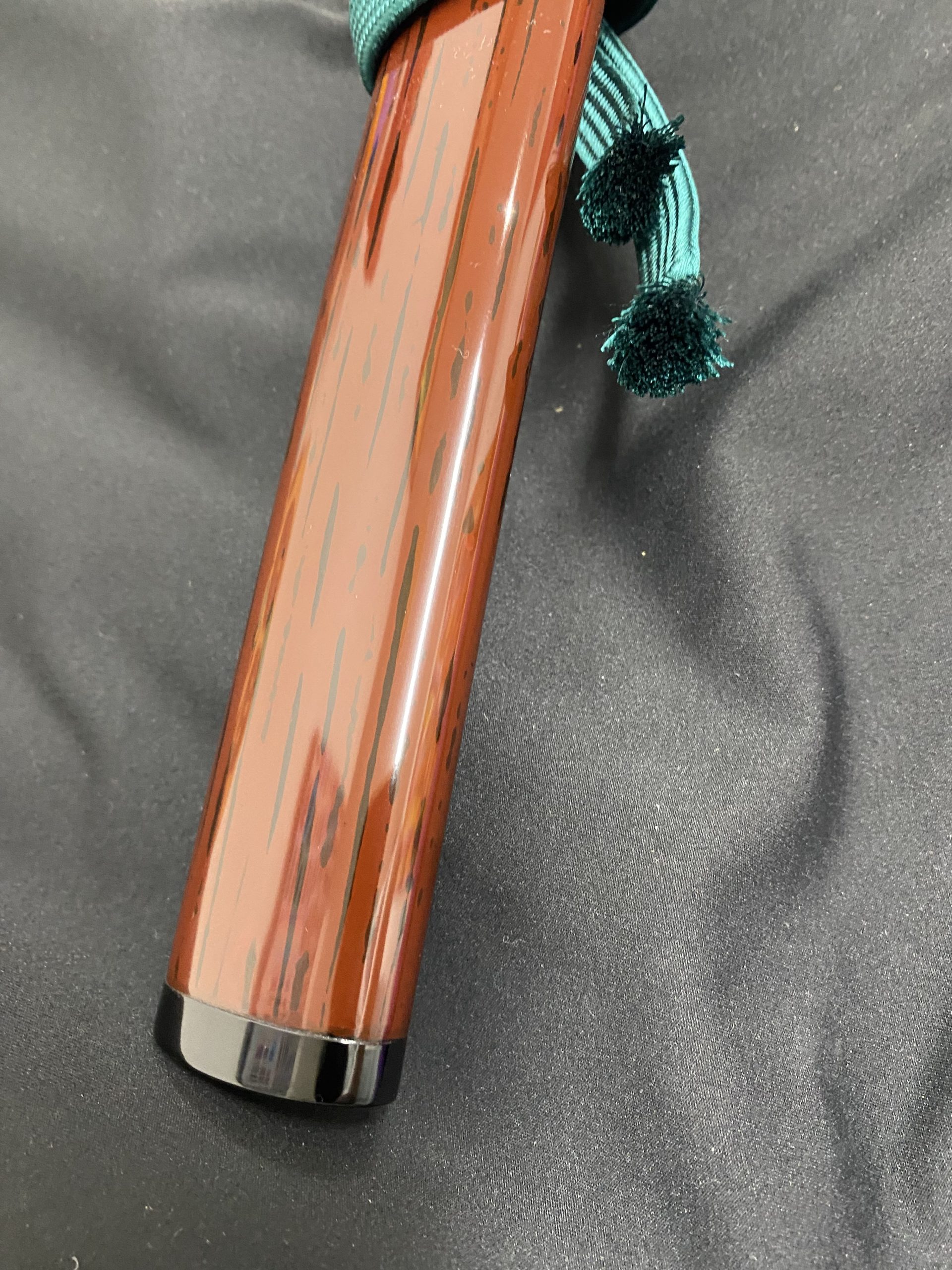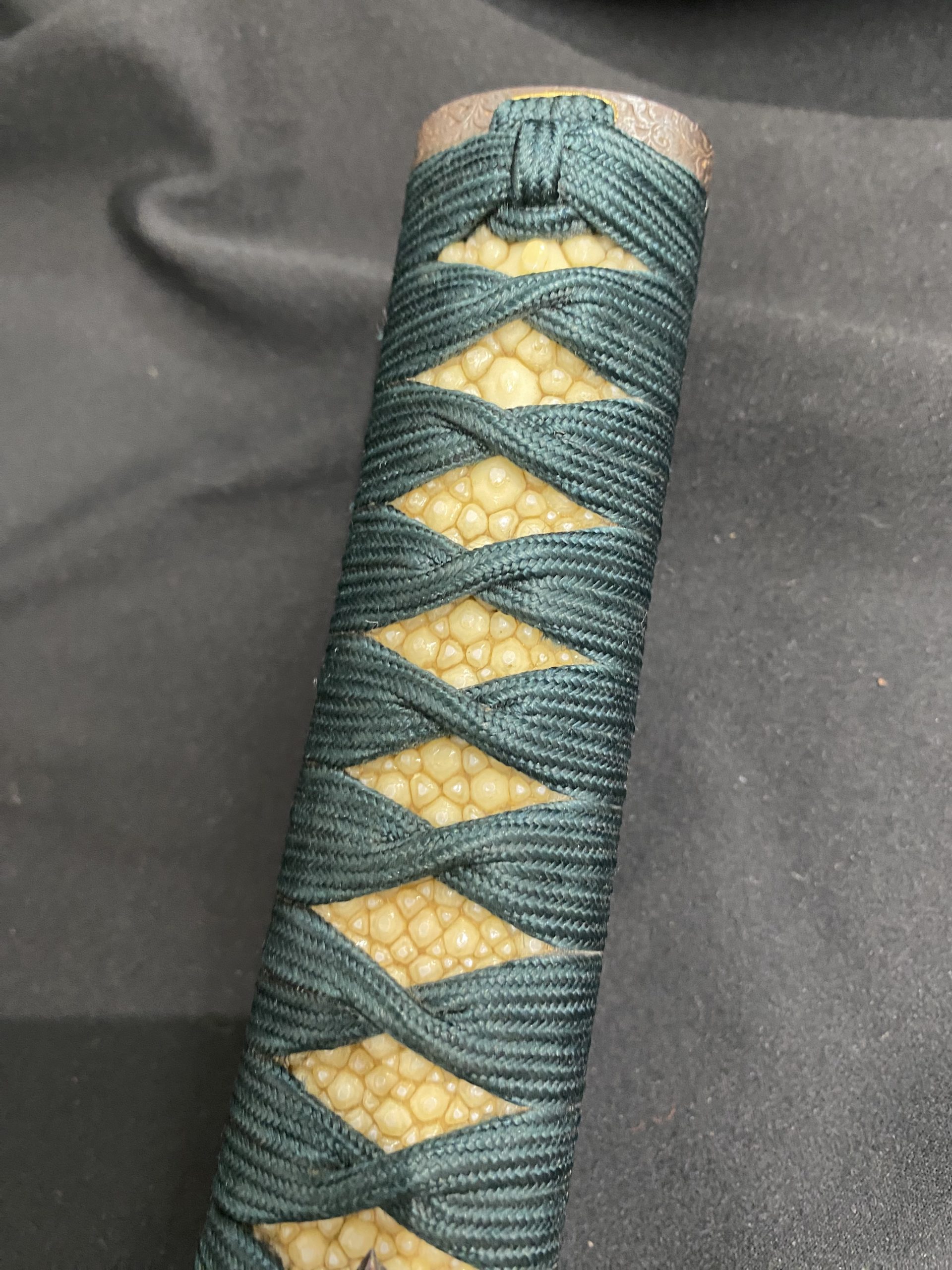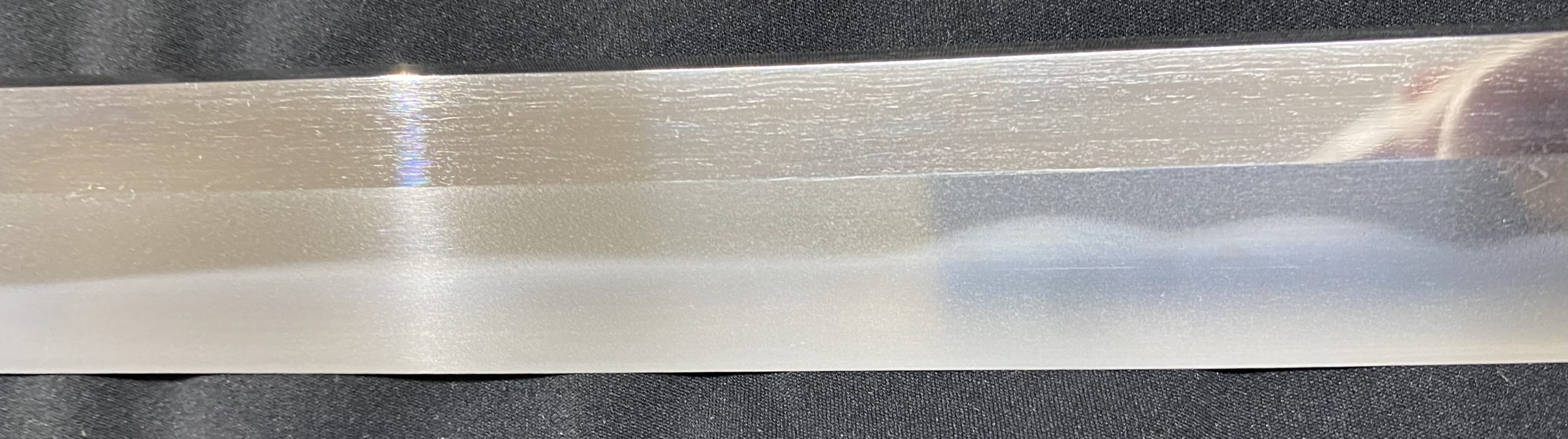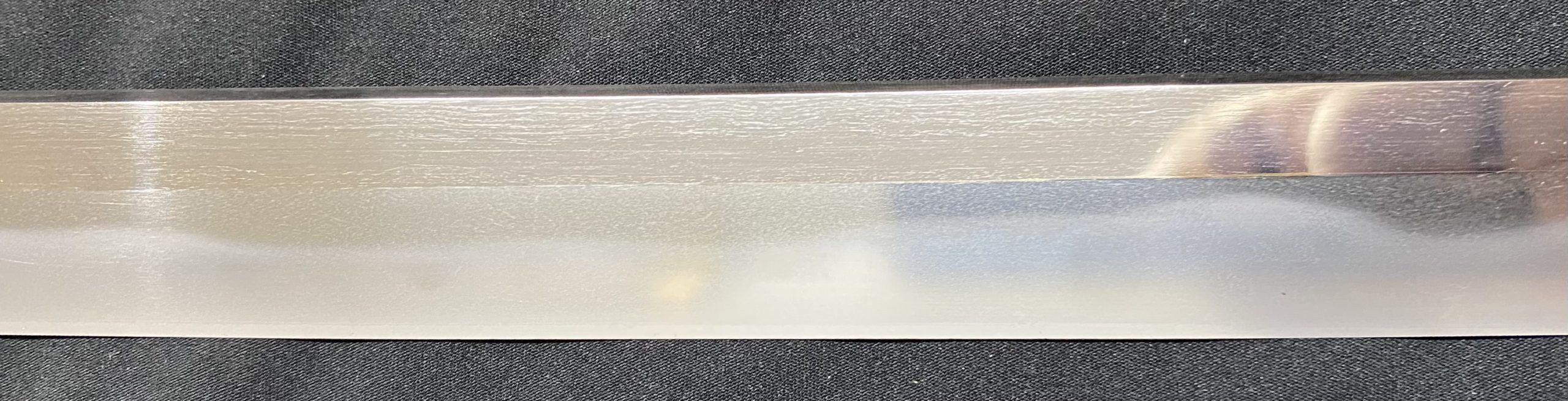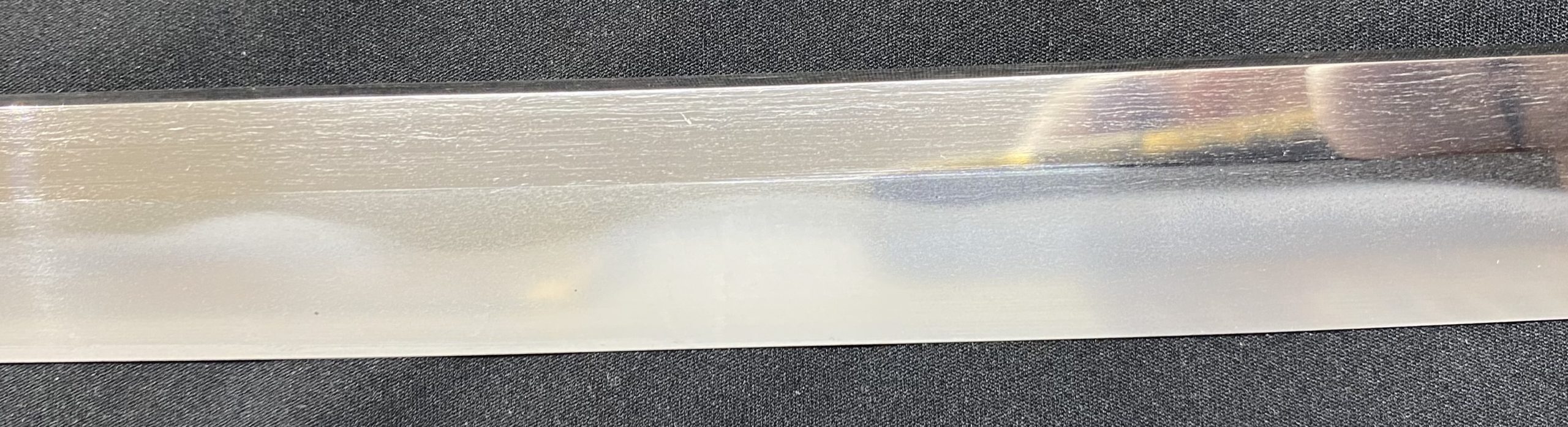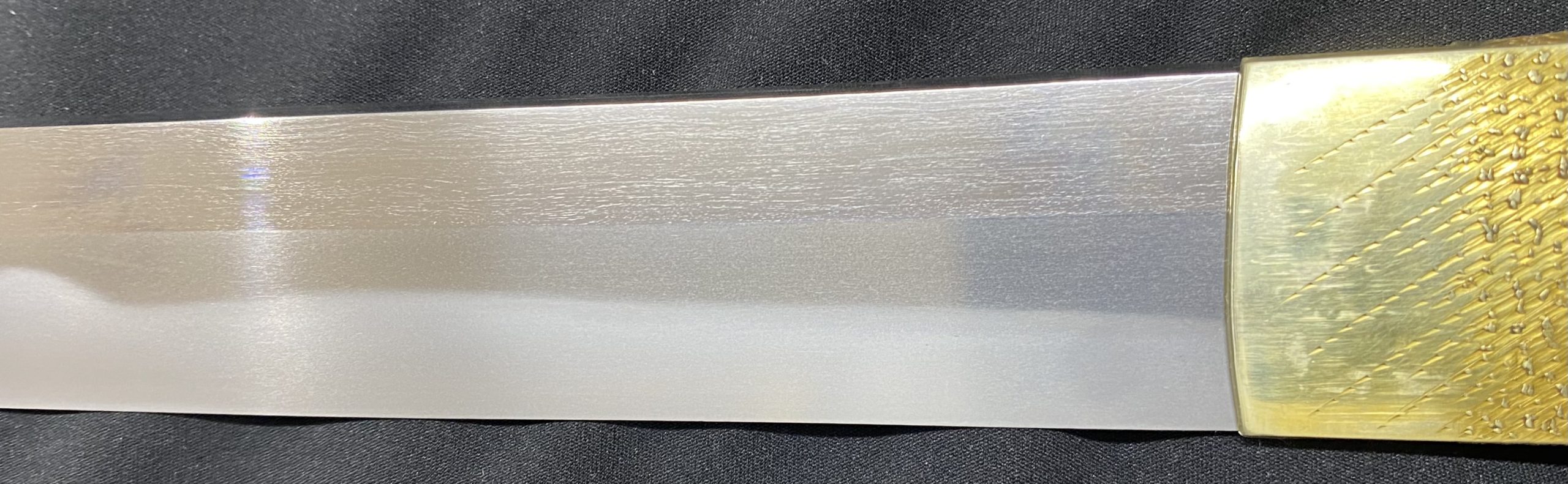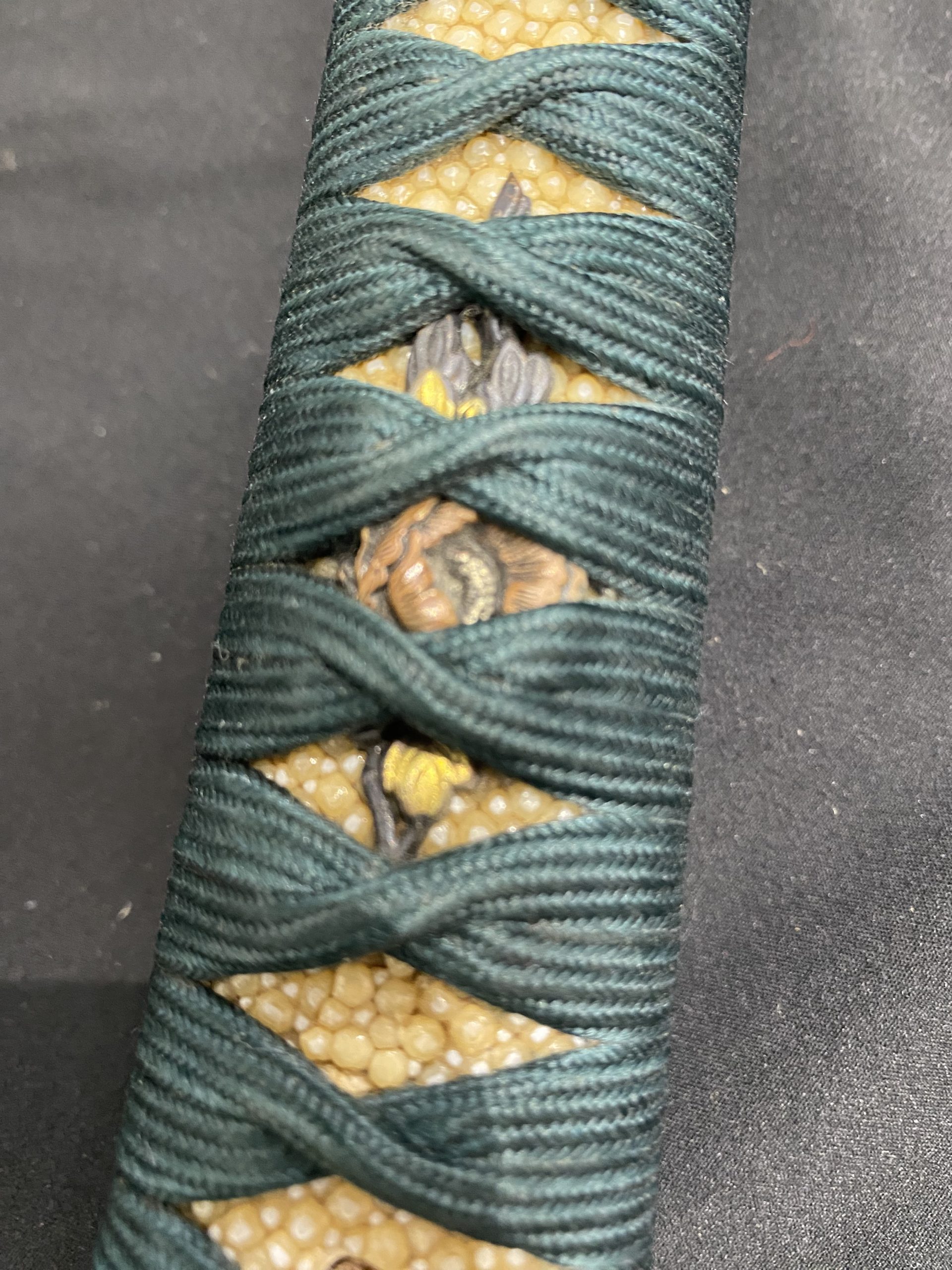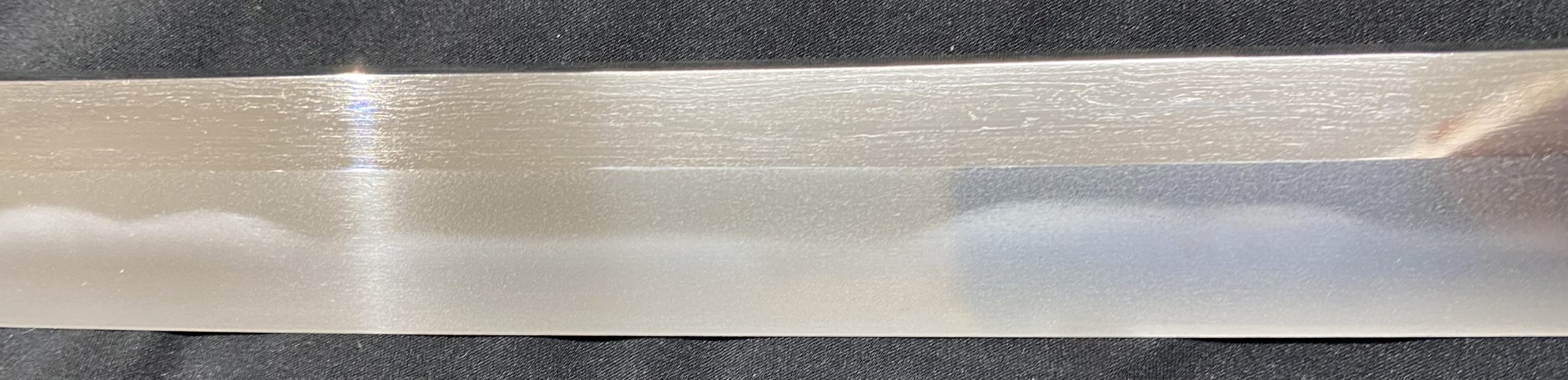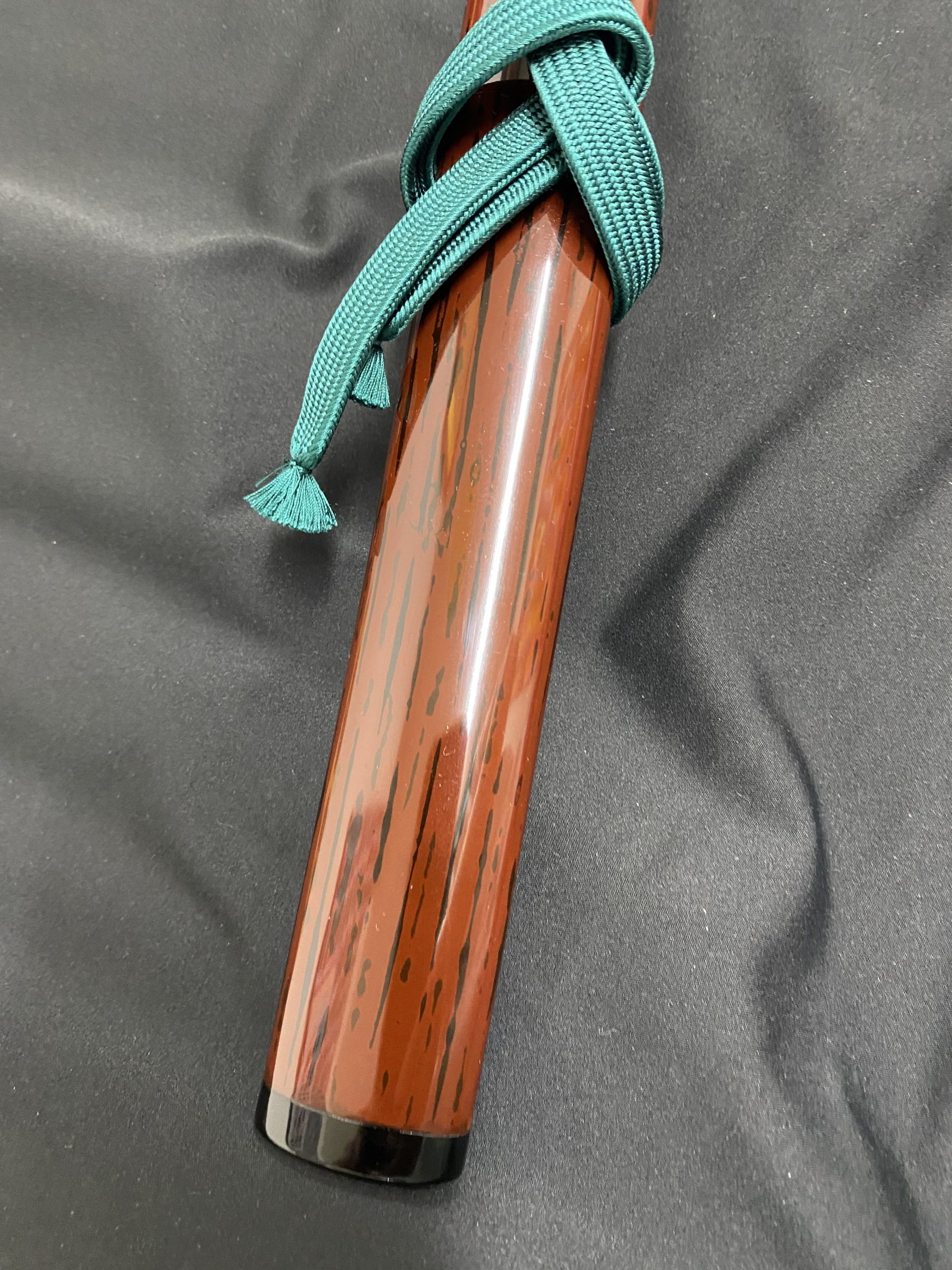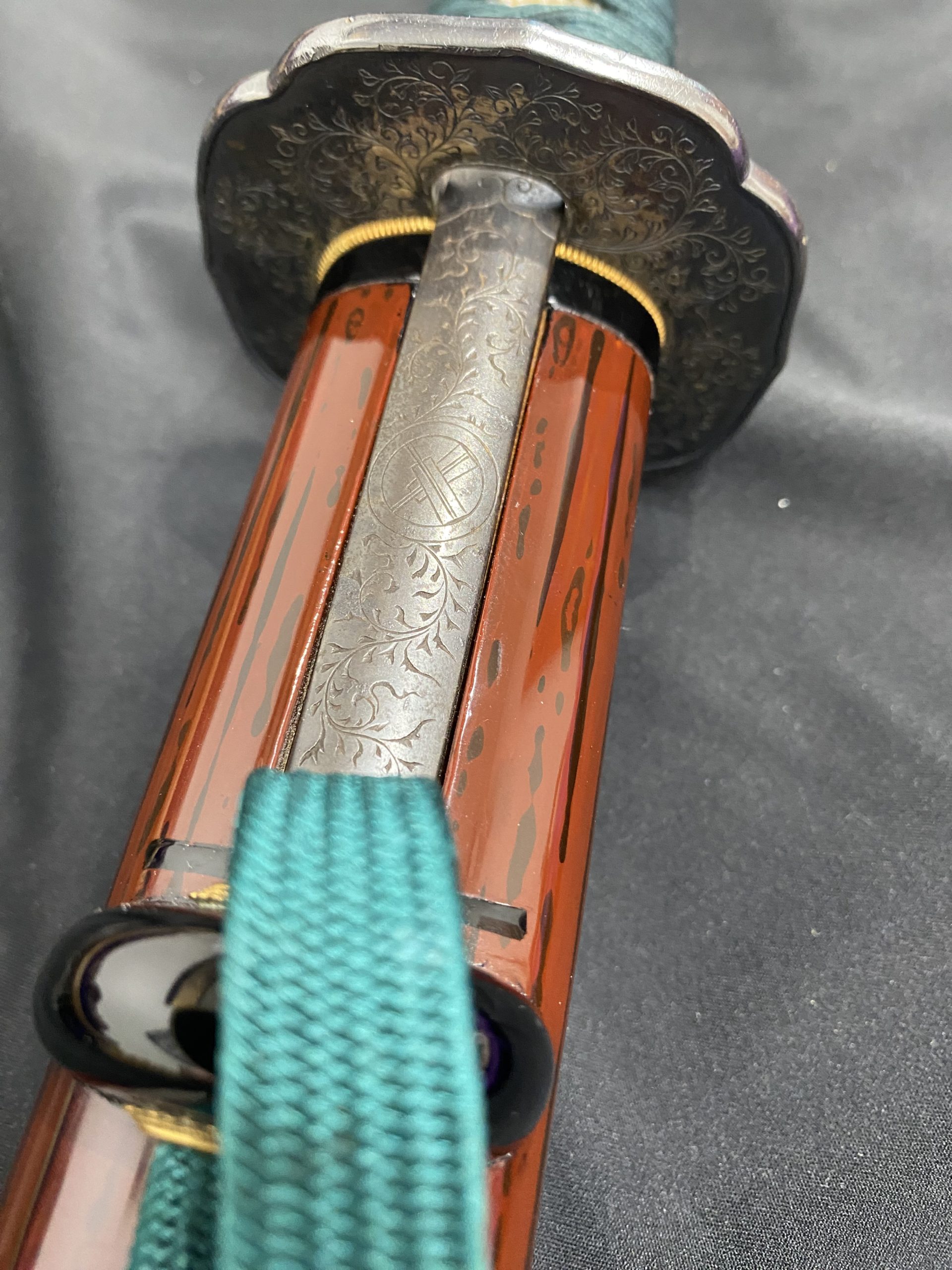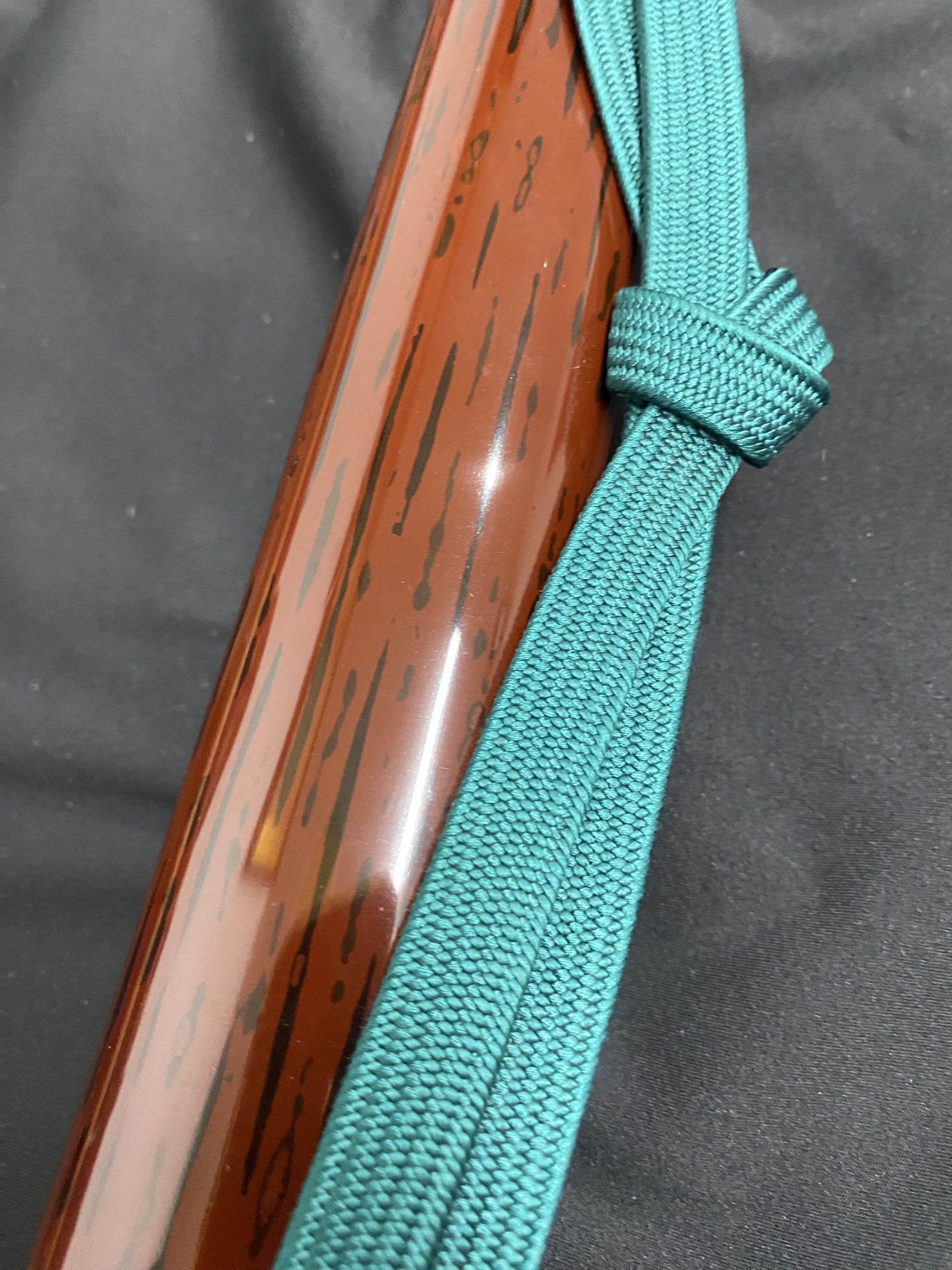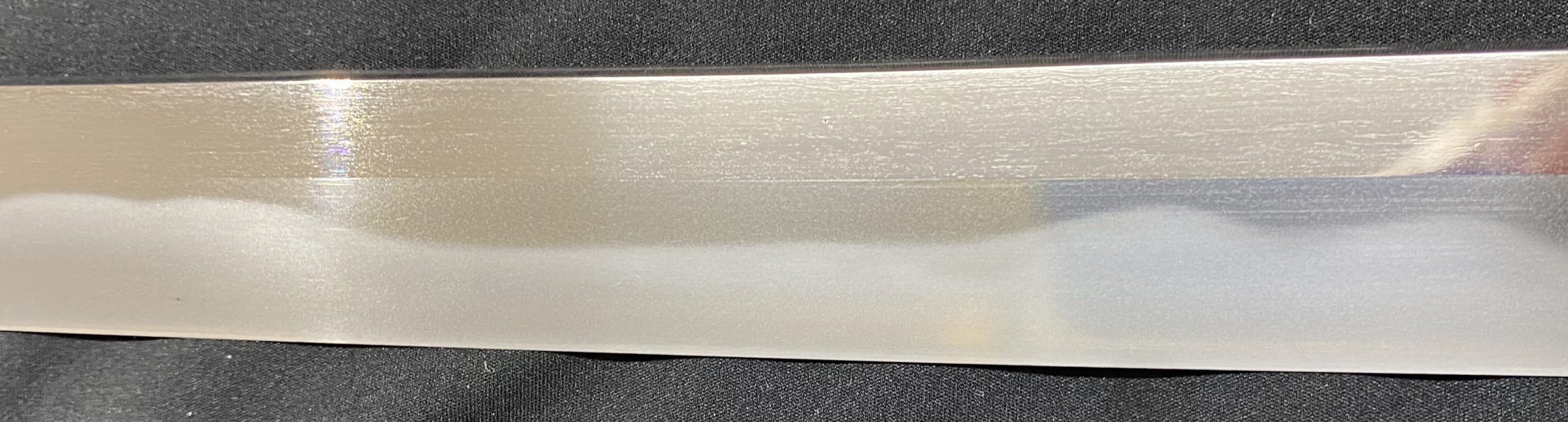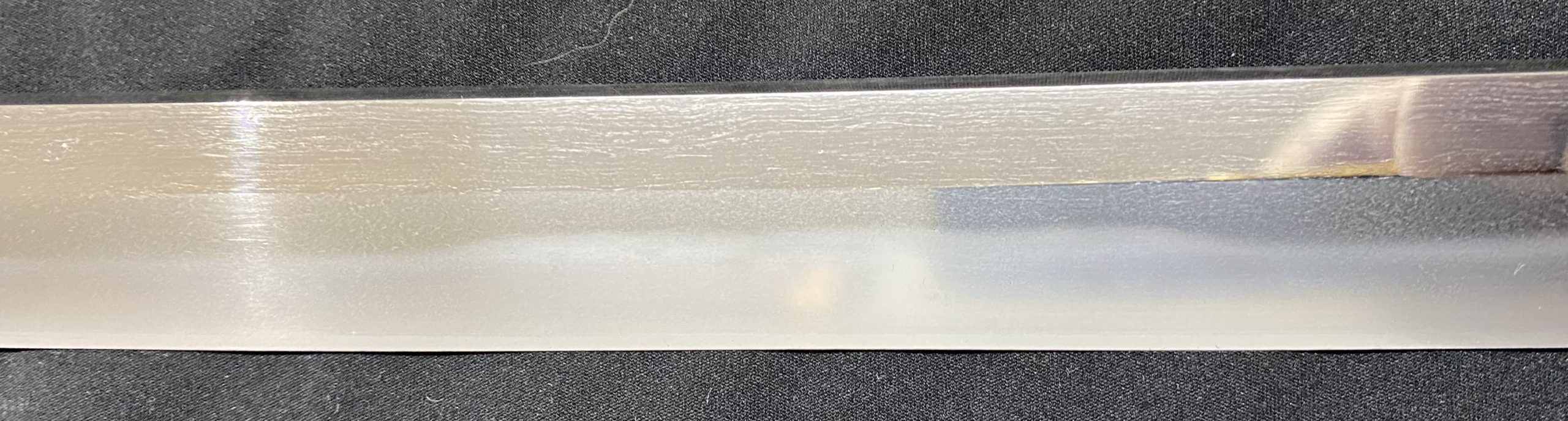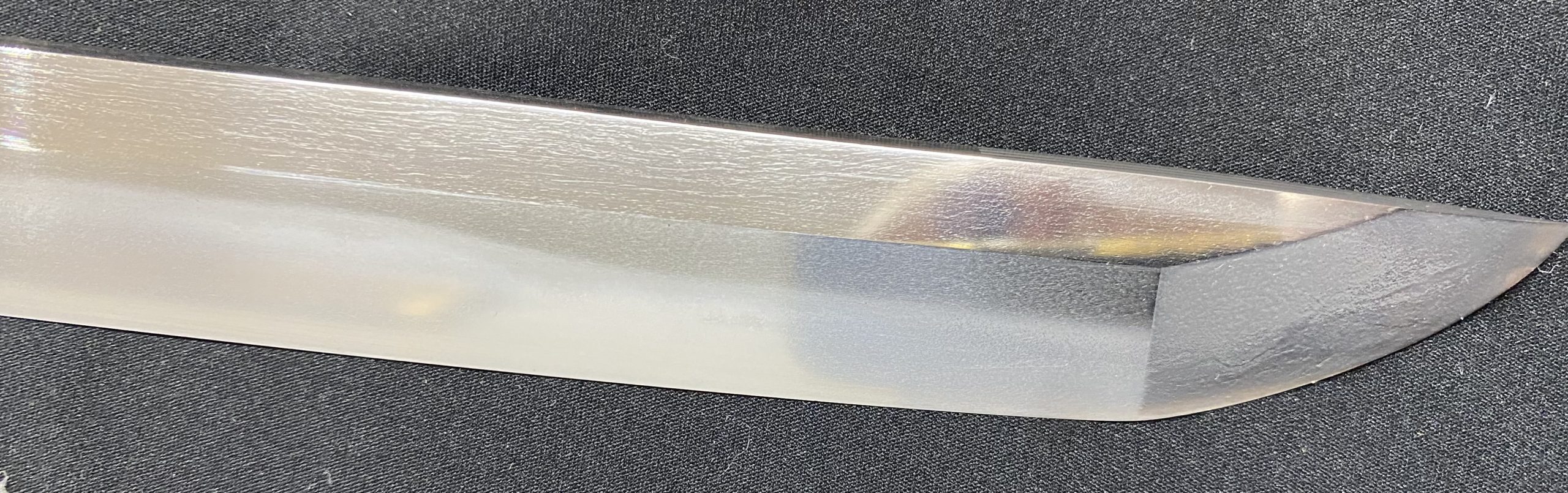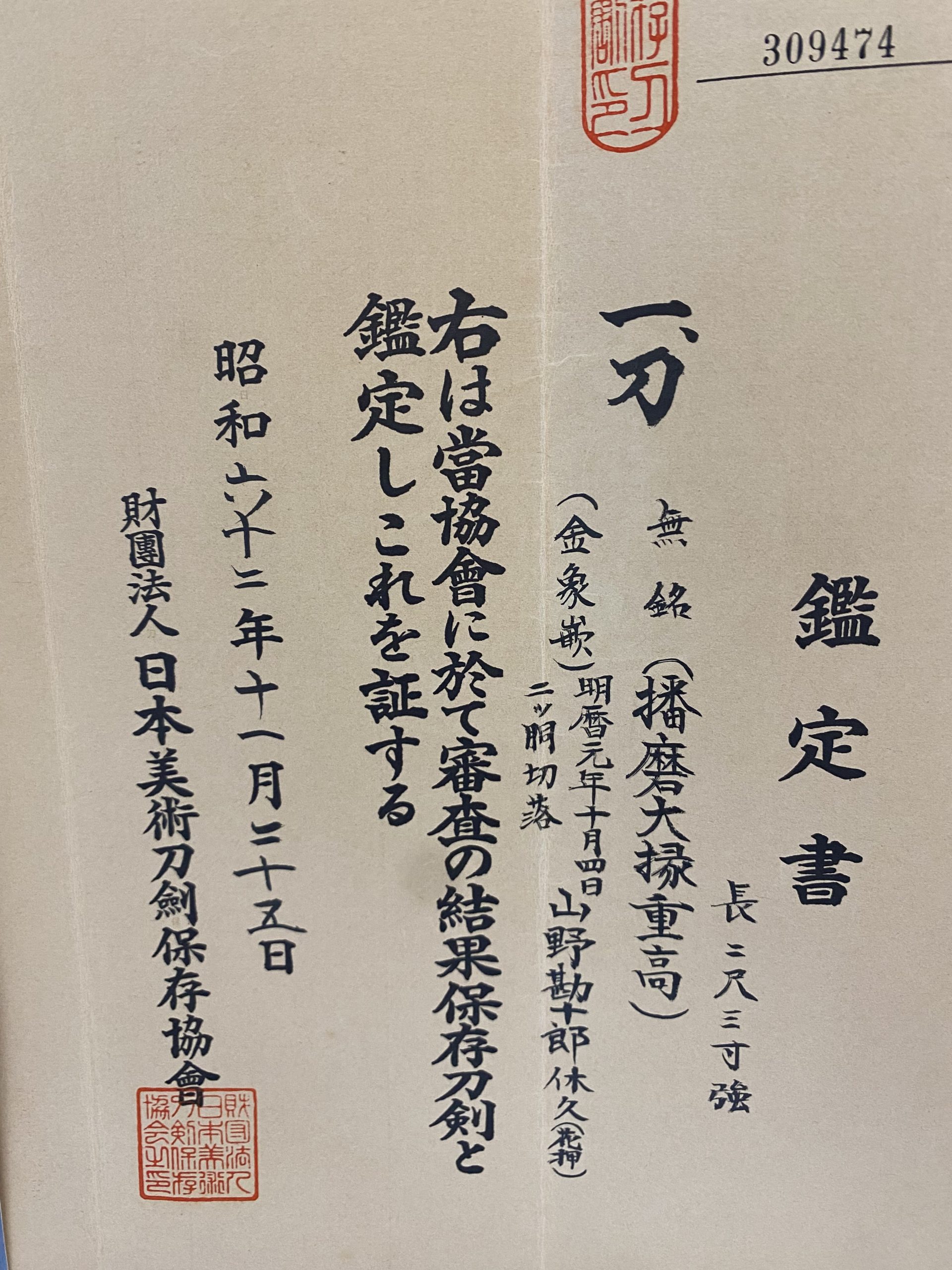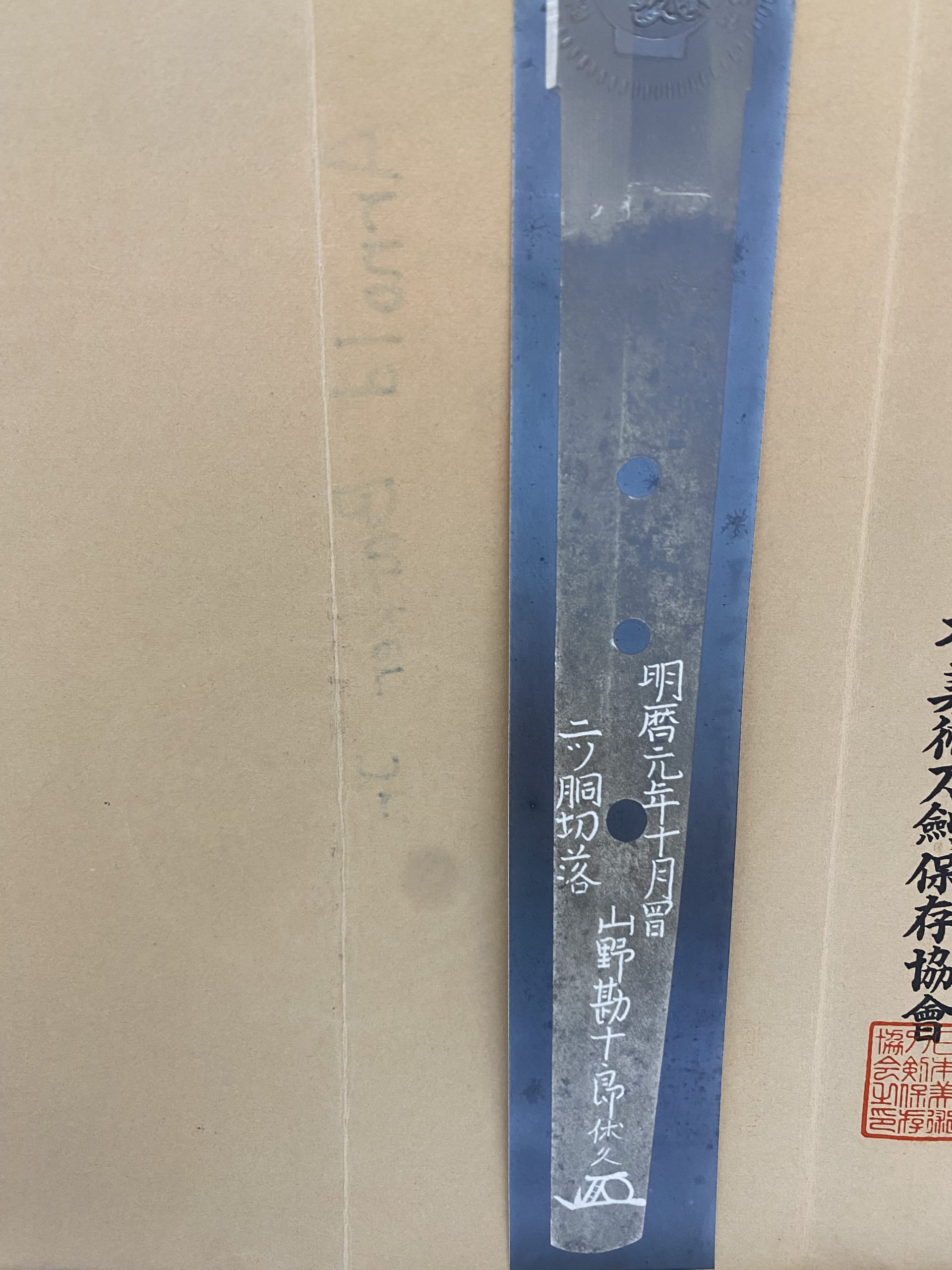
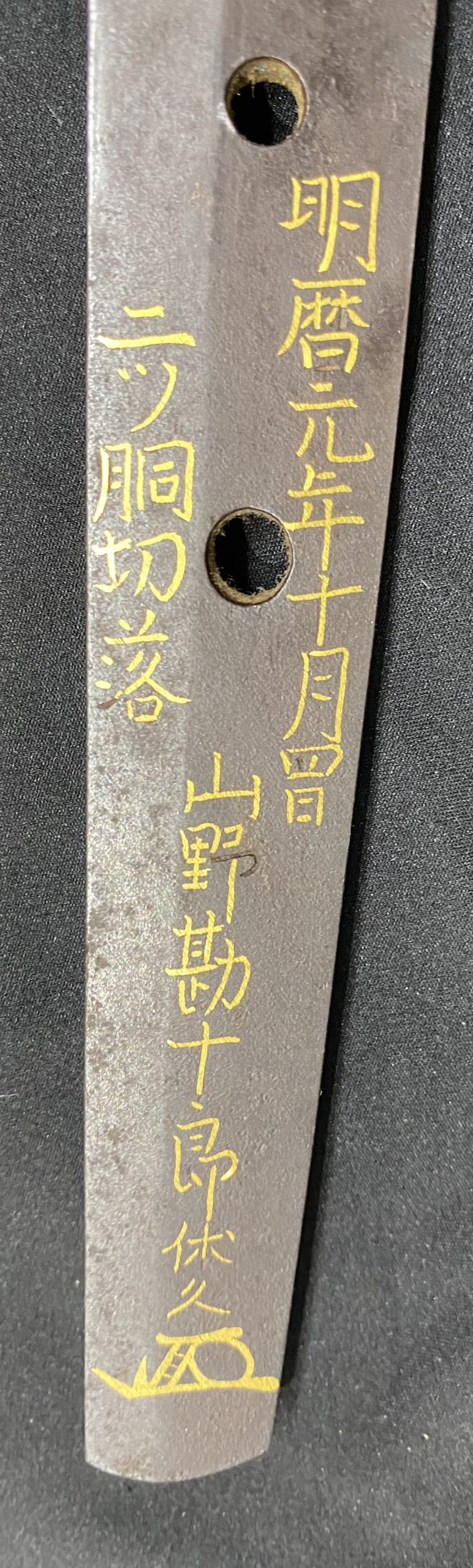
Excellent Katana Mumei Echizen Shigetaka with Gold Cutting Test. NBTHK Hozon Certificate.
With Beautiful Koshirae with Silver Fittings intricately carved katakiri style kozuka kogai tsuba
Katana,
Harima Daijō Shigetaka (播磨⼤掾重⾼)
Kinzōgan : Gold Inscription
Meireki gannen jūgatsu yokka, futatsu-dō kiri-otoshi, Yamano
Kanjūrō Yasuhisa + kaō
(明暦元年⼗⽉四⽇、⼆ッ胴切落、⼭野勘⼗郎休久「花押」)
“Yamano Kanjūrō Yasuhisa cut with this blade on the fourth day of
the tenth month Meireki one (1655) through two bodies + monogram”
nagasa ~ 69.7 cm
According to the result of the Shinsa committee of our society, we judge this work as authentic
and rank it as Hozon Tōken.
November 25, 1987
[Foundation] Nihon Bijutsu Tōken Hozon Kyōkai, NBTHK (⽇本美術⼑劍保存協會)
SHIGETAKA (重高), 1st gen., Keichō (慶長, 1596-1615), Echizen – “Shigetaka” (重高), “Shinshū Iida-jū Shigetaka”
(信州飯田住重高), “Harima no Daijō Fujiwara Shigetaka” (播磨大掾藤原重高), “Echizen-jū Harima no Daijō
Fujiwara Shigetaka” (越前住播磨大掾藤原重高), he came originally from Iida (飯田) in Shinano province, he studied
in Seki under Kanenori (兼則) and accompanied his master during the Tenshō era (天正, 1573-1592) to Echizen, he was
an excellent horimono engraver, there are relative many hira-zukuri wakizashi extant, fine itame with ji-nie all over, gunome
midare, notare, chū-suguha – see also “KANENORI (兼則), 2nd gen., Keichō (慶長, 1596-1615), Mino/Echizen”
SHIGETAKA (重高), 2nd gen., Kan´ei (寛永, 1624-1644), Echizen – “Harima no Daijō Fujiwara Shigetaka – Echizen
jū” (播磨大掾藤原重高・越前住, the part “Echizen-jū” is signed on the ura side), according to tradition a student of
the 1st gen. Dōhon Kanetane (道本兼植), we know blades from Genna (元和, 1615-1624) to Kan´ei, sometimes
standing-out itame mixed with masame and ji-nie, also a standing-out mokume, the steel is blackish, suguha, gunome, notare,
gunome-midare, it is said that he also worked in Edo, wazamono, chūjō-saku
- Yasuhisa (休久) – Used at the start of his career (oldest records from roughly 1656).
- Naganari (永成) – Used briefly between 1658 and 1659, taking a character from his father’s name.
- Narihisa (成久) – Used between 1660 and 1661.
- Hisahide (久英) – His final and most widely recognized name, used until his retirement or death around 1687.
- The Process: Yasuhisa/Hisahide would test blades by cutting through the stacked corpses of executed criminals (suemonogiri). He reportedly performed thousands of cuts over his 30-year career.
- Gold Inlay Inscriptions (Kinzōgan-mei): When a sword performed exceptionally well, the result was carved into the tang (nakago) of the blade and inlaid with gold. A typical inscription by him would state the date, his name/seal (kaō), the specific cut area, and how many bodies were severed in a single strike (e.g., Futatsu-dō meaning “two bodies cut through”).
- Famous Collaborations: He famously tested and certified legendary masterworks forged by premier smiths of the era, including Nagasone Kotetsu and Kazusa no Suke Kaneshige.