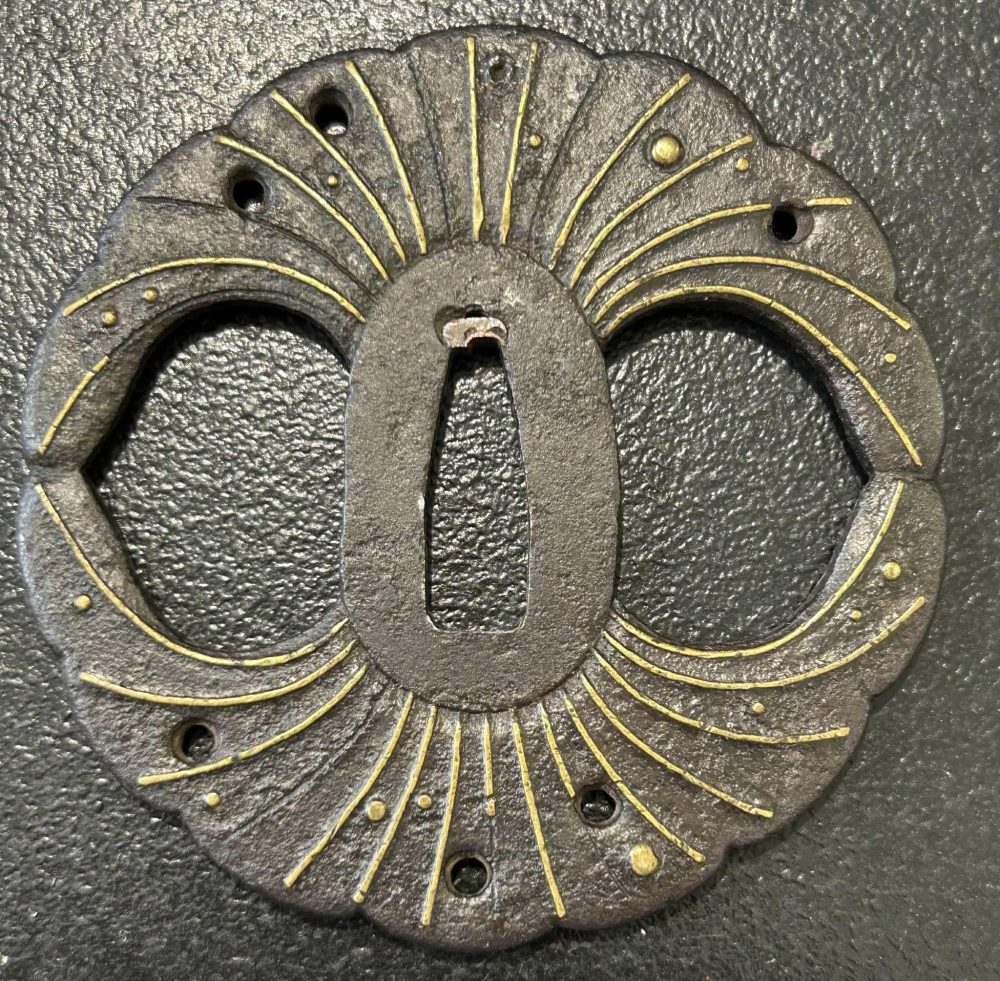
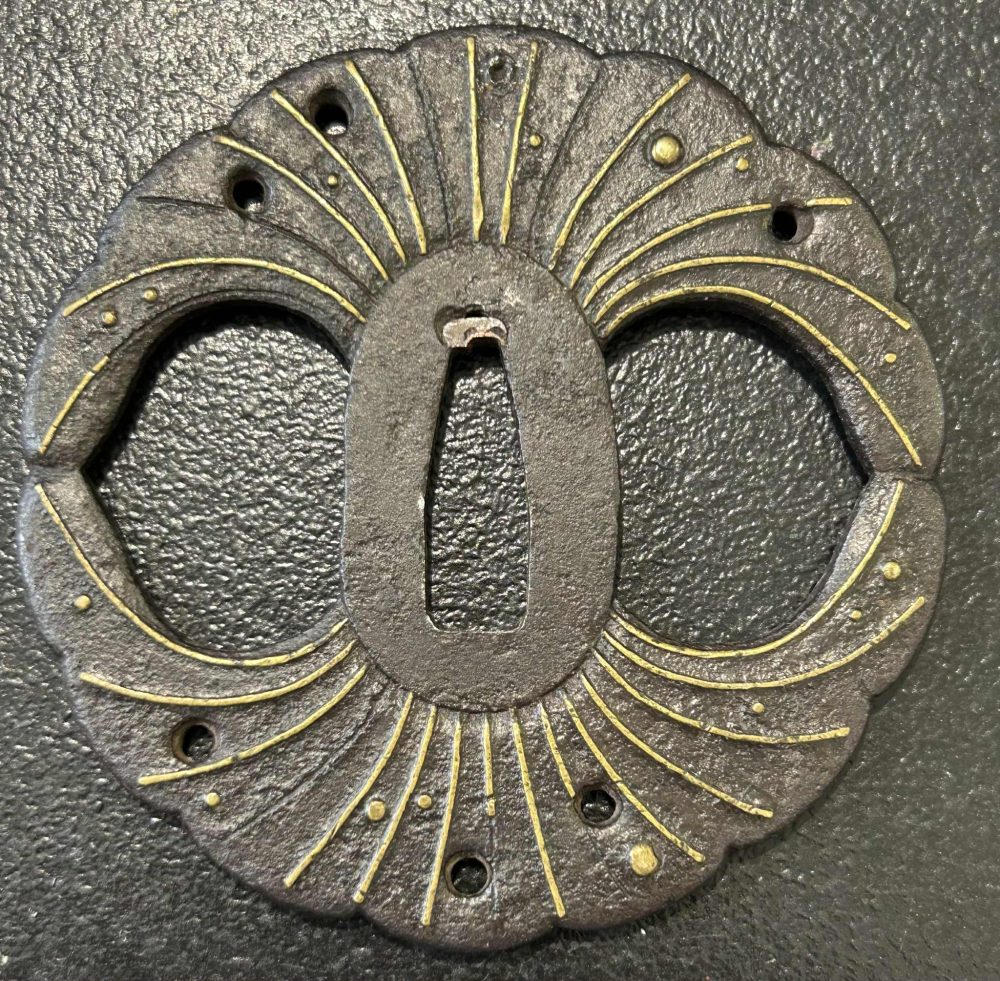
Large Iron Tsuba in the form of Gingko leaves
88mm x 85 mm x 3 mm
Heianjo tsuba (平安城鐔) refers to a style of Japanese sword guard that originated in Yamashiro province (present-day Kyoto Prefecture) during the Muromachi period. They are primarily known for two distinct techniques: brass inlay (zougan) and intricate openwork (sukashi).
Characteristics of Heianjo Tsuba
- Origin and Era: The style emerged during the Muromachi Shogunate and continued to be produced through the Edo period.
- Material: They are predominantly made of iron, often with inlays of brass, and sometimes gold, silver, or copper.
- Shape: Most Heianjo tsuba have a classic round (maru-gata) shape.
- Aesthetics: The style is known for being elaborate, decorative, and refined, often emphasizing artistic beauty over strict practicality.
Primary Styles
Heianjo tsuba can be broadly categorized into two main types based on their decorative techniques:
- Heianjo Zougan Tsuba (Brass Inlay): This style uses fine brass inlay (shinchu zougan) on an iron base, inheriting techniques from the earlier Onin style.
- Common motifs include:
- Botan (peony)
- Nanten (nandina)
- Karakusa (arabesque) patterns
- Family crests (mon)
- Heianjo Sukashi Tsuba (Openwork): Also known as Kyou Sukashi Tsuba, this type features dynamic openwork designs, often with a focus on the negative space and artistic composition. Motifs can include flowers, leaves, and various symbolic patterns.