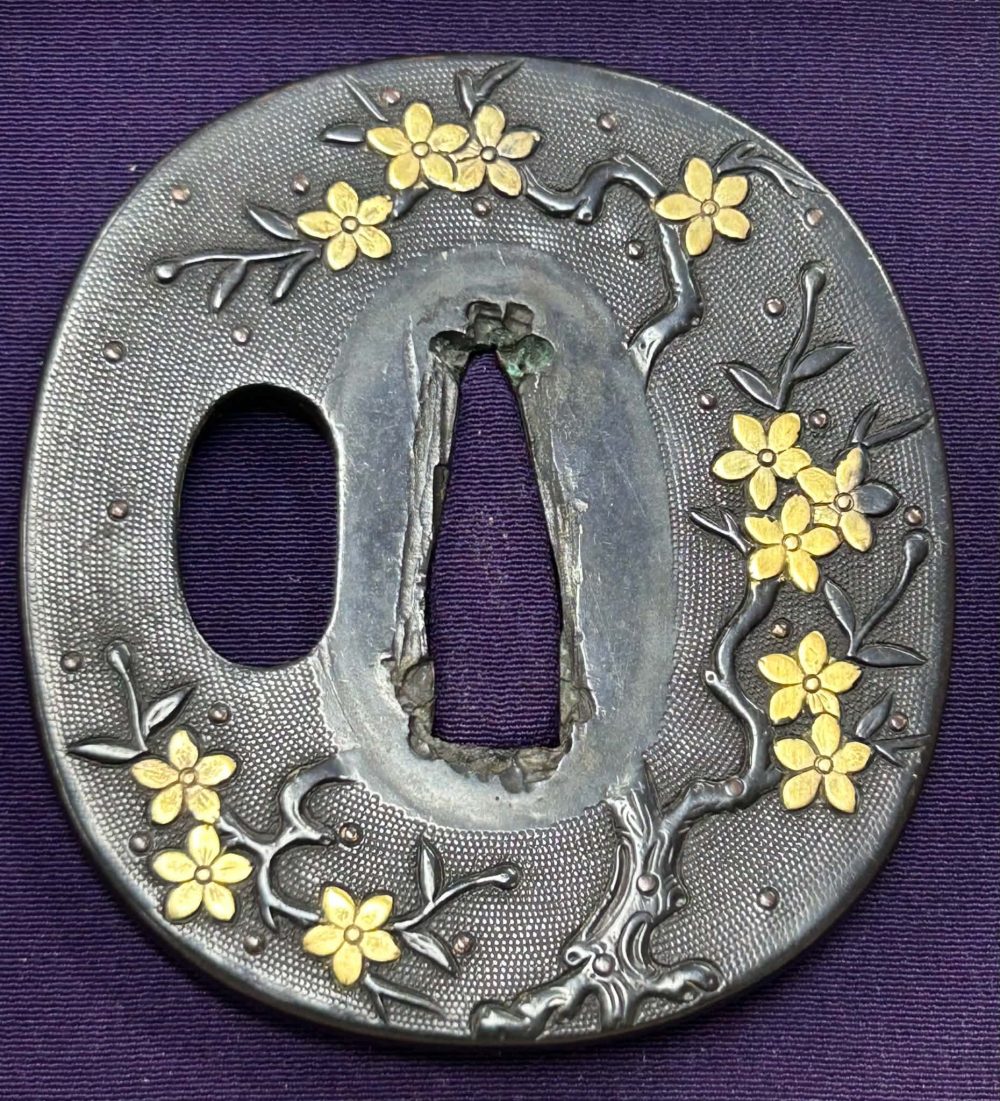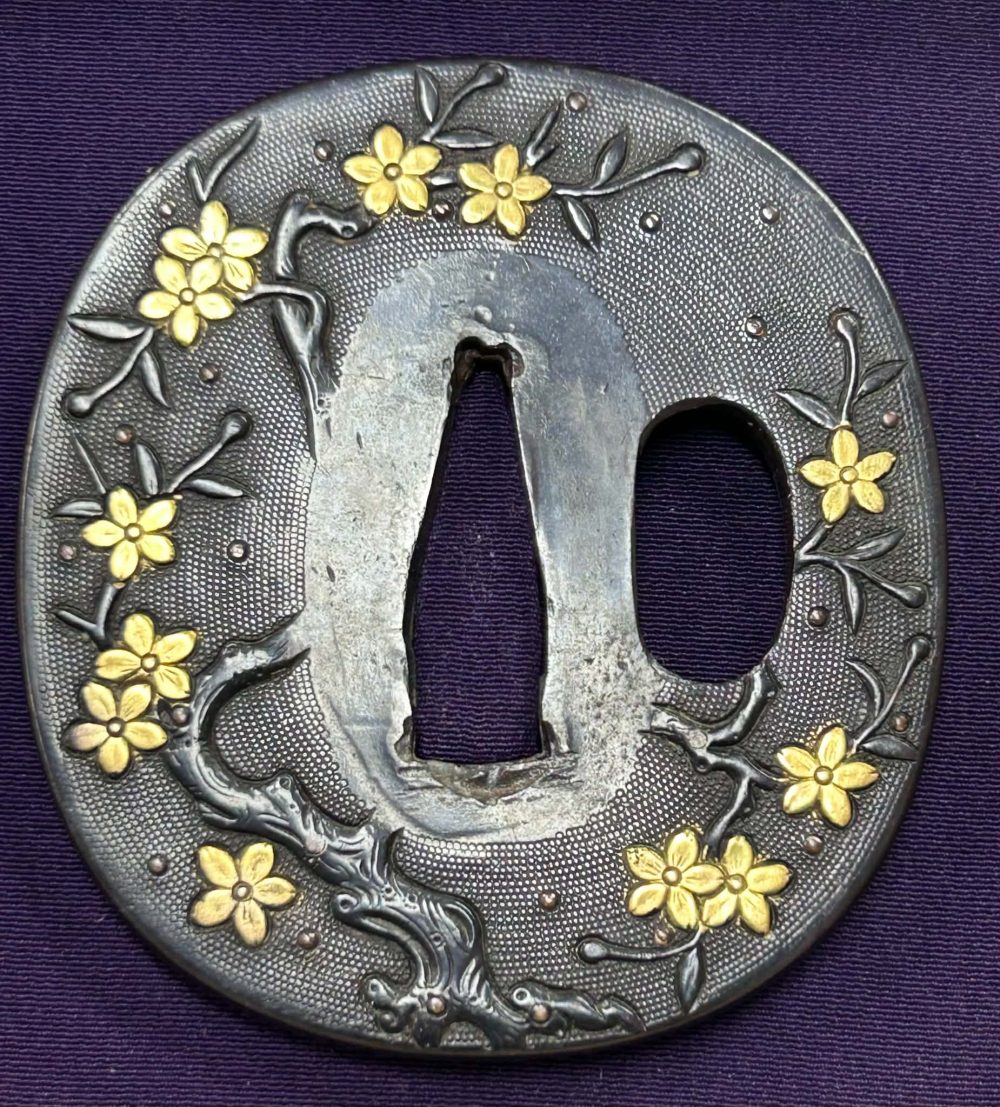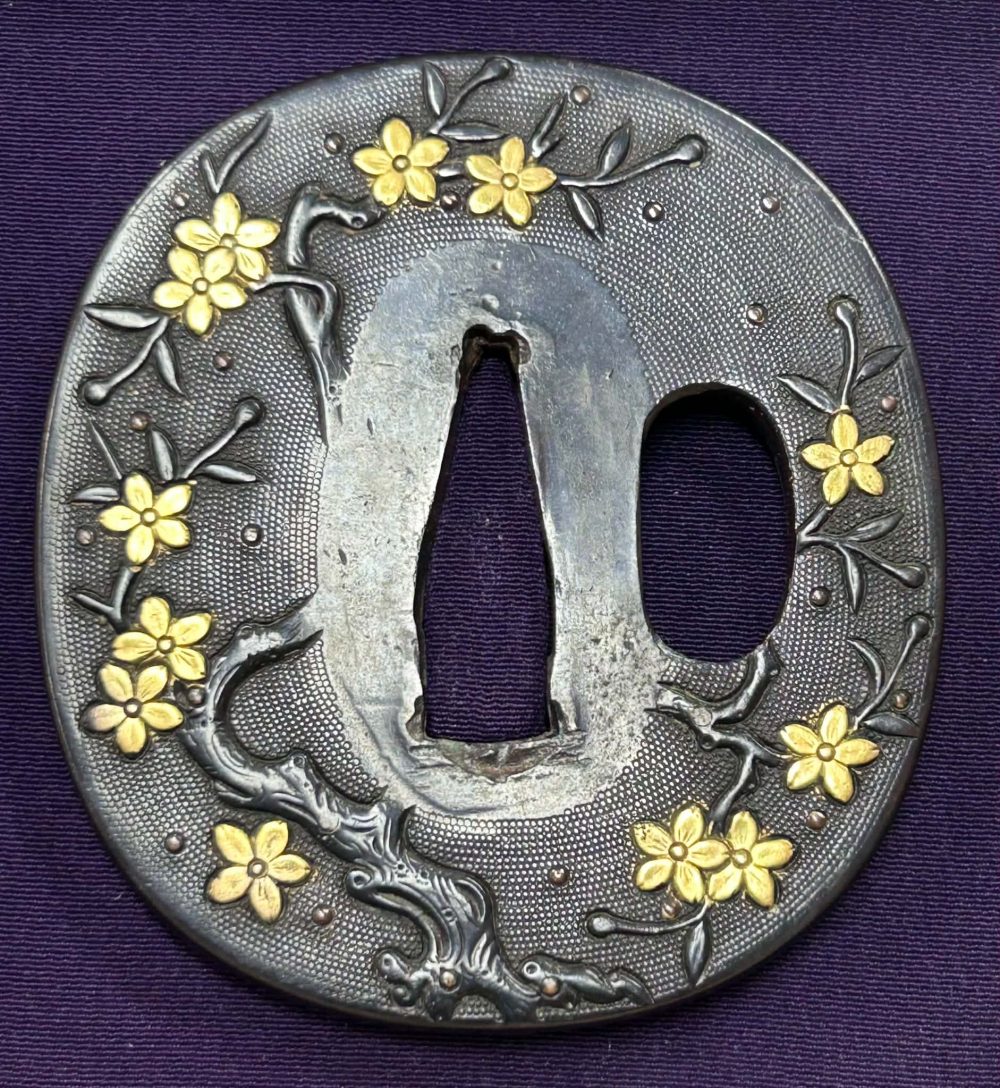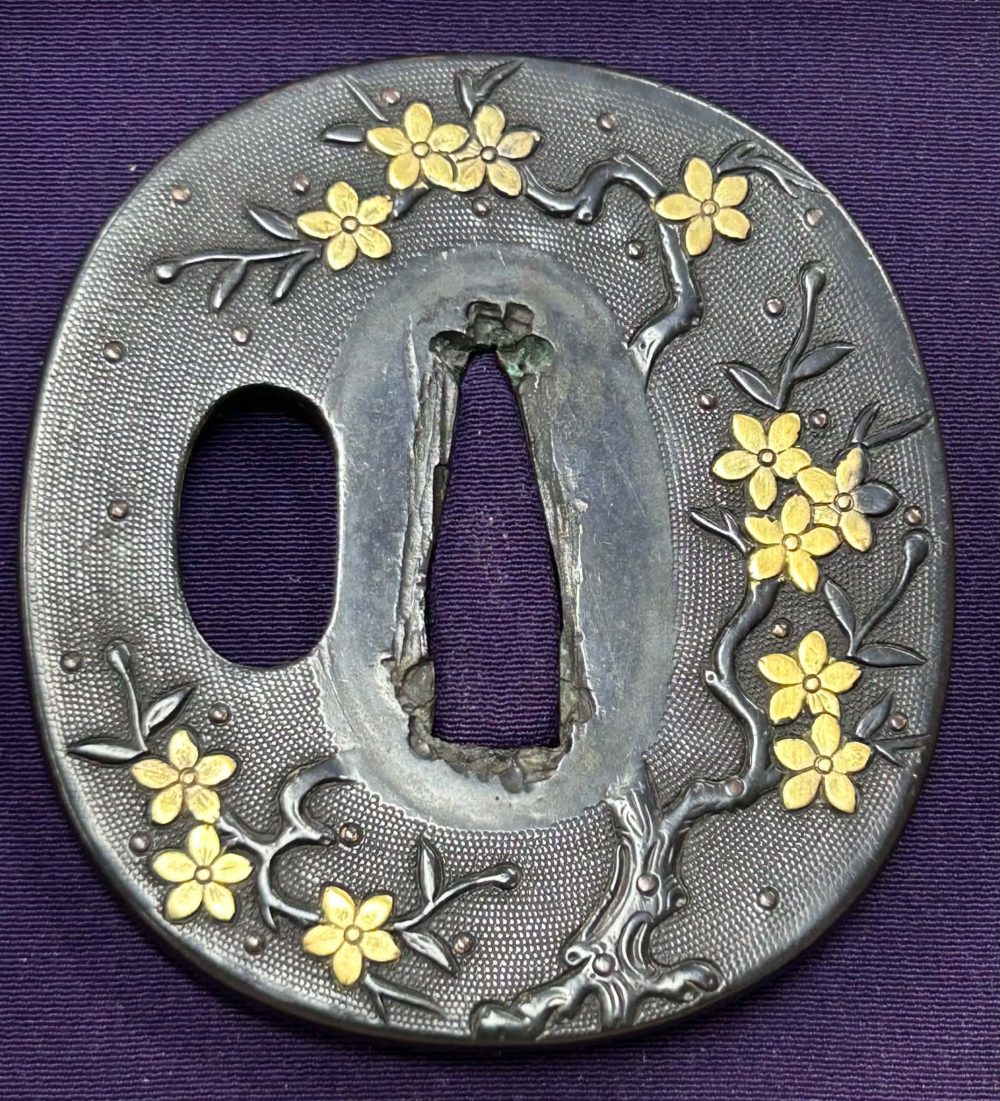
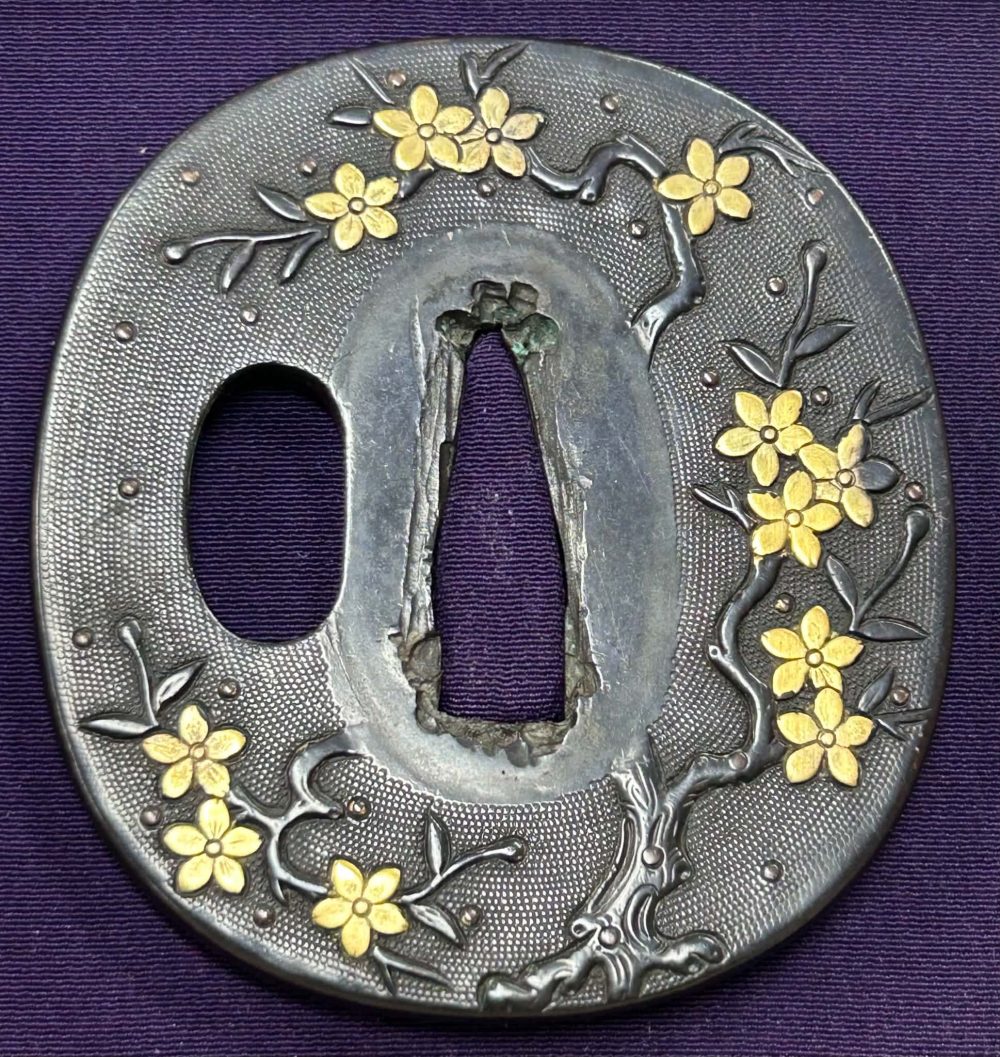
An excellent early Kokinko Tsuba with Motif of Plum tree and blossoms..Beautiful Dark Shakudo with super fine Nanako Ground.
70mm x 65mm
A Ko-Kinko tsuba (古金工鐔) is an antique Japanese sword guard created by early, usually anonymous “soft metal” craftsmen before and during the Momoyama period (pre-1603). Meaning “old metalworker,” Ko-Kinko serves as an umbrella term used by organizations like the NBTHK to classify early, masterfully crafted sword guards that predate the formal establishment of specialized schools like the Goto school. Unlike mainstream samurai guards forged from rugged iron, Ko-Kinko tsuba are highly celebrated for their usage of precious alloys and decorative elegance.
Key Characteristics & Materials
-
- Soft Metal Construction: Craftsmen primarily worked with shakudō (a rich copper-gold alloy that patinates to a deep blue-black), yamagane (unrefined copper), brass, or bronze.
- Intricate Groundwork: They frequently feature a nanako (fish-egg) ground, where hundreds of microscopic dots are meticulously punched onto the surface to create texture.
- Classical Carving and Inlays: Designs utilize takabori (high relief carving) paired with uttori iro-e (a classical technique where gold or silver sheet overlay is pressed into borders).
- The Fukurin Edge: Many pieces feature an outer rim wrapped in a protective and decorative sheet metal band called Fukurin.
Popular Historical Motifs
Because these sword guards were crafted during transitional times in Japanese history, their themes range from deep cultural symbols to rare historical anomalies:
-
- Nature & Folk Life: Common designs include waves, seashells, chrysanthemums, and bamboo, which captured everyday life and natural beauty.
- Mythology: Dragons, phoenixes, and protective deities are frequently carved into the metal to symbolize power and eternity.
- Hidden Christian Crosses: A rare and highly collectible subset includes the Kakure Kirishitan (Hidden Christian) tsuba. These pieces feature clever, disguised cross patterns seamlessly worked into floral or geometric openwork (sukashi) to bypass the Tokugawa shogunate’s strict prohibitions against Christianity.
Valuation & Collectability
Today, genuine Ko-Kinko Tsuba are prized items in institutions like the Metropolitan Museum of Art and among private collectors.