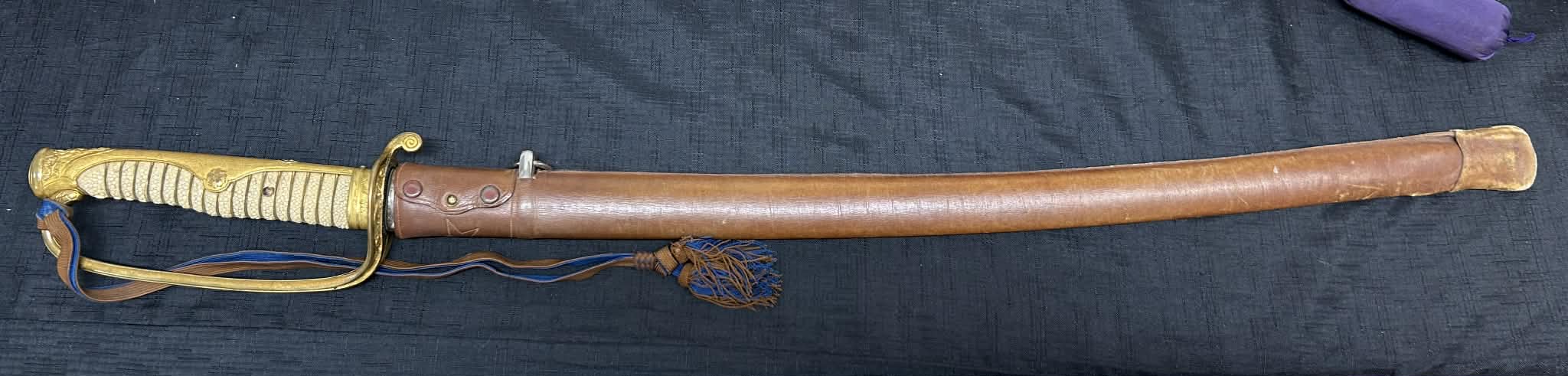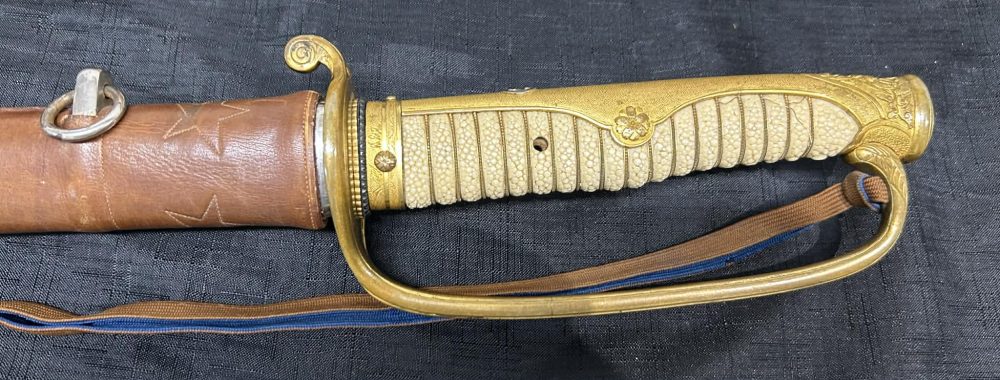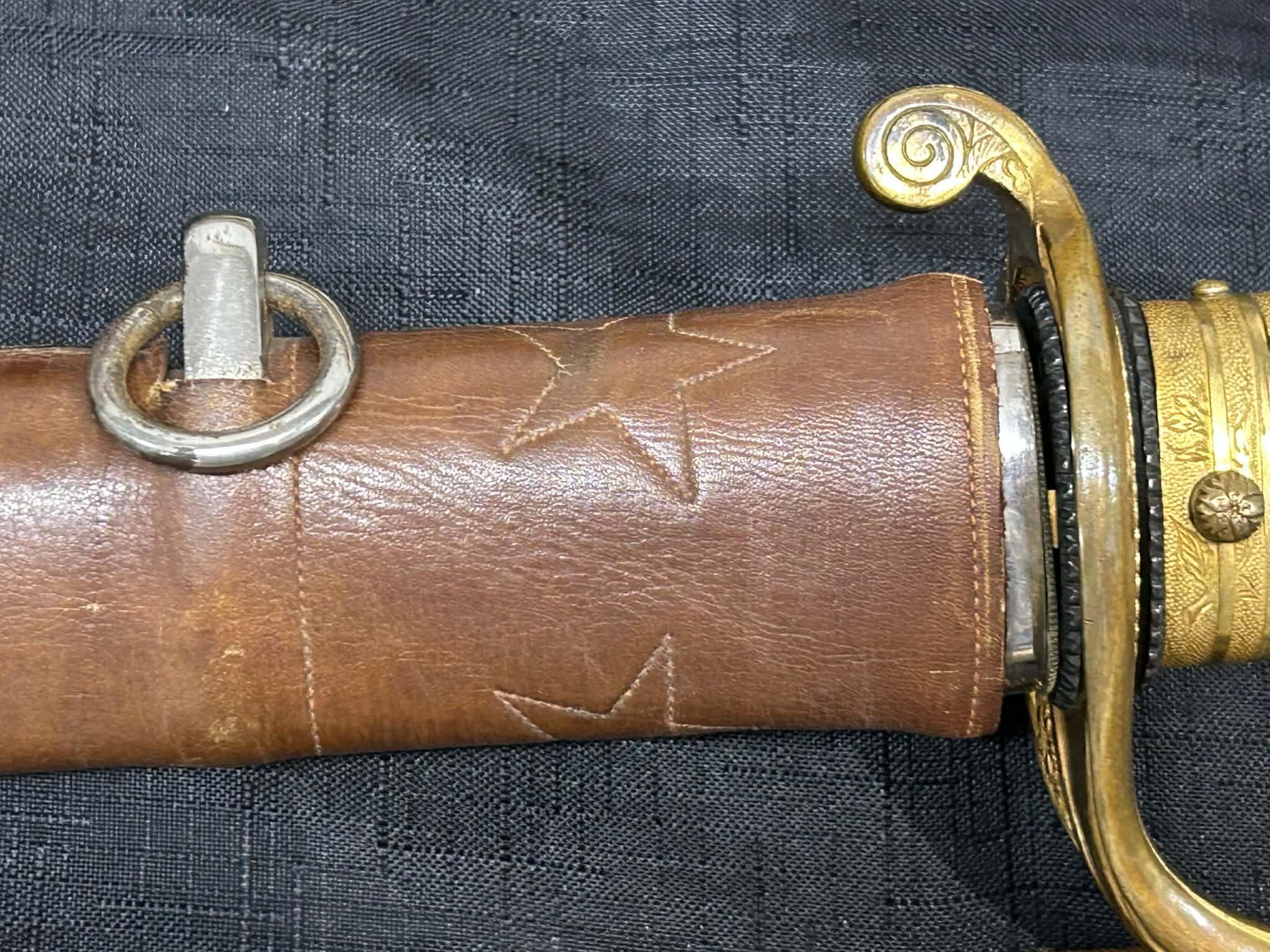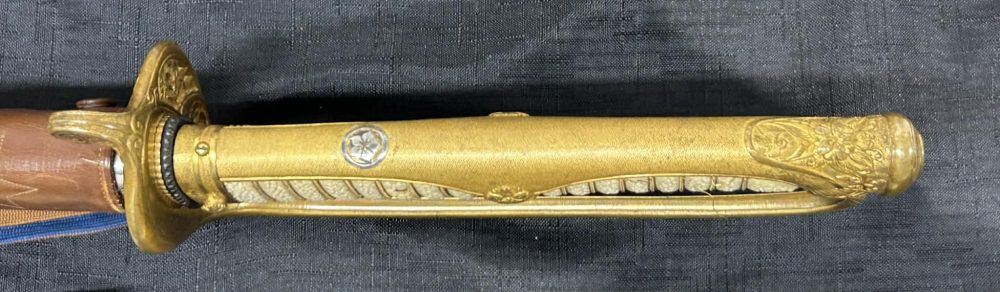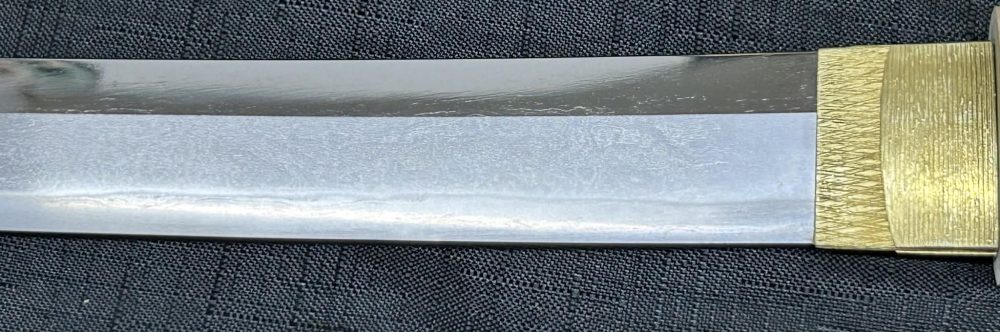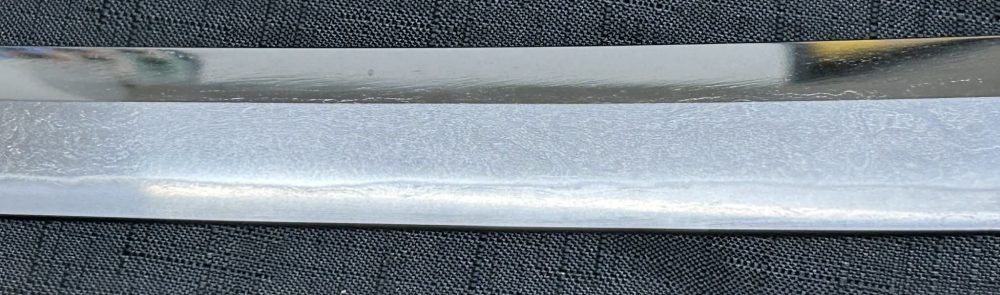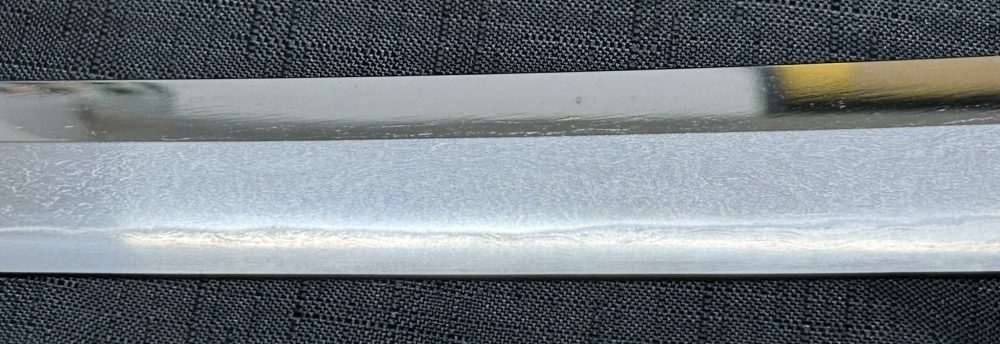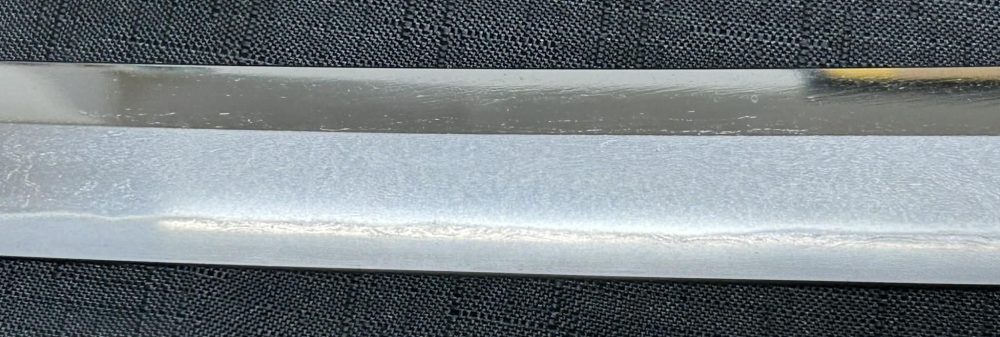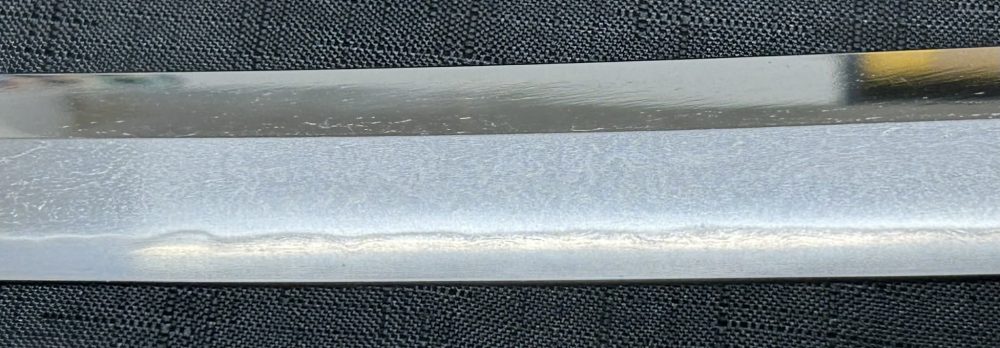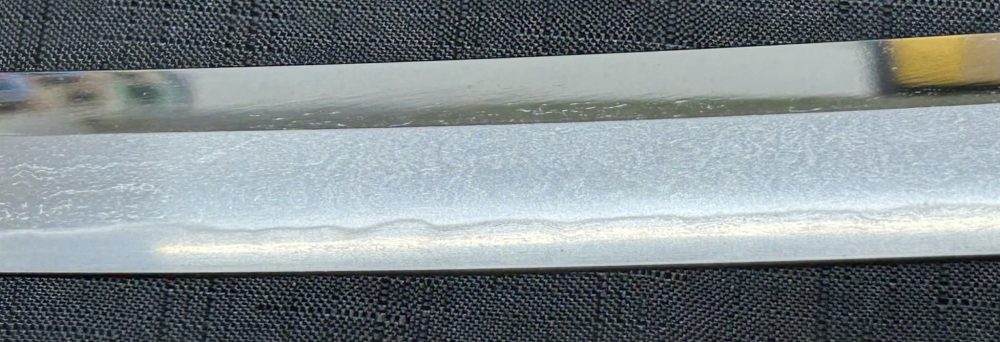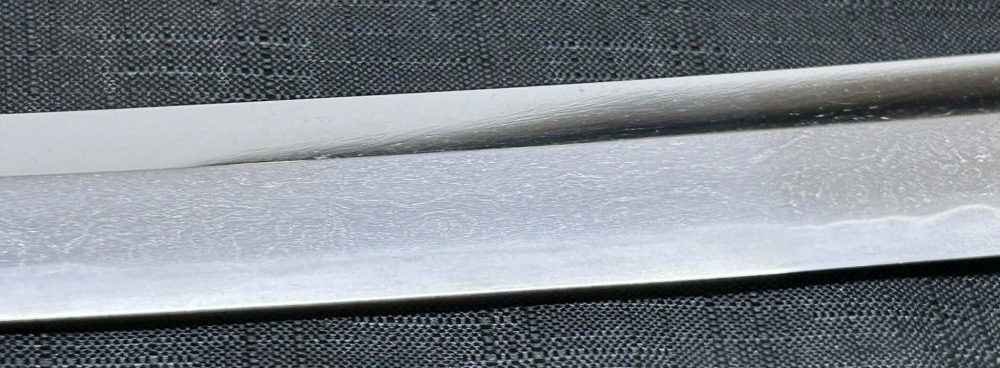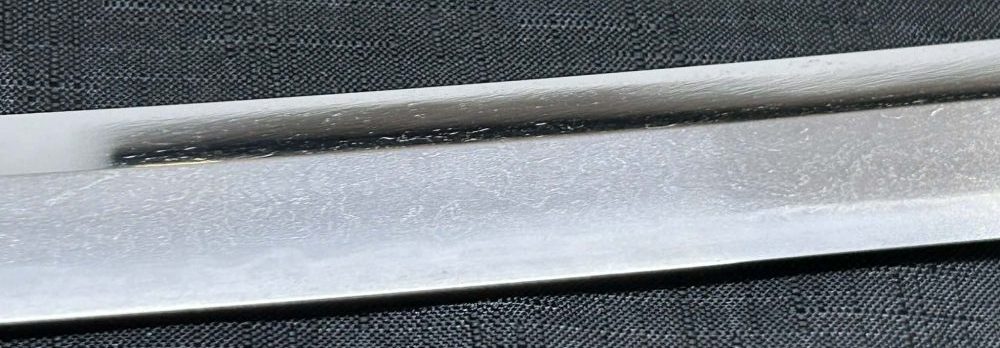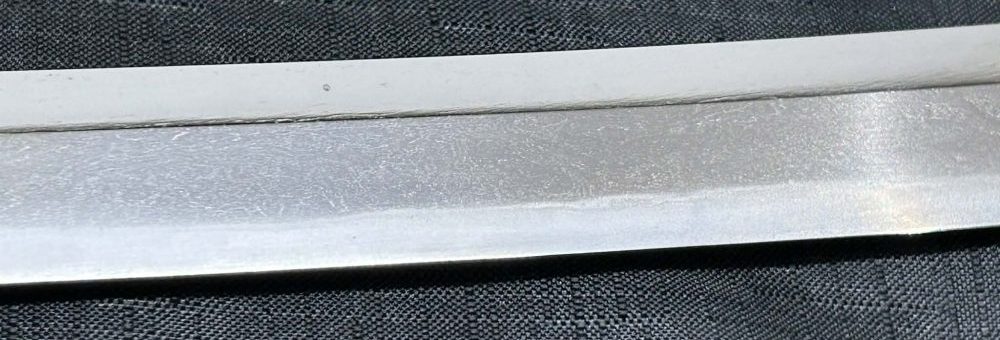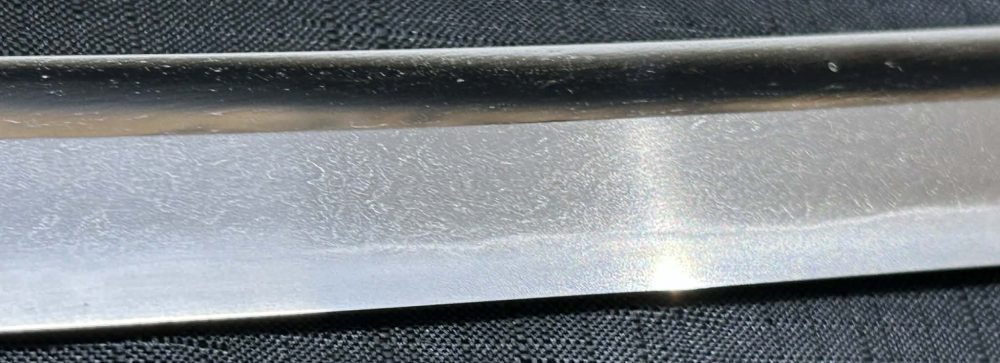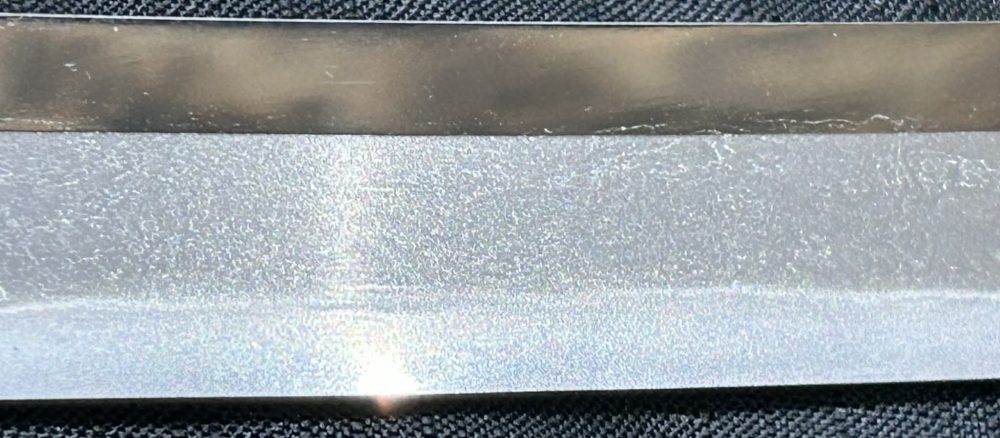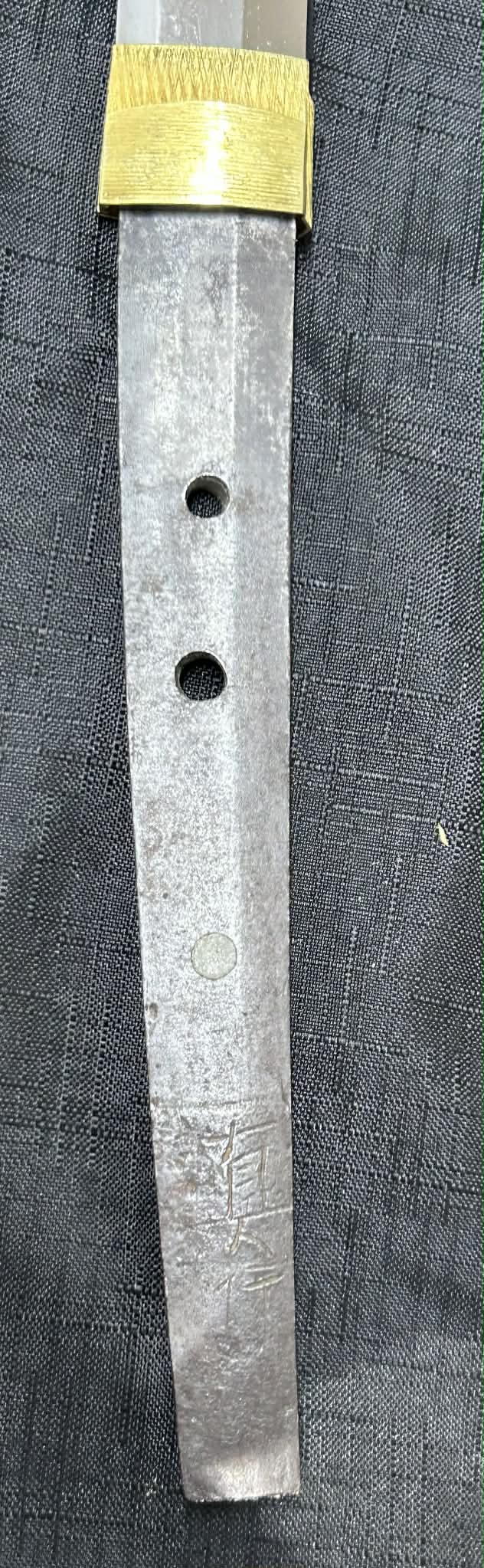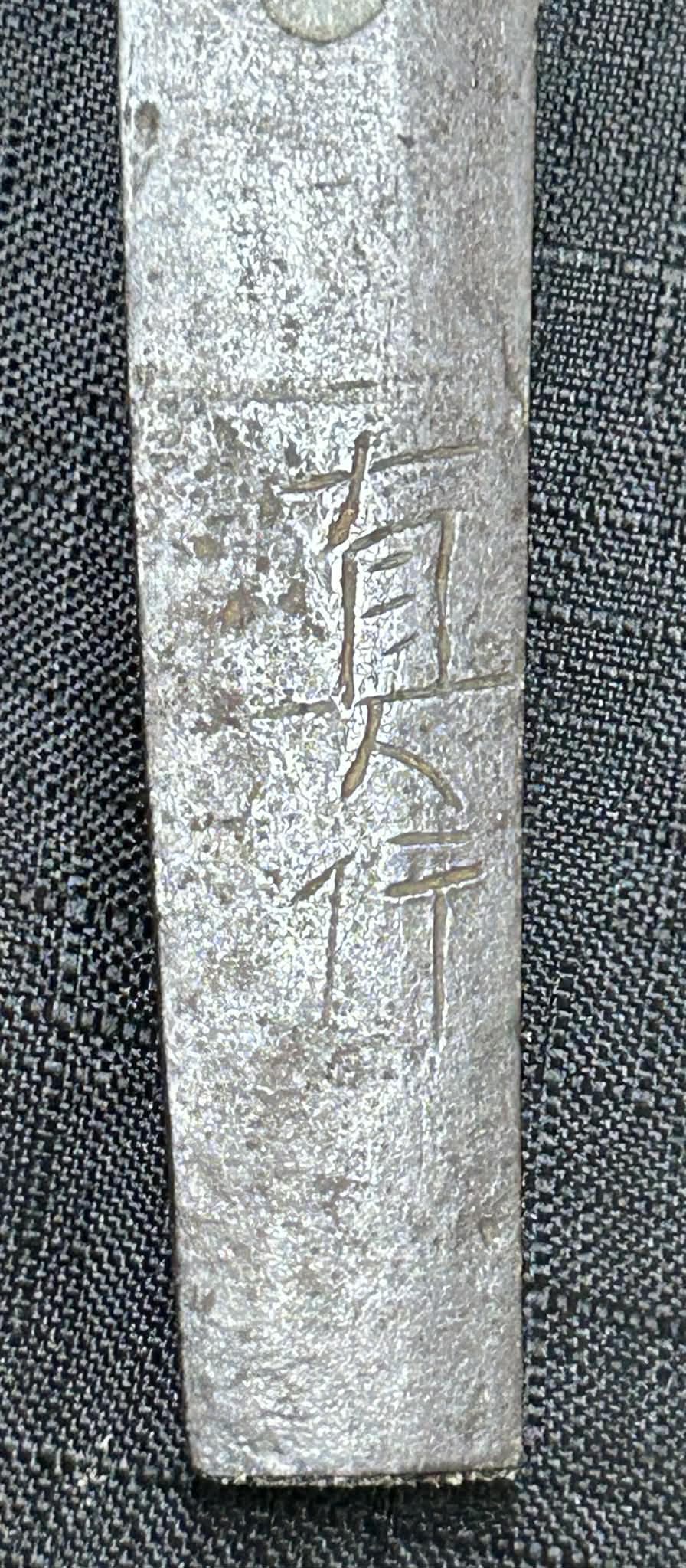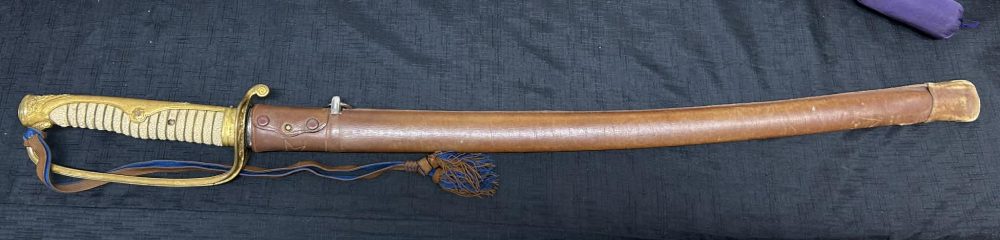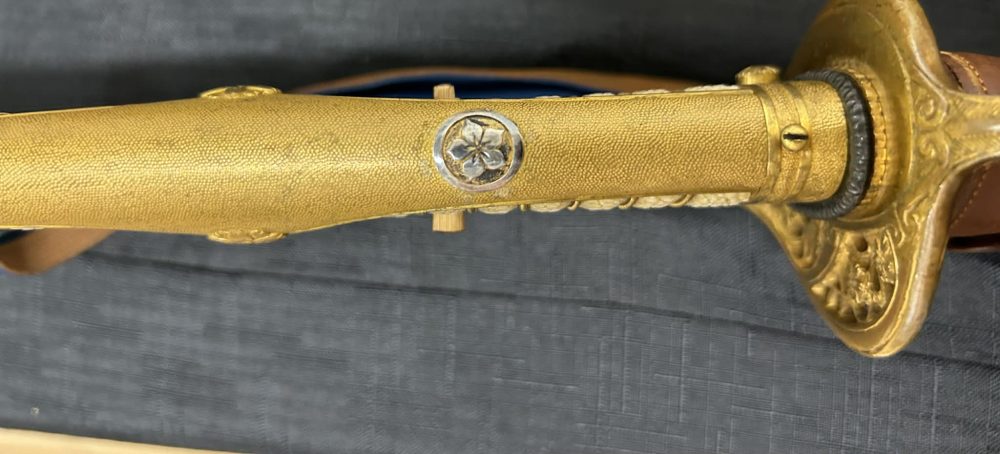
Saneyuki Katana mounted in original Kyu Gunto Koshirae with Silver family Mon and High Quality 2 Piece Habaki. Excellent very well forged Blade with active Hamon packed with Hataraki.
Recently Polished In Japan. Newly Made Shirasaya
Nagasa 69.2cm
SANEYUKI (真行), Eishō (永正, 1504-1521), Bingo – “Bishū-jū Saneyuki” (備州住真守),
he lived in Bingo´s Mihara (三原) and belonged to the Go´ami school (五阿弥),
according to tradition the son of Mihara Kiyomasa (清正)
The Mihara school was a group of swordsmiths active in Japan’s Bingo Province
(modern-day eastern Hiroshima prefecture) from the late Kamakura period (late 13th century) through the Muromachi period.
Their katana are highly regarded for their exceptional sharpness and durability,
often exhibiting strong influences from the Yamato sword-making tradition
Characteristics of Mihara School
Mihara school blades are known for a conservative, elegant style, contrasting with some of the flashier Bizen school designs. Key characteristics include:
Jigane (Steel Surface): A dense ko-itame (small wood-grain) pattern, often mixed with masame (straight grain), resulting in a whitish jigane (steel).
Hamon (Temper Line): Typically a suguha (straight) temper line, often with a soft appearance (nioiguchi), sometimes mixed with ashi (vertical lines), inazuma (lightning flashes), and sunagashi (brushed sand effects).
Boshi (Tip Temper Line): A distinctive “Mihara boshi” with a soft ko-maru (small round) turn-back, which often ends abruptly.
Sugata (Shape): Blades from the Ko-Mihara (early) period are often o-suriage (heavily shortened) due to their original great length as tachi, reflecting a form popular with mounted warriors. Later blades reflect the wider, longer kissaki (tip) styles of the Nambokucho period.Historical Periods
The school is traditionally divided into three periods based on the time of production:
Ko-Mihara (Old Mihara): End of the Kamakura period (c. 1278) to the end of the Nambokucho era (c. 1394). This era produced some of the school’s most prized and sharpest works, rated Owazamono (supreme sharpness).Chu-Mihara (Middle Mihara): Oei era (1394) to Eikyo (1429), during the early Muromachi period.
Sue-Mihara (Late Mihara): The later part of the Muromachi period, continuing until the Edo period.
Prominent smiths of the school include its founder Masaie (正家), Masahiro (正広), and Masamitsu.
Saneyuki Koto Katana Mounted in Original Kyu Gunto Koshirae NBTHK Hozon Certificate
$12,000.00