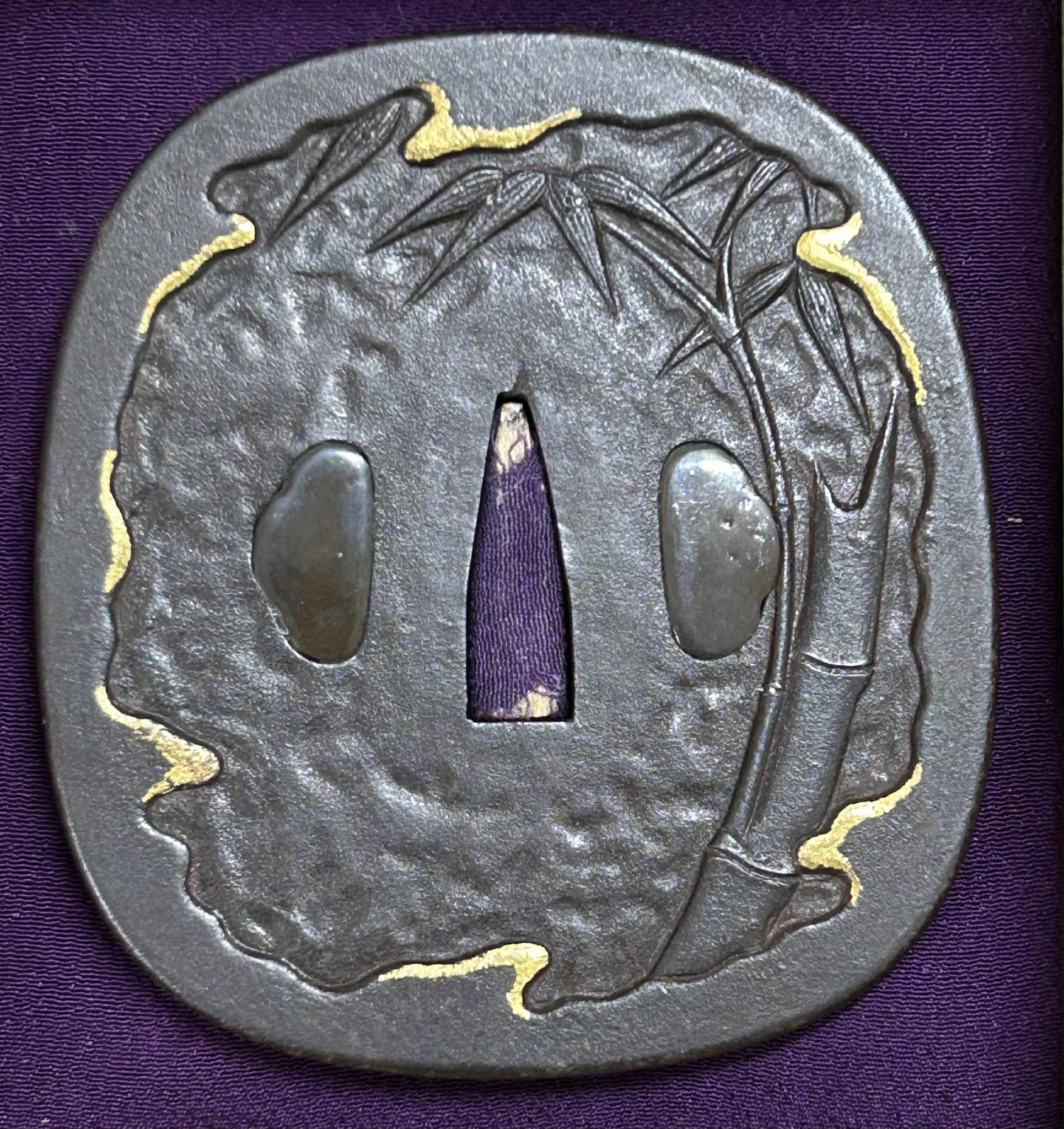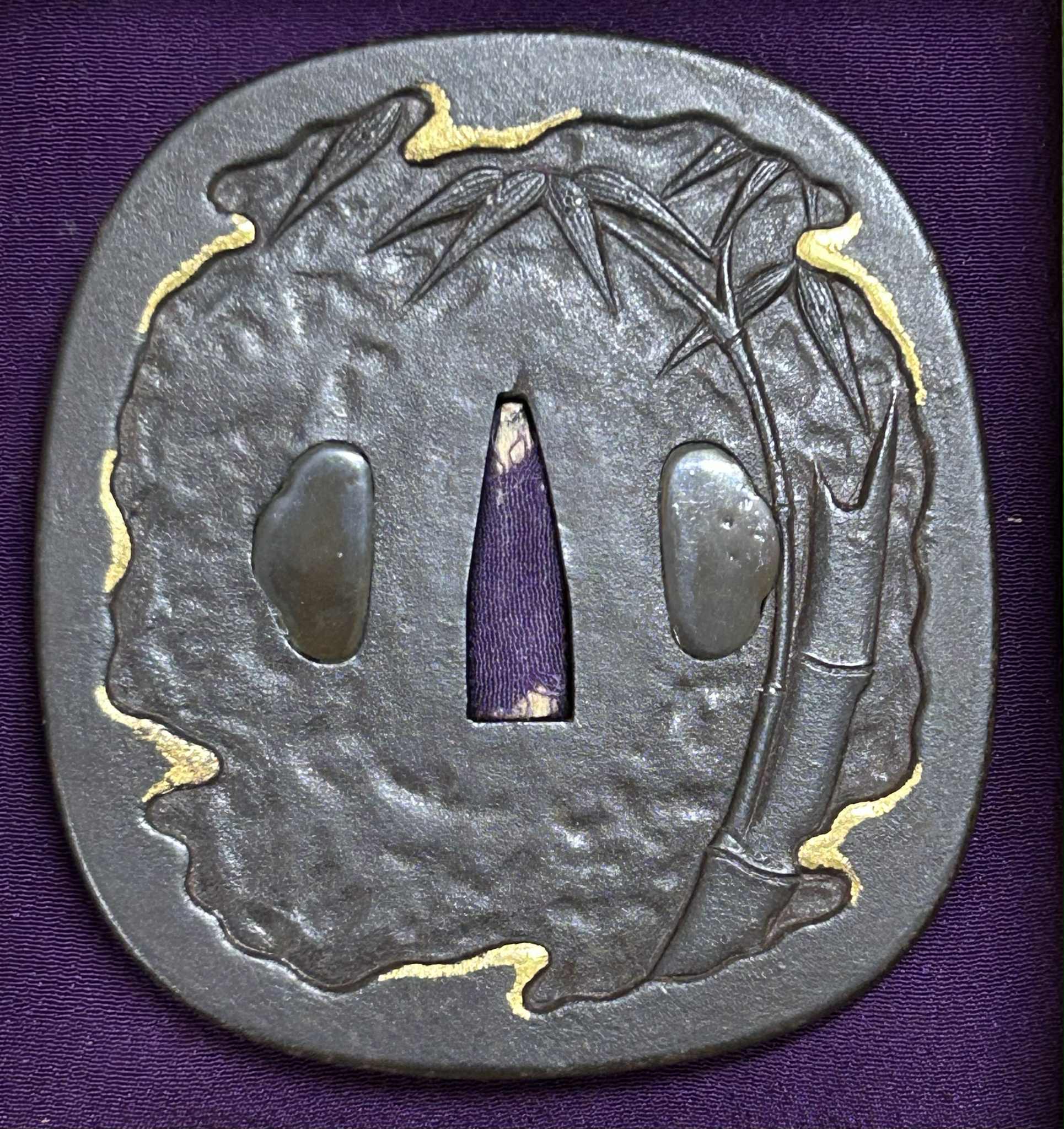
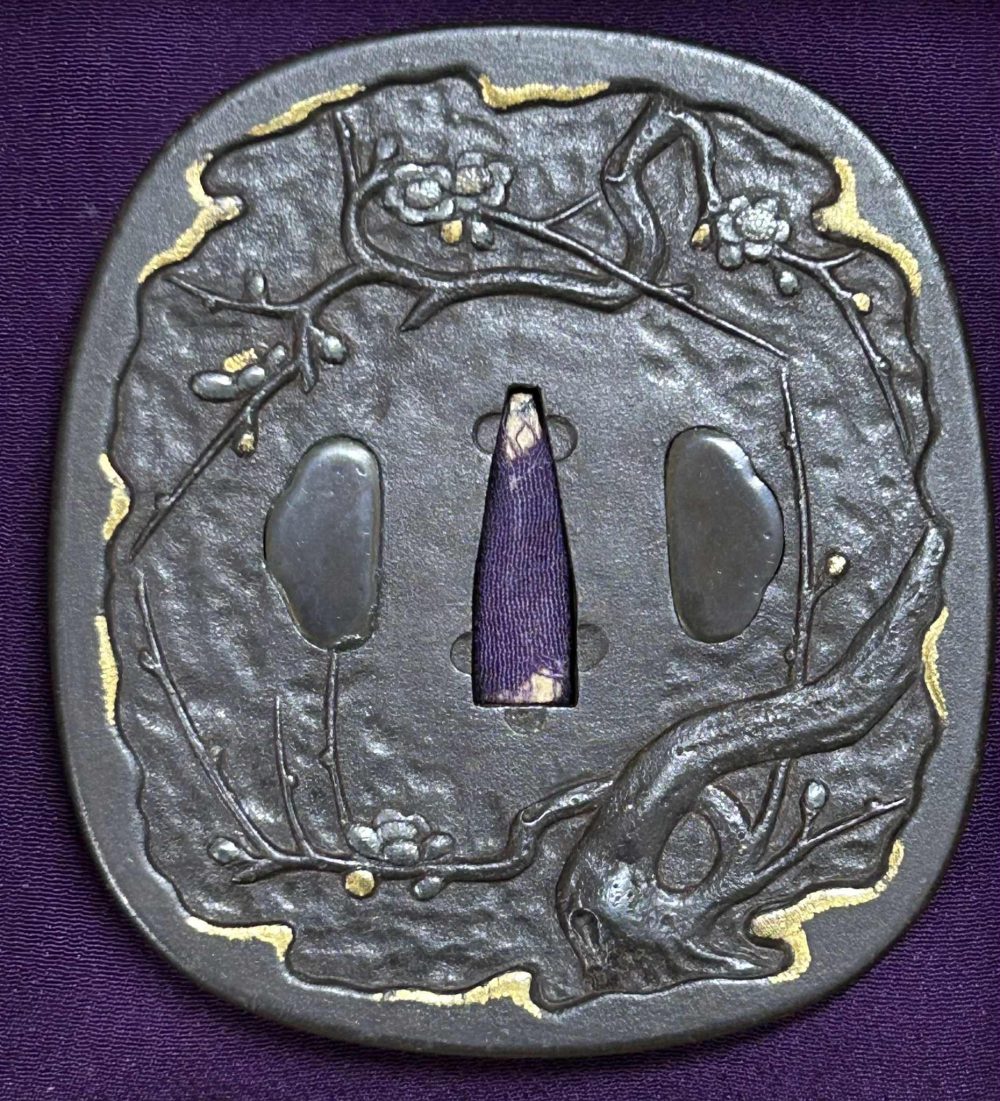
Large Iron Toryusai Tsuba with Motif of Bamboo and Plum tree and Blossoms . Late Edo Period with NBTHK Tokubetsu Kicho Certificate
The Toryusai school produced highly regarded antique Japanese sword guards (Tsuba) during the late Edo period, known for their detailed and artistic designs often featuring natural motifs.
Key artists include Tanaka Toshitaka and Hojusai Masakage.
Characteristics of Toryusai School Tsuba
Toryusai school tsuba are generally made of iron and often employ intricate inlay techniques using gold, silver, and shakudo (a copper-gold alloy) to create vibrant and detailed scenes.
Motifs: Common designs often depict nature scenes, folklore, or proverbs. Examples found in the school’s work include:
-
- Swallows and the moon
- Sugi (Japanese cedar) trees
- War flags and military leader’s fans
- Plovers and drying fishnets
- Dragons, butterflies, and other natural elements
- Technique: The artists were masters of metal inlay (zogan) and carving (takabori or kiriba), often finishing the inlays flush with the surface of the iron plate.
- Era: These works are typically dated to the late Edo period (19th century).
- Notable Artists:
- Tanaka Toshitaka (also known as Toryusai Toshitaka), a prominent master.
- Hojusai Masakage, the son of Tanaka Toshikage, who studied with his father and Tanaka Kiyotoshi.
- Ryuseimin (civilian name Morimiya Heikichi), Was a student of Tanaka Kiyotoshi